
Why Vitamin D Stacking Matters
Vitamin D functions more like a hormone than a traditional vitamin — it modulates hundreds of genes and interacts directly with other fat-soluble vitamins, minerals, and metabolic pathways. This means that what you combine with it genuinely affects how well it works. Getting vitamin D stacking right can meaningfully improve outcomes; getting it wrong can waste supplemental doses or, in rare cases, create imbalances.
Evidence-Based Synergies
Vitamin D and Vitamin K2
This is the best-documented vitamin D stacking combination. Vitamin D increases calcium absorption from the gut. Vitamin K2 (specifically the MK-7 form) directs that calcium to bones and arteries, preventing soft-tissue calcification. An analysis by Masterjohn (2007) and subsequent mechanistic research confirm that these two vitamins share a regulatory relationship — adequate K2 may help prevent the arterial calcification that theoretically could occur with sustained high-dose vitamin D supplementation.
OstroVit Vitamin D3 + K2 90 tabs and 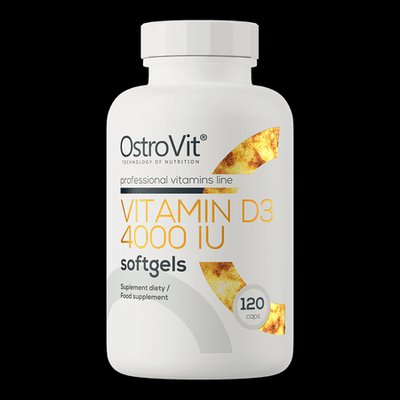 OstroVit Vitamin D3 4000 IU€8.90 In stock + K2 100tabs combine both in a single product, removing the need to dose separately. These are available at maxfit.ee/et/category/d-vitamiin.
Vitamin D and Magnesium
Magnesium is required as a cofactor in the enzymatic conversion of vitamin D to its active form (calcitriol). A large observational study found that people with higher magnesium intake had more effective vitamin D metabolism (Deng et al., 2013). In practice, this means that supplementing vitamin D while magnesium-deficient may yield a blunted response. Ensuring adequate magnesium — whether from diet or supplements — is a sensible prerequisite for effective vitamin D stacking.
Vitamin D and Omega-3 Fatty Acids
Both are fat-soluble and share anti-inflammatory signalling pathways. While no large RCT has specifically tested the vitamin D + omega-3 combination for synergy, both individually are associated with reduced inflammatory markers. Taking vitamin D with a fat-containing meal (including omega-3 fish oil) also improves its absorption because it requires bile for emulsification.
Vitamin D and Calcium
Vitamin D is essential for calcium absorption — this is its most well-established function. For bone health and musculoskeletal function, ensuring calcium adequacy alongside vitamin D supplementation makes mechanistic sense. Food sources are preferable to supplemental calcium where possible, but OstroVit Vitamin D3 + K2 + Calcium 90tabs provides all three in one product.
Antagonistic Combinations
High-Dose Vitamin A
Vitamin A and vitamin D compete for some of the same nuclear receptors. High supplemental vitamin A intake may blunt vitamin D activity. This applies primarily to retinol at doses well above the RDA — beta-carotene (pro-vitamin A from plants) does not appear to cause this competition. Avoid combining high-dose retinol supplements with vitamin D.
Certain Medications
Olestra (a fat substitute found in some foods) and medications like cholestyramine and orlistat impair fat-soluble vitamin absorption, including vitamin D. This is clinically relevant if you are on those medications and supplementing vitamin D — absorption may be significantly reduced regardless of dose.
Timing Within a Stack
- Take vitamin D with a meal containing fat to maximise absorption.
- Pairing with the largest fat-containing meal of the day is a practical strategy.
- K2 can be taken at the same time.
- Magnesium is often better tolerated in the evening (some find it supports sleep quality), but timing relative to vitamin D is not critical.
Sample Stacks by Goal
| Goal | Stack |
|---|---|
| General immune and bone health | Vitamin D3 + K2 + dietary calcium |
| Athletes optimising muscle function | Vitamin D3 + K2 + magnesium |
| Comprehensive fat-soluble support | Vitamin D3 + K2 + omega-3 + magnesium |
What to Avoid
- Supplementing vitamin D without checking baseline 25(OH)D levels if you plan to take doses significantly above standard supplemental amounts. Toxicity is rare but does occur with very high prolonged doses.
- Stacking with high-dose retinol supplements without professional guidance.
- Expecting vitamin D to compensate for major lifestyle gaps — it works best as part of an overall healthy pattern.
NOW Vitamin D3 5000 IU 120 softgels, BIOTECHUSA Vitamin D3 60tab, and NOW Vitamin D-3 & K-2 120caps are popular starting points for those building a vitamin D stack, available at maxfit.ee.
FAQ
How much vitamin D should I take daily?
The right amount depends on baseline status, which varies widely. General supplemental amounts of 1000-4000 IU daily are commonly used and considered safe for most adults without blood testing. Northern European populations (including Estonia) tend to have lower sun exposure, making supplementation especially relevant during autumn and winter months.
Is it possible to take too much vitamin D?
Yes. Vitamin D toxicity is rare but real — it involves hypercalcaemia and can cause nausea, weakness, and kidney issues. This occurs with sustained very high doses (typically well above 10,000 IU daily over long periods). Standard supplementation with 1000-4000 IU carries a very low risk in otherwise healthy adults.
Does taking vitamin D at night affect sleep?
Some people report that vitamin D taken late in the evening affects sleep quality, possibly via interactions with melatonin pathways. This is anecdotal rather than well-studied. A simple approach is to take vitamin D with breakfast or lunch.
References
Masterjohn, C. (2007). Vitamin D toxicity redefined: vitamin K and the molecular mechanism. Medical Hypotheses, 68(5), 1026-1034. https://pubmed.ncbi.nlm.nih.gov/17145139/
Deng, X., Song, Y., Manson, J. E., Signorello, L. B., Zhang, S. M., Shrubsole, M. J., Ness, R. M., Seidner, D. L., & Dai, Q. (2013). Magnesium, vitamin D status and mortality: results from US National Health and Nutrition Examination Survey (NHANES) 2001 to 2006 and NHANES III. BMC Medicine, 11, 187. https://pubmed.ncbi.nlm.nih.gov/23981518/
Sadat-Ali, M., Al-Omran, A. S., Azam, M. Q., Al-Othman, A. A., & Alfifi, A. A. (2012). Vitamin D supplementation and serum 25-hydroxyvitamin D levels: a comparison of three preparations. Saudi Medical Journal, 33(11), 1169-1173.



