
Common and Rare Side Effects of Vitamin D
Vitamin D3 (cholecalciferol) is fat-soluble, which means it accumulates in body fat and liver rather than being excreted in urine like water-soluble vitamins. This property makes excessive supplementation more consequential than with, say, vitamin C.
At recommended supplementation doses, vitamin D is well tolerated and side effects are rare. Problems arise primarily with prolonged intake at very high doses:
Vitamin D toxicity (hypervitaminosis D) is almost exclusively caused by supplementation, not sun exposure or diet. The primary mechanism is hypercalcaemia — elevated blood calcium — resulting from excessive activation of intestinal calcium absorption. Symptoms of early hypercalcaemia include:
- Nausea, vomiting, loss of appetite
- Constipation
- Weakness and fatigue
- Increased thirst and urination
- Confusion or cognitive changes in severe cases
A systematic review of vitamin D toxicity cases found that most documented toxicity occurred with daily intakes exceeding 10,000 IU for several months or following accidental mega-dose ingestion (Marcinowska-Suchowierska et al., 2018).
Upper Safe Limits
Regulatory bodies have established tolerable upper intake levels (UL) that represent the maximum daily intake considered safe for the general adult population:
- EFSA (European Union): UL of 4,000 IU (100 µg) per day for adults
- US Endocrine Society: Considers up to 10,000 IU per day as no-observed-adverse-effect level (NOAEL) in adults, though this is not a general recommendation
- EFSA for infants and children: Lower ULs apply; see age-specific guidelines
The EFSA UL of 4,000 IU applies to supplement intake from all sources combined. It does not mean 4,000 IU is the optimal dose — the UL represents the safety ceiling, not the target (EFSA, 2012).
For most healthy adults in Northern Europe (including Estonia, at latitude 57–60°N with minimal sun exposure from October to April), standard supplementation of 1,000–2,000 IU per day is the practical norm, providing meaningful repletion without approaching the UL.
Drug and Nutrient Interactions
Vitamin D has clinically relevant interactions that are important to know:
- Thiazide diuretics: Combining vitamin D with thiazide diuretics (commonly prescribed for blood pressure) increases the risk of hypercalcaemia because both raise serum calcium levels. Monitoring is warranted.
- Digoxin: Hypercalcaemia induced by excessive vitamin D can increase the risk of digoxin toxicity (cardiac glycoside). Patients on digoxin should be particularly cautious.
- Cholestyramine and orlistat: These fat-absorption-blocking drugs reduce vitamin D absorption, potentially lowering levels.
- Vitamin K2: Rather than an adverse interaction, K2 is frequently co-supplemented with D3 because high-dose vitamin D increases calcium mobilisation; K2 (particularly MK-7 form) directs calcium to bones rather than soft tissues. This is a complementary combination, not a safety concern per se.
- Magnesium: Magnesium is required for vitamin D activation in the liver and kidneys. Supplementing D without addressing low magnesium may blunt the response.
Who Should Be Cautious
Certain groups require extra attention with vitamin D supplementation:
- People with granulomatous diseases (sarcoidosis, tuberculosis, lymphoma): These conditions produce their own vitamin D-activating enzyme outside the kidneys, making hypercalcaemia possible even at normal supplementation doses.
- Primary hyperparathyroidism: Elevated parathyroid hormone already drives high calcium; additional vitamin D may worsen this.
- Kidney disease: Impaired kidneys struggle to regulate vitamin D activation and calcium excretion; supplementation should be medically supervised.
- Infants: The EFSA UL for infants under 12 months is 1,000 IU/day; exceeding this carries greater relative risk.
For healthy adults without the above conditions, vitamin D supplementation within the EFSA UL is safe and appropriate, especially in winter months.
Quality and Contamination Considerations
Vitamin D supplements are one of the most studied supplement categories, and the risk of contamination is low compared to more complex multi-ingredient products. Key quality indicators are:
- Verified dose: The stated IU should match what is in the product. Third-party batch testing (ISO 17025-accredited labs) provides the highest confidence.
- Form: D3 (cholecalciferol) raises serum 25(OH)D more effectively than D2 (ergocalciferol) in direct comparison studies.
- Carrier oil: D3 is fat-soluble; products in olive oil or MCT oil may offer better absorption than dry powder capsules, though the difference is modest.
In-stock products at maxfit.ee include ICONFIT Softgel D3-Vitamin 4000 IU N90 and 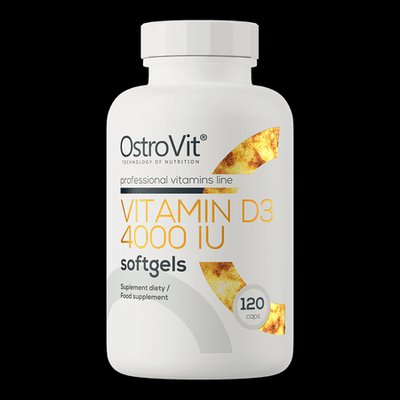 OstroVit Vitamin D3 4000 IU€8.90 In stock + K2 100tabs, the latter combining D3 with vitamin K2 (MK-7) as a complementary stack. Browse the full vitamin D range in the vitamin D category.
References
Marcinowska-Suchowierska, E., Kupisz-Urbańska, M., Łukaszkiewicz, J., Płudowski, P., & Jones, G. (2018). Vitamin D toxicity — a clinical perspective. Frontiers in Endocrinology, 9, 550. https://pubmed.ncbi.nlm.nih.gov/30294301/
EFSA Panel on Dietetic Products, Nutrition and Allergies. (2012). Scientific Opinion on the Tolerable Upper Intake Level of vitamin D. EFSA Journal, 10(7), 2813. https://doi.org/10.2903/j.efsa.2012.2814
Vieth, R. (1999). Vitamin D supplementation, 25-hydroxyvitamin D concentrations, and safety. The American Journal of Clinical Nutrition, 69(5), 842–856. https://pubmed.ncbi.nlm.nih.gov/10232622/
FAQ
Can you get vitamin D toxicity from the sun?
No. Sun-induced vitamin D synthesis in the skin is self-limiting — prolonged UV exposure degrades previtamin D3 before it can cause toxicity. Vitamin D toxicity is caused exclusively by supplementation or accidental ingestion of very high doses.
How do I know if I am taking too much vitamin D?
The most reliable indicator is a serum 25(OH)D blood test. Most European laboratories flag levels above 250 nmol/L (100 ng/mL) as potentially toxic. Routine testing is recommended for anyone supplementing more than 2,000 IU per day long-term.
Is it safe to take vitamin D every day?
Yes, for healthy adults without contraindications, daily supplementation within the EFSA UL of 4,000 IU is considered safe. Standard doses of 1,000–2,000 IU are far below the UL and are the typical recommendation for adults in Northern Europe during winter months.



