What to Stack with Vitamin C: Synergies & Conflicts
Vitamin C (ascorbic acid) is one of the most versatile supplements in any stack. Its roles as a water-soluble antioxidant, cofactor in collagen biosynthesis, and enhancer of non-haem iron absorption make it a natural partner for a range of other supplements and foods. Understanding vitamin c stacking — which combinations amplify effects and which interfere — helps you build a smarter daily protocol.
Evidence-Based Synergies
Iron Absorption
The most robustly documented synergy for vitamin C is with non-haem iron. Ascorbic acid reduces ferric iron (Fe3+) to ferrous iron (Fe2+), the form preferentially transported by the intestinal divalent metal transporter DMT1. This measurably increases iron absorption from plant foods and iron supplements. Combining vitamin C with an iron supplement or an iron-rich plant-based meal is particularly useful for vegetarians, vegans, and women of reproductive age who may have higher iron needs (Hunt, 2003).
Collagen Synthesis
Vitamin C is an obligate cofactor for the enzymes prolyl hydroxylase and lysyl hydroxylase, which catalyse the hydroxylation of proline and lysine residues in procollagen — a step required for the formation of stable collagen triple helices. Without adequate vitamin C, collagen cannot be properly cross-linked. This makes vitamin C a logical co-supplement with collagen peptides, gelatin, or joint-support formulations. Timing the two together (or vitamin C shortly before collagen) around training or before sleep may help with joint recovery, though direct RCT evidence for this specific co-timing is still emerging (Shaw et al., 2017).
Vitamin E Regeneration
Vitamin C can regenerate oxidised vitamin E (tocopheroxyl radical) back to its active tocopherol form in a two-antioxidant recycling reaction. This means adequate vitamin C intake potentiates the antioxidant capacity of vitamin E (Carr and Frei, 1999). The reverse is also true: vitamin E can spare vitamin C. For athletes with high oxidative stress, combining both vitamins may extend their collective antioxidant effect.
Quercetin
Quercetin (a flavonoid found in onions, apples, and supplements) and vitamin C share antioxidant roles and appear to be mutually sparing. Some in-vitro evidence shows vitamin C recycling of quercetin semiquinones, though in-vivo significance in humans is less established.
Antagonistic Combinations
High-Dose Vitamin B12
High-dose vitamin C taken simultaneously with vitamin B12 in the same solution may oxidise a small proportion of the B12. This is primarily a concern with pharmaceutical IV formulations rather than oral supplements, but if you take both as capsules, a short separation (30 minutes) is cautious.
Excessive Antioxidants Around Training
High-dose antioxidant combinations (vitamin C plus vitamin E) taken immediately before or after resistance training may blunt training-induced cellular adaptation signals, including those mediated by reactive oxygen species that act as second messengers for mitochondrial biogenesis and muscle hypertrophy (Ristow et al., 2009). This does not mean vitamin C is harmful — it means timing matters. Consider taking high antioxidant doses away from the immediate peri-workout window.
Copper at High Vitamin C Doses
Very high supplemental vitamin C can theoretically reduce copper absorption through competition at the intestinal level. At typical supplemental doses (500–1000 mg per day), this is unlikely to be clinically significant for most people.
Timing Within a Stack
Vitamin C is water-soluble and does not need fat for absorption. Useful timing guidelines:
- With iron supplements — take simultaneously for maximum synergy.
- With collagen — take 30–60 minutes before training or before sleep.
- Antioxidant doses — consider morning or evening rather than immediately peri-workout.
- Separate from B12 (if taking high-dose isolates) — 30-minute gap is sufficient.
Sample Stacks by Goal
| Goal | Stack | Timing |
|---|---|---|
| Iron repletion (vegetarian) | Vitamin C + non-haem iron food or supplement | Same time |
| Joint / skin health | Vitamin C + collagen peptides | 30–60 min pre-training or pre-sleep |
| General antioxidant support | Vitamin C + Vitamin E | Morning, away from training |
| Immune support | Vitamin C + zinc | Morning with food |
At maxfit.ee the vitamin C range includes 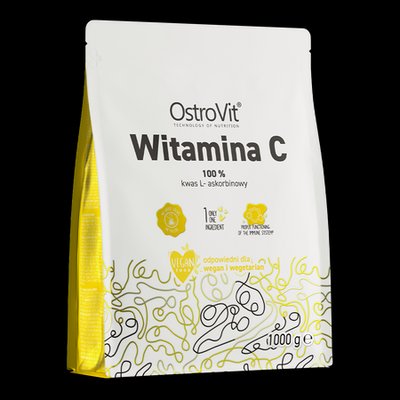 OstroVit Vitamin C€14.90 In stock 1000g,
 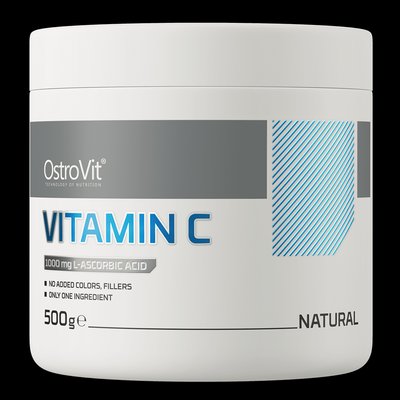 OstroVit Vitamin C€7.90 In stock 1000mg 90tabs, BIOTECHUSA Vitamin C1000 100tab, and OstroVit Pharma natural Vitamin C from rose hips 30caps — all suitable bases for stacking.
What to Avoid
- Mixing with alkaline supplements in solution (e.g. sodium bicarbonate) — ascorbic acid is unstable above pH 7; take separately.
- Megadosing (above 2000 mg/day without medical guidance) — increases risk of kidney oxalate stones in susceptible individuals and causes osmotic diarrhoea.
- Taking immediately post-workout if your goal is maximising strength/hypertrophy adaptation.
FAQ
Does vitamin C help absorb zinc?
The iron-vitamin C synergy is well-established. For zinc, the evidence of a meaningful vitamin C interaction is much weaker. The main zinc absorption enhancers are animal protein (meat factor), not vitamin C.
Can I take vitamin C and collagen at the same time?
Yes — this is in fact the recommended approach for joint and skin health. Vitamin C is a cofactor for collagen synthesis, so co-timing is logical and supported by mechanistic evidence.
Is there a maximum useful dose of vitamin C per day?
Absorption efficiency decreases as dose increases. At doses above approximately 1000 mg, a smaller proportion is absorbed and urinary excretion increases. Most adults do not benefit meaningfully from doses above 500–1000 mg per day under ordinary conditions.
References
Hunt, J. R. (2003). Bioavailability of iron, zinc, and other trace minerals from vegetarian diets. American Journal of Clinical Nutrition, 78(3), 633S-639S. https://pubmed.ncbi.nlm.nih.gov/14668280/
Shaw, G., Lee-Barthel, A., Ross, M. L., Wang, B., & Baar, K. (2017). Vitamin C-enriched gelatin supplementation before intermittent activity augments collagen synthesis. American Journal of Clinical Nutrition, 105(1), 136-143. https://pubmed.ncbi.nlm.nih.gov/27852613/
Carr, A. C., & Frei, B. (1999). Toward a new recommended dietary allowance for vitamin C based on antioxidant and health effects in humans. American Journal of Clinical Nutrition, 69(6), 1086-1107. https://pubmed.ncbi.nlm.nih.gov/10357726/
Ristow, M., Zarse, K., Oberbach, A., Kloting, N., Birringer, M., Kiehntopf, M., Stumvoll, M., Kahn, C. R., & Bluher, M. (2009). Antioxidants prevent health-promoting effects of physical exercise in humans. Proceedings of the National Academy of Sciences, 106(21), 8665-8670. https://pubmed.ncbi.nlm.nih.gov/19433800/



