
What Long-Term Studies Show
Vitamin C (ascorbic acid) is a water-soluble vitamin with an established role in collagen synthesis, immune function, and antioxidant defence. Unlike fat-soluble vitamins, excess vitamin C is not stored in the body — the kidneys excrete what is not needed. This biological feature underpins its comparatively favourable safety profile at moderate doses.
Long-term observational studies and randomised trials have generally shown vitamin C supplementation to be safe when doses remain within a reasonable range. High-quality reviews have not identified organ toxicity or carcinogenicity associated with long-term intake at supplemental doses used by most people.
However, pharmacokinetics matter. Plasma vitamin C concentrations saturate: at an intake of around 200 mg per day, absorption efficiency begins to decline and any surplus is excreted in urine. Taking very large doses (grams per day) does not proportionally raise plasma levels but does increase renal load and oxalate production.
Upper Safe Limits Over Time
The tolerable upper intake level (UL) established by scientific bodies is used as a reference for maximum supplemental dose that is unlikely to cause adverse effects. For adults, this is generally set at 2000 mg per day. This is a conservative boundary rather than a toxicity threshold — it is the level below which adverse effects are unlikely, not a line between safe and dangerous.
Long-term daily intake at or below this level is generally considered acceptable, though regular assessment of individual health status is prudent. For most adults with adequate kidney function, 250–1000 mg per day is a practical and well-studied range.
Products available at maxfit.ee include 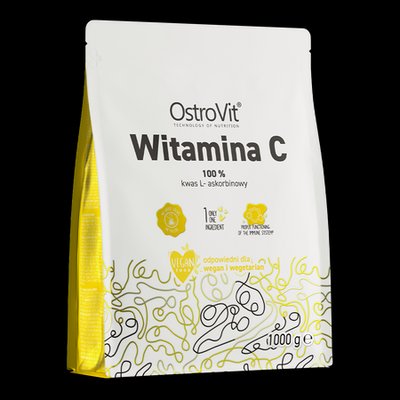 OstroVit Vitamin C€14.90 In stock 1000g,
 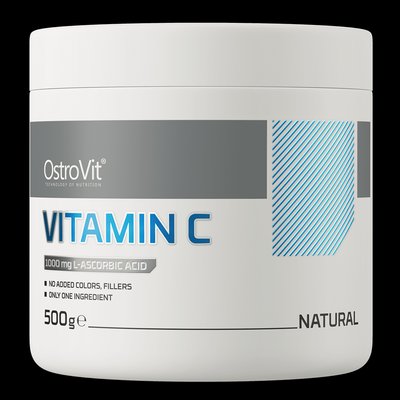 OstroVit Vitamin C€7.90 In stock 500g, OstroVit Vitamin C 1000mg 90tabs, and OstroVit Vitamin C 1000mg 120caps. For those preferring a lower dose or food-based form, OstroVit Pharma natural Vitamin C from rose hips 30caps provides a gentler option.
Do You Need to Cycle Vitamin C?
No strong evidence supports the need to cycle water-soluble vitamins like vitamin C. Because it is not stored and any excess is excreted, the concept of accumulation toxicity that applies to fat-soluble vitamins (A, D, K, E) does not apply here in the same way.
Some practitioners suggest brief breaks to reassess baseline needs, but this is not a requirement for safety. There is no established withdrawal effect from stopping vitamin C supplementation.
Monitoring and Cautions
Kidney stones: The most commonly cited concern with high-dose long-term vitamin C is the potential for increased oxalate excretion, which may elevate kidney stone risk in predisposed individuals. Those with a history of calcium oxalate stones should avoid high doses and consult a doctor.
Iron absorption: Vitamin C significantly enhances non-haem iron absorption. This is beneficial for those with low iron intake but may be relevant for individuals with haemochromatosis or other iron overload conditions.
Gastrointestinal effects: Large single doses (above 1000 mg) can cause loose stools or digestive discomfort in sensitive individuals. Dividing doses throughout the day or using buffered forms reduces this.
Interaction with some lab tests: High-dose vitamin C can interfere with certain blood glucose tests (glucose oxidase method). Inform your doctor if you supplement at high doses before laboratory testing.
Honest Verdict
Long-term vitamin C supplementation at 250–1000 mg per day is safe for most healthy adults. The evidence does not support excessive doses above 1000 mg daily for general purposes — the body cannot use the surplus and simply excretes it. For those eating a varied diet rich in fruits and vegetables, a modest supplement fills potential gaps without risk. Those with kidney disease, a history of kidney stones, or haemochromatosis should consult a physician before supplementing.
FAQ
Can I take 1000 mg of vitamin C every day for years?
For most healthy adults with normal kidney function, 1000 mg per day over years is considered safe. This is below the tolerable upper intake level. The body excretes surplus ascorbic acid efficiently. Individuals with kidney stone history should be cautious.
Does vitamin C cause kidney stones?
At standard supplemental doses, the risk is low. High chronic doses raise urinary oxalate, which is a risk factor for calcium oxalate kidney stones in predisposed individuals (Moyad et al., 2008). If you have a history of kidney stones, discuss supplementation with your doctor.
Is it better to take buffered vitamin C or regular ascorbic acid?
For most people, regular ascorbic acid is effective and inexpensive. Buffered forms (such as calcium ascorbate) are gentler on the stomach and useful for those who experience digestive discomfort with standard ascorbic acid.
References
Levine, M., Conry-Cantilena, C., Wang, Y., Welch, R. W., Washko, P. W., Dhariwal, K. R., Park, J. B., Lazarev, A., Graumlich, J. F., King, J., & Cantilena, L. R. (1996). Vitamin C pharmacokinetics in healthy volunteers: evidence for a recommended dietary allowance. Proceedings of the National Academy of Sciences, 93(8), 3704–3709. https://pubmed.ncbi.nlm.nih.gov/8623000/
Moyad, M. A., Combs, M. A., & Vrablic, A. S. (2008). Vitamin C metabolites, independent of smoking status, significantly enhance leukocyte, but not plasma ascorbate concentrations. Advances in Therapy, 25(10), 995–1006. https://pubmed.ncbi.nlm.nih.gov/18836692/
Padayatty, S. J., Katz, A., Wang, Y., Eck, P., Kwon, O., Lee, J. H., Chen, S., Corpe, C., Dutta, A., Dutta, S. K., & Levine, M. (2003). Vitamin C as an antioxidant: evaluation of its role in disease prevention. Journal of the American College of Nutrition, 22(1), 18–35. https://pubmed.ncbi.nlm.nih.gov/12569111/



