
Vitamin A for Women: Benefits & Considerations
Vitamin A for women is more than a skin nutrient. It plays roles in immune defence, reproductive health, vision, and cellular differentiation. Yet it is also one of the few vitamins where excess supplementation – especially in the retinol form – carries documented risks, making it important to understand both sides.
Why Women May Need It
Vitamin A exists in two main dietary forms: preformed retinol (from animal foods) and provitamin A carotenoids such as beta-carotene (from plant foods). The body converts beta-carotene to retinol only as needed, which provides an inherent safety buffer that preformed retinol does not.
Women need vitamin A for:
- Immune function – Retinol maintains the integrity of mucosal barriers in the respiratory and digestive tracts, representing a first line of defence against pathogens.
- Skin health – Retinoic acid regulates epidermal cell turnover; this underlies the use of retinoid derivatives in dermatology.
- Reproductive health – Adequate vitamin A is required for normal follicular development and luteal function (Clagett-Dame & Knutson, 2011).
- Vision – Retinal is a critical component of rhodopsin, the photoreceptor pigment responsible for low-light vision.
Hormonal and Life-Stage Notes
During reproductive years, menstrual blood losses do not directly deplete vitamin A, but chronically poor dietary variety in young women can lead to inadequate intake. Population surveys across Northern Europe, including Baltic countries, note that women in the 20–35 age group may fall below recommended intakes when diets are low in dairy, eggs, and coloured vegetables.
Post-menopause, bone remodelling becomes a prominent concern. High preformed retinol intake has been associated with reduced bone mineral density in post-menopausal women in prospective cohort studies (Feskanich et al., 2002). This does not apply to beta-carotene from plant sources.
During intense athletic training, oxidative stress increases. Carotenoids act as antioxidants and may support recovery, though this should be understood as one part of a broader antioxidant strategy rather than the sole solution.
Dose Considerations
The dietary reference value for adult women in the EU is 650 micrograms retinol activity equivalents (RAE) per day. Multivitamins such as BIOTECHUSA Active Women 60tab and Optimum Nutrition Opti-Women 120tabs typically include vitamin A as a combination of retinol and beta-carotene, with the retinol component kept well below the tolerable upper level.
If using a standalone beta-carotene supplement such as 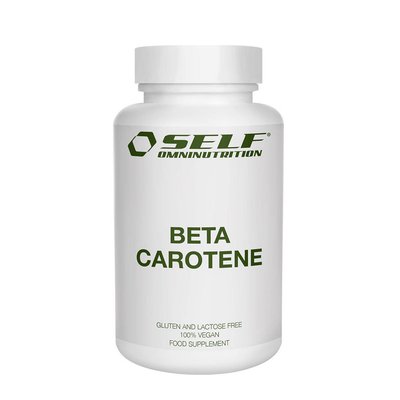 SELF Beta carotene€8.90 In stock 60caps, the provitamin A pathway provides a meaningful safety margin compared to preformed retinol supplements.
The tolerable upper level for preformed retinol in adults is set at 3,000 micrograms RAE per day by regulatory authorities; chronic intake above this level is associated with toxicity risk.
Pregnancy and Safety Notes
Vitamin A is uniquely important to understand during pregnancy. Retinol is essential for foetal development, particularly organogenesis in the first trimester. However, excessive preformed retinol is teratogenic – it has been shown to cause birth defects at high doses (Rothman et al., 1995).
Current guidance is consistent: pregnant women should avoid high-dose preformed retinol supplements and avoid liver (a concentrated retinol source) during pregnancy. Beta-carotene from food and well-formulated prenatal supplements is safe because the conversion to retinol is tightly regulated.
Breastfeeding increases vitamin A needs modestly, as retinol is secreted in breast milk.
Bottom Line
Vitamin A from a balanced diet and a well-formulated women's multivitamin covers most women's needs without risk. Standalone high-dose retinol supplements have a narrower benefit window and require more caution, particularly around pregnancy. Beta-carotene from plant sources remains a safer choice for supplemental vitamin A in all life stages.
Explore women's vitamins at maxfit.ee/et/category/vitamiinikompleksid.
FAQ
Can I get enough vitamin A from vegetables alone?
Yes, if you regularly eat orange and yellow vegetables, leafy greens, and some orange fruits. Beta-carotene conversion efficiency varies between individuals; those with certain genetic variants convert it less effectively and may benefit from small amounts of dietary retinol from eggs or dairy.
Is high-dose vitamin A supplementation safe for women trying to conceive?
Preformed retinol at doses exceeding the tolerable upper level should be avoided when trying to conceive, as the embryonic period begins before most women know they are pregnant. Beta-carotene supplements carry no documented teratogenic risk.
Does vitamin A improve skin independently of skincare products?
Adequate dietary vitamin A supports skin cell renewal from the inside. Deficiency is associated with dry, rough skin. However, the topical retinoids used in skincare act at much higher local concentrations than any dietary supplement can achieve systemically.
References
Clagett-Dame, M., & Knutson, D. (2011). Vitamin A in reproduction and development. Nutrients, 3(4), 385–428. https://pubmed.ncbi.nlm.nih.gov/22254103/
Feskanich, D., Singh, V., Willett, W. C., & Colditz, G. A. (2002). Vitamin A intake and hip fractures among postmenopausal women. JAMA, 287(1), 47–54. https://pubmed.ncbi.nlm.nih.gov/11754708/
Rothman, K. J., Moore, L. L., Singer, M. R., Nguyen, U. S., Mannino, S., & Milunsky, A. (1995). Teratogenicity of high vitamin A intake. New England Journal of Medicine, 333(21), 1369–1373. https://pubmed.ncbi.nlm.nih.gov/7477116/



