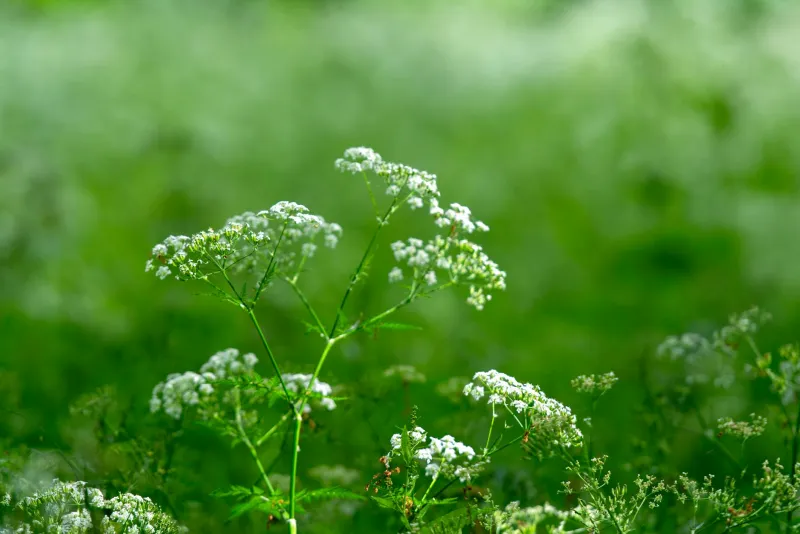
Valerian: 2,000 Years as Europe's Sleep Herb
Valerian (Valeriana officinalis) has been used as a sleep aid since Hippocrates' time. Ancient Greeks prescribed it for insomnia, mediaeval European monks cultivated it in monastery physic gardens, and it has been a staple of Estonian folk medicine for centuries.
The European Medicines Agency (EMA) has recognised valerian root as a traditional herbal medicinal product for mild anxiety and sleep disturbances — a higher regulatory threshold than most supplements pass. This distinguishes it from countless unverified sleep products on the market.
How Valerian Works
Valerian's mechanism of action is multi-layered:
- GABA receptor modulation — valepotriates and isovaleric acid bind to GABA receptors, mimicking GABA's calming effect (Hattesohl et al., 2008)
- Serotonin receptor interaction — contributing to mood and sleep regulation
- Reduced adenosine inhibition — adenosine is a key sleep-drive signalling molecule
This multi-target action explains why valerian combines synergistically with other sleep compounds rather than simply duplicating their effects.
What the Research Shows
Valerian research has produced somewhat mixed results (typical for traditional herbs with variable standardisation), but positive signals are consistent:
- Reduced sleep onset time: a meta-analysis of 16 studies found valerian reduced time to fall asleep by an average of 15 minutes (Bent et al., 2006)
- Improved sleep quality: increased proportion of deep sleep reported in multiple trials
- Chronic use advantage: best effects emerge after 2–4 weeks of regular use rather than single-dose administration
- Valerian + lemon balm: the evidence for this combination is consistently stronger than for either herb alone
A notable feature: valerian is one of the few sleep supplements specifically studied in patients with chronic insomnia — not just healthy volunteers who sleep normally.
Active Compounds
| Compound | Effect |
|---|---|
| Valepotriates (isovalerate) | GABA receptor modulation |
| Isovaleric acid | Calming, GABA-mimetic |
| Hesperidin | Anti-anxiety |
| Linalool | Aromatic calming component |
Quality supplements are standardised for valepotriate (0.3–0.8%) and/or isovaleric acid content.
Product Recommendations
For a convenient multi-ingredient evening formula, BIOTECHUSA Night 60 caps combines several sleep-supporting compounds in one capsule, available at maxfit.ee. NOW Melatonin 1mg Complex 100tabs pairs melatonin with complementary ingredients.
For dedicated valerian preparations and herbal combinations, explore the herbs and adaptogens category at maxfit.ee.
Dosing Guide
| Goal | Dose | Timing |
|---|---|---|
| Short-term sleep support | 300–600 mg | 30–60 min before bed |
| Chronic insomnia | 600–900 mg | 30–60 min before bed |
| Valerian + lemon balm combo | 300 mg each | 30–60 min before bed |
Do not combine with alcohol, benzodiazepines, or other sedatives — additive sedation is possible.
Valerian vs. Melatonin: Which to Choose?
| Valerian | Melatonin | |
|---|---|---|
| Mechanism | GABA, serotonin | Circadian rhythm |
| Best for | Chronic sleep difficulty | Jet lag, schedule shifts |
| When to expect results | 2–4 weeks | First night |
| Onset after taking | 30–60 min | 30–60 min |
| Next-day grogginess | Possible at high doses | Occasional with high doses |
Both are effective but differently suited — they can often be combined for complementary coverage.
FAQ
Does valerian cause dependency?
Valerian does not cause the physical dependency characteristic of benzodiazepines. However, abrupt discontinuation after prolonged use may cause a brief return of sleep difficulties (rebound) for 1–2 weeks. Tapering the dose gradually over 1–2 weeks avoids this.
Why does valerian smell so unpleasant?
The distinctive pungent odour of valerian root comes from isovaleric acid — the same compound that partly explains its sleep-promoting properties. Capsules and tablets effectively mask the smell, making them far more user-friendly than raw root preparations.
Is valerian appropriate for children?
Valerian use in children is controversial and understudied. In Estonia, it is not recommended for children under 12 without medical supervision.
References
- Bent, S., Padula, A., Moore, D., et al. (2006). Valerian for sleep: a systematic review and meta-analysis. American Journal of Medicine, 119(12), 1005–1012.
- Hattesohl, M., Feistel, B., Sievers, H., et al. (2008). Extracts of Valeriana officinalis L. s.l. show anxiolytic and antidepressant effects but neither sedative nor myorelaxant properties. Phytomedicine, 15(1–2), 2–15.
- Koetter, U., Schrader, E., Käufeler, R., & Brattström, A. (2007). A randomized, double blind, placebo-controlled, prospective clinical study to demonstrate clinical efficacy of a fixed valerian hops extract combination in patients with non-organic sleep disorder. Phytotherapy Research, 21(9), 847–851.
- Fernández-San-Martín, M. I., Masa-Font, R., Palacios-Soler, L., et al. (2010). Effectiveness of valerian on insomnia: a meta-analysis of randomized placebo-controlled trials. Sleep Medicine, 11(6), 505–511.



