Tryptophan Side Effects & Safety: What to Know
L-tryptophan is an essential amino acid — meaning the body cannot synthesise it and it must come from diet or supplements. In the body, tryptophan serves as the precursor for serotonin (and thus melatonin), making it relevant for sleep quality and mood support. Understanding tryptophan safety is essential before supplementing, particularly because of its interaction with psychiatric medications.
Common Side Effects
At supplemental doses, tryptophan is generally well tolerated in most healthy adults. Reported mild side effects include:
- Drowsiness and sedation: The most common effect, particularly at higher doses. This can be beneficial for sleep support but undesirable during the day.
- Nausea: More likely when taken on an empty stomach.
- Dizziness or lightheadedness: Reported at higher doses.
- Dry mouth: Occasionally noted.
- Loss of appetite: Some people report reduced appetite at supplemental doses.
These effects are generally transient and dose-dependent. Starting at a low dose and taking with food reduces most of them.
Rare but Serious Effects
Serotonin syndrome is the most important safety concern with tryptophan. This occurs when serotonergic activity in the nervous system is excessively elevated — combining tryptophan with serotonin-increasing medications dramatically raises this risk. Serotonin syndrome can range from mild (tremor, diaphoresis, tachycardia) to life-threatening (hyperthermia, seizures, rhabdomyolysis).
A historical concern for tryptophan supplements was eosinophilia-myalgia syndrome (EMS), linked to a contaminated batch from a single manufacturer in the late 1980s. This was a product-quality issue, not an inherent effect of tryptophan itself, and well-regulated modern products are not associated with EMS risk.
Upper Safe Limits
There is no internationally agreed tolerable upper intake level (UL) for L-tryptophan supplements in healthy adults. Research in adults has used doses ranging from 1 g to 5 g per day, with 1–3 g being the most commonly studied supplemental range (Hartmann, 1982). Doses used in controlled sleep research typically fall in the 1–2 g range taken before bed.
Due to the interaction risks described below, self-supplementing above 3 g/day without medical supervision is not advisable.
Drug and Nutrient Interactions
Tryptophan has critical interactions that must be taken seriously:
- SSRIs and SNRIs (antidepressants): These drugs increase serotonin by blocking its reuptake. Adding tryptophan — a serotonin precursor — can elevate serotonin to dangerous levels. Do not combine tryptophan supplements with SSRIs or SNRIs without explicit physician guidance.
- MAO inhibitors (MAOIs): Even more dangerous combination. MAOIs prevent serotonin breakdown; adding a serotonin precursor substantially raises serotonin syndrome risk.
- Tramadol: Has serotonergic properties and carries the same interaction risk.
- 5-HTP supplements: Both 5-HTP and tryptophan increase serotonin. Combining them amplifies the effect and risk.
Who Should Be Cautious
- Anyone taking antidepressants (SSRIs, SNRIs, MAOIs): High interaction risk. Do not combine without physician guidance.
- People with liver disease: Tryptophan is metabolised primarily in the liver; impaired function can lead to accumulation.
- Pregnant or breastfeeding women: Insufficient evidence for supplemental safety; dietary tryptophan from food is fine.
- Individuals with cataracts: Some data suggest tryptophan metabolites may be associated with lens changes at high intakes, though evidence is limited.
Quality and Contamination
Modern tryptophan production uses fermentation methods from reputable sources. Look for supplements that specify the manufacturing source and carry third-party quality certifications. Avoid products with unusually low prices that may source from unregulated manufacturers.
At maxfit.ee, the tryptophan range includes MST L-Tryptophan 500mg 60caps, NOW L-Tryptophan 500mg 60 veg caps, 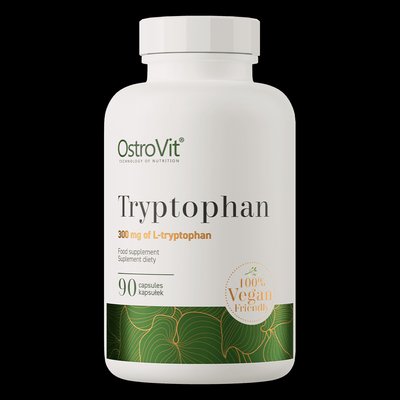 OstroVit Tryptophan VEGE€8.90 In stock 90caps, and OstroVit Tryptophan 200g for a powder option.
Browse the full range at maxfit.ee/en/category/truptofaan.
Summary Table
| Consideration | Detail |
|---|---|
| Common side effects | Drowsiness, nausea, dizziness |
| Typical supplemental range | 1–3 g/day (usually before bed) |
| Critical interactions | SSRIs, SNRIs, MAOIs, tramadol, 5-HTP |
| Who should be cautious | Antidepressant users, liver disease, pregnancy |
| Best timing | Before bed (for sleep support) |
FAQ
Does tryptophan help with sleep?
Controlled studies have found that tryptophan supplementation can reduce the time it takes to fall asleep and improve sleep quality in people with mild insomnia (Hartmann, 1982). The mechanism is its conversion to serotonin and then melatonin, the sleep-regulating hormone. Effects are most pronounced in people who are mildly deficient or under high stress.
Is L-tryptophan the same as 5-HTP?
No. 5-HTP is one metabolic step closer to serotonin than tryptophan. This means 5-HTP has a more direct and potent effect on serotonin levels per milligram. Both carry the serotonin syndrome risk when combined with serotonergic medications, and combining them with each other is also inadvisable without medical oversight.
Can tryptophan be taken long term?
Long-term supplementation of tryptophan in the ranges studied (1–3 g/day) has not been associated with major safety signals in healthy adults in published trials. However, because long-term data are limited, discussing continuous use with a healthcare provider is sensible.
References
Hartmann, E. (1982). Effects of L-tryptophan on sleepiness and on sleep. Journal of Psychiatric Research, 17(2), 107–113. https://pubmed.ncbi.nlm.nih.gov/6764927/
Myers, R. D., Wooten, M. H., III. (1996). Tryptophan and serotonin in thermoregulation and behavior. In: Psychopharmacology of serotonin. Cited from: Stone, T. W., Darlington, L. G. (2002). Endogenous kynurenines as targets for drug discovery and development. Nature Reviews Drug Discovery, 1(8), 609–620.
Wurtman, R. J., Wurtman, J. J., Regan, M. M., McDermott, J. M., Tsay, R. H., Breu, J. J. (2003). Effects of normal meals rich in carbohydrates or proteins on plasma tryptophan and tyrosine ratios. American Journal of Clinical Nutrition, 77(1), 128–132. https://pubmed.ncbi.nlm.nih.gov/12499331/



