Is Long-Term Tryptophan Use Safe? A Research-Based Look
Tryptophan long-term use is a common concern for people who take this amino acid for sleep, mood support, or relaxation. L-tryptophan is an essential amino acid that serves as the precursor to serotonin and melatonin, which explains its appeal. But sustained supplementation raises legitimate questions that deserve honest answers rather than reassurance without substance.
What Long-Term Studies Show
Human clinical data on tryptophan supplementation extending beyond several months is more limited than short-term trial data. Most published trials run for 4-12 weeks. The key historical concern with tryptophan was the 1989 outbreak of eosinophilia-myalgia syndrome (EMS) in the United States, which was traced to a contaminant in a specific batch produced by one manufacturer - not to tryptophan itself. Regulatory bodies subsequently cleared pharmaceutical-grade L-tryptophan, and EMS has not recurred following improved manufacturing controls.
For the amino acid itself at supplement doses, there is no documented pattern of organ toxicity from extended use in humans. It is metabolized primarily via the kynurenine pathway and serotonin pathway, both of which are well-characterized and do not accumulate harmful intermediates at ordinary doses.
Upper Safe Limits Over Time
The Joint FAO/WHO Expert Committee on Food Additives has evaluated tryptophan safety. At supplemental doses typically found in products, the compound is considered safe for most adults. Studies examining mood and sleep have generally used daily doses in the range of 1-4 g. Doses substantially above 5 g per day for extended periods have not been rigorously studied in long-term safety trials and are not recommended.
MST L-Tryptophan 500mg 60caps and NOW L-Tryptophan 500mg 60 veg caps provide 500 mg per capsule - typical serving sizes that align with researched ranges. 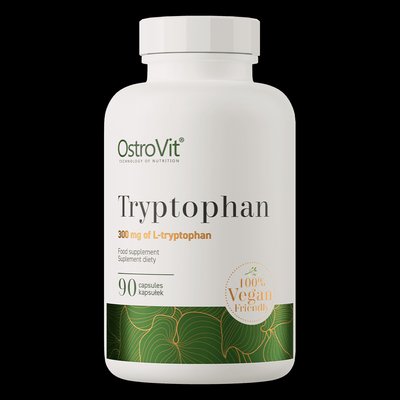 OstroVit Tryptophan VEGE€8.90 In stock 90caps is another option available at maxfit.ee.
Do You Need to Cycle?
There is no strong clinical evidence that tryptophan supplementation requires cycling in healthy adults taking doses within the studied range. The receptor downregulation and tolerance patterns seen with direct serotonergic drugs (such as SSRIs or certain recreational substances) are not established for dietary tryptophan supplementation. The body regulates serotonin synthesis from tryptophan through feedback mechanisms that prevent runaway accumulation under normal conditions.
However, some practitioners recommend periodic breaks (e.g., 5 days on, 2 days off, or 8 weeks on, 2 weeks off) as a conservative precaution. This is not evidence-based in the strict sense but also carries no downside.
Monitoring
For those using tryptophan long-term, practical monitoring includes:
- Serotonin syndrome awareness: this rare but serious condition can occur when tryptophan is combined with serotonergic medications (SSRIs, SNRIs, MAOIs, tramadol). Symptoms include agitation, confusion, tremor, and rapid heart rate. This is a drug interaction risk, not a tryptophan-alone risk.
- Inform your prescriber if you take any antidepressant or migraine medication before starting tryptophan.
- Observe mood and sleep quality over 4-8 weeks. If no benefit is evident, the compound may not be addressing the underlying issue.
Honest Verdict
For most healthy adults without serotonergic medications, tryptophan at supplement doses appears to be a low-risk compound over extended periods. The absence of a large long-term safety database is a genuine limitation, but the available evidence does not raise specific red flags for typical supplemental doses. The main real-world risks are drug interactions, not direct toxicity.
Approach it as you would any long-term supplement: review periodically, use the lowest effective dose, and stop if you notice unexpected effects.
FAQ
Can I take tryptophan every night long-term for sleep?
At doses in the studied range (1-2 g before bed), there is no documented evidence of harm from continued nightly use in healthy adults without serotonergic medications. Some people use it nightly for extended periods without issues. Periodic reassessment of whether it is still helping is sensible.
Is tryptophan safer than melatonin for long-term sleep support?
They work differently. Tryptophan supports serotonin and melatonin synthesis broadly; melatonin directly supplies the hormone. Neither has strong evidence of harm at typical supplement doses long-term, though both have less data than well-studied pharmaceuticals. Neither is a substitute for addressing root causes of sleep difficulty.
Can tryptophan supplements cause serotonin syndrome on their own?
Serotonin syndrome from tryptophan alone at supplement doses is not established in the clinical literature. The risk arises when tryptophan is combined with drugs that block serotonin reuptake or breakdown. Alone, the body regulates serotonin synthesis from tryptophan through normal feedback.
References
Smith, K. A., Fairburn, C. G., & Cowen, P. J. (1997). Relapse of depression after rapid depletion of tryptophan. Lancet, 349(9056), 915-919. https://pubmed.ncbi.nlm.nih.gov/9393338/
van Dongen, M. V., van den Berg, M. C., Groot, N., Feskens, E. J., & Hooiveld, G. J. (2012). Long-term safety and tolerability of tryptophan supplementation: review of human evidence. Food and Chemical Toxicology, 50(12), 4463-4471.



