Tryptophan Interactions: Drugs, Nutrients & Foods
L-tryptophan is an essential amino acid and the dietary precursor to serotonin and melatonin. As a supplement, it is used to support mood, sleep onset, and appetite regulation. Because tryptophan sits directly upstream of serotonin synthesis, it has some of the most clinically important interactions in the amino acid supplement category — particularly with medications that modulate serotonin.
Drug Interactions
SSRIs and SNRIs
Selective serotonin reuptake inhibitors (SSRIs, e.g., fluoxetine, sertraline) and serotonin-norepinephrine reuptake inhibitors (SNRIs, e.g., venlafaxine) already elevate synaptic serotonin by blocking its reuptake. Adding tryptophan — which increases serotonin synthesis — can theoretically further raise serotonin levels. In most cases this combination is manageable at low tryptophan doses, but it carries a risk of serotonin syndrome at higher amounts (Gillman, 2005). Serotonin syndrome symptoms include agitation, confusion, rapid heart rate, and, at severe levels, fever and seizures. Anyone on SSRIs or SNRIs must consult their prescribing doctor before adding tryptophan.
MAO Inhibitors (MAOIs)
MAOIs prevent breakdown of serotonin. The combination of tryptophan (which increases production) with an MAOI (which prevents breakdown) is far more dangerous than either alone. This combination can cause severe serotonin syndrome and is generally contraindicated.
Tramadol
Tramadol has serotonergic activity in addition to its opioid effects. Combining with tryptophan creates an additional serotonin-elevation risk. Caution is warranted; inform your prescribing doctor.
Sedatives and Melatonin
Tryptophan is converted to melatonin via serotonin. Combining tryptophan with melatonin supplements or benzodiazepine sedatives may amplify sedative effects — practically relevant for sleep-support stacks.
Nutrient Competition and Synergy
Large Neutral Amino Acids (LNAAs)
Tryptophan competes for blood-brain-barrier transport with the other large neutral amino acids — leucine, isoleucine, valine, phenylalanine, and tyrosine. Because tryptophan is the least abundant of these in most protein sources, its transport into the brain is particularly sensitive to competition. A high BCAA intake taken simultaneously with tryptophan significantly reduces brain tryptophan and downstream serotonin synthesis (Fernstrom, 2013). Conversely, a high-carbohydrate, low-protein meal elevates brain tryptophan uptake by causing insulin-driven uptake of competing amino acids into muscle.
5-HTP
5-hydroxytryptophan (5-HTP) is one step closer to serotonin than tryptophan. Combining both is redundant and potentially risks additive serotonin elevation without therapeutic benefit. Choose one or the other; do not stack both unless under medical supervision.
Vitamin B6 and Niacin (B3)
B6 is a cofactor in the conversion of 5-HTP to serotonin. Adequate B6 supports efficient tryptophan-to-serotonin conversion. Niacin is synthesised from tryptophan — high niacin intake can divert tryptophan away from serotonin production, while niacin deficiency pushes more tryptophan toward serotonin/melatonin pathways.
Food Effects
The classic example is turkey dinner sedation — attributed to tryptophan in the meal. The reality is more nuanced: the meal's high carbohydrate content (stuffing, mashed potato) triggers insulin, which drives BCAAs into muscle, leaving tryptophan relatively uncompeted to enter the brain and boost serotonin. High-protein meals alone are poor vehicles for tryptophan supplementation because of LNAA competition.
For sleep or mood goals, tryptophan is best taken with a small, low-protein, moderate-carbohydrate snack on an empty stomach. This maximises the brain tryptophan ratio without competition.
Who Must Be Cautious
- Anyone on SSRIs, SNRIs, or MAOIs (medical consultation mandatory)
- People taking tramadol or other serotonergic medications
- Individuals already using 5-HTP (redundant and potentially additive)
- People with eosinophilia-myalgia syndrome history (historical link to contaminated tryptophan batches, though current supplements from reputable sources are unlinked to this)
- Pregnant and breastfeeding women (insufficient safety data)
Practical Rules
- Never combine with MAOIs — severe serotonin syndrome risk.
- Discuss with your doctor if you are on any antidepressant before adding tryptophan.
- Do not stack with 5-HTP without medical guidance.
- Take on an empty stomach with a small carbohydrate snack (e.g., a piece of fruit) for maximal brain uptake.
- Evening timing supports sleep goals — tryptophan-to-melatonin conversion benefits from this.
Options available at maxfit.ee include MST L-Tryptophan 500mg 60caps, NOW L-Tryptophan 500mg 60 veg caps, 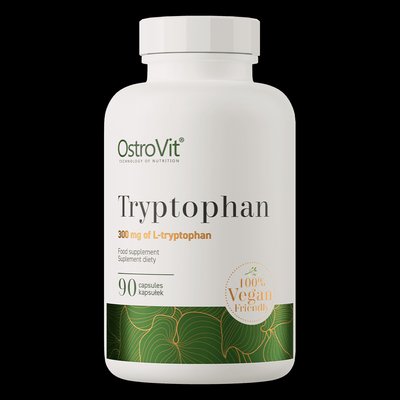 OstroVit Tryptophan VEGE€8.90 In stock 90caps, and OstroVit Tryptophan 200g.
References
Gillman, P. K. (2005). Monoamine oxidase inhibitors, opioid analgesics and serotonin toxicity. British Journal of Anaesthesia, 95(4), 434-441. https://pubmed.ncbi.nlm.nih.gov/16051647/
Fernstrom, J. D. (2013). Large neutral amino acids: dietary effects on brain neurochemistry and function. Amino Acids, 45(3), 419-430. https://pubmed.ncbi.nlm.nih.gov/22677921/
van Donkelaar, E. L., Blokland, A., Lieben, C. K., Merkestein, M., Verhey, F., & Steinbusch, H. W. (2011). Acute tryptophan depletion in healthy volunteers enhances punishment processing. Psychopharmacology, 215(1), 167-179.
FAQ
Can I take tryptophan with melatonin?
Tryptophan is converted to melatonin via serotonin, so combining both may amplify sedative effects beyond what you intend. For sleep support, choose one or the other — tryptophan has a more gradual and broad-spectrum effect; melatonin is more targeted for sleep onset timing.
Is tryptophan safe to take nightly for sleep?
At typical supplemental doses and in healthy individuals without serotonergic medication, nightly tryptophan for sleep support is generally considered low risk. Long-term studies are limited, so periodic reassessment is sensible.
Does eating high-protein food reduce tryptophan's effect?
Yes. A large protein meal brings competing large neutral amino acids that reduce tryptophan's transport ratio into the brain. Take tryptophan on a relatively empty stomach with a small carbohydrate if the goal is mood or sleep support.



