Why Women May Need More Tryptophan
Tryptophan for women is a topic worth examining carefully because the biology at play is genuinely different from men. L-tryptophan is an essential amino acid — the body cannot synthesise it and must obtain it from diet. Once absorbed, it can be routed toward several destinations: serotonin production (via 5-HTP), NAD+ synthesis (via the kynurenine pathway), or protein construction.
The key sex difference is that women have a faster rate of tryptophan metabolism along the kynurenine pathway compared to men. This means, all else equal, less dietary tryptophan is available for serotonin synthesis in women. Serotonin is involved in mood regulation, appetite, sleep architecture, and pain processing — domains where women statistically experience a higher burden of dysregulation (depression, anxiety, insomnia, migraines).
Combine this metabolic asymmetry with the reality that women tend to consume fewer total calories and therefore fewer grams of total protein (and tryptophan) than men, and the rationale for paying attention to tryptophan intake becomes clear.
Hormonal and Life-Stage Notes
Estrogen directly influences tryptophan metabolism. Estrogen upregulates certain enzymes in the kynurenine pathway, diverting more tryptophan away from serotonin. This means the serotonin synthesis competition is most acute during the luteal phase of the menstrual cycle (when estrogen and progesterone peak) and during perimenopause and menopause, when estrogen fluctuates significantly.
Research has found that women with premenstrual syndrome show altered serotonin signalling compared to controls, and that tryptophan supplementation had a positive effect on mood and irritability during the premenstrual period in a double-blind placebo-controlled trial (Steinberg et al., 1999). This is not a cure and the evidence base is modest — but the mechanistic rationale is plausible.
During perimenopause, when serotonin-estrogen interactions shift substantially, attention to dietary tryptophan and serotonin precursors may support mood stability alongside other evidence-based approaches.
Dose Considerations
For adults, research doses of L-tryptophan in studies examining sleep and mood typically fall between 1 gram and 3 grams per day, often taken in the evening due to tryptophan's role in melatonin production (serotonin is a precursor to melatonin).
A common practical approach is to start with 500 mg to 1 gram taken one to two hours before bed. A lower-carbohydrate, protein-sparse snack can be taken with tryptophan to favour its uptake into the brain — a small carbohydrate intake triggers insulin, which clears competing large neutral amino acids from plasma, favouring tryptophan transport across the blood-brain barrier.
Products such as MST L-Tryptophan 500mg 60caps, NOW L-Tryptophan 500mg 60 veg caps, 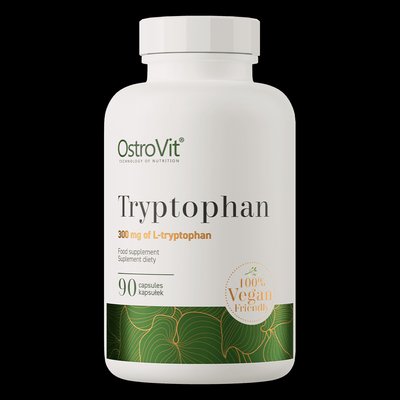 OstroVit Tryptophan VEGE€8.90 In stock 90caps, and OstroVit Tryptophan 200g are available at maxfit.ee/et/category/truptofaan.
Pregnancy and Safety Notes
L-tryptophan supplementation is generally not recommended during pregnancy without medical guidance. The kynurenine pathway metabolites produced during tryptophan catabolism have complex biological roles in immune tolerance and placental function. While dietary tryptophan from food is normal and necessary, high-dose supplementation during pregnancy introduces variables that lack adequate safety data. Breastfeeding women should similarly consult a healthcare provider before supplementing.
Outside of pregnancy, L-tryptophan at typical supplement doses is considered safe for most healthy women. The main drug interaction to be aware of is with serotonergic medications (SSRIs, SNRIs, MAO inhibitors, tramadol) — combining tryptophan supplements with these drugs significantly increases the risk of serotonin syndrome and should be avoided unless under close medical supervision.
Bottom Line
Tryptophan is an underappreciated area of women's nutrition. The faster kynurenine metabolism in women, the hormonal influence on tryptophan routing, and the lower typical intake of total tryptophan from diet all make it a reasonable focus for women who experience cyclical mood shifts, disrupted sleep around hormonal transitions, or who follow calorie-restricted or plant-based diets with lower protein variety.
Available at maxfit.ee, tryptophan supplements offer a targeted, evidence-informed approach to supporting serotonin precursor status.
FAQ
Can tryptophan help with PMS symptoms?
Preliminary evidence from a double-blind trial suggests tryptophan supplementation may reduce irritability and mood-related symptoms in the premenstrual phase (Steinberg et al., 1999). The evidence is not robust enough to recommend it as a primary treatment, but the mechanism is biologically plausible and side effects at typical doses are minimal.
Is tryptophan the same as 5-HTP?
No. Tryptophan is the dietary amino acid that can be converted to 5-HTP (5-hydroxytryptophan), which is then converted to serotonin. 5-HTP is one step further along the pathway and crosses the blood-brain barrier more readily. Both can support serotonin, but they differ in their pharmacokinetics, dose ranges, and interaction profiles.
Can I take tryptophan if I am on antidepressants?
No — not without medical supervision. Combining L-tryptophan with SSRIs, SNRIs, or MAO inhibitors can increase the risk of serotonin syndrome, a potentially serious condition. Always consult your prescribing doctor before adding any serotonergic supplement.
References
Steinberg, S., Annable, L., Young, S. N., & Liyanage, N. (1999). A placebo-controlled clinical trial of L-tryptophan in premenstrual dysphoria. Biological Psychiatry, 45(3), 313-320. https://pubmed.ncbi.nlm.nih.gov/10023508/



