Tryptophan: Why This Amino Acid Matters
Tryptophan is an essential amino acid the body cannot produce on its own — it must come from food. It is the precursor to serotonin, melatonin, and niacin (vitamin B3). Adequate tryptophan intake is associated with sleep quality, mood stability, and nerve function. Natural food sources of tryptophan are widely accessible and sufficient for most people.
Top Food Sources
The table below shows the approximate tryptophan content per 100 g of food:
| Food | Approximate Tryptophan Content |
|---|---|
| Pumpkin seeds | High |
| Chicken breast (cooked) | High |
| Canned tuna | High |
| Cottage cheese | Moderate to high |
| Hen's egg | Moderate |
| Milk | Moderate |
| Legumes (lentils, beans) | Moderate |
| Oats | Moderate |
Animal protein sources generally contain higher tryptophan concentrations than plant sources.
Bioavailability: Food vs Supplement
Bioavailability depends on several factors. Tryptophan from food competes with other large neutral amino acids (LNAAs) to cross the blood-brain barrier. Consuming tryptophan alongside a carbohydrate-rich meal favours its uptake into the brain, because the resulting insulin release lowers the plasma concentrations of competing amino acids (Fernstrom & Wurtman, 1972). Isolated tryptophan supplements are absorbed faster, but food-derived tryptophan provides a steadier supply for most people.
Daily Targets from Diet
The adult requirement is approximately 4–5 mg per kg of body weight per day (Young & Wurtman, 2003). For most people following a mixed diet, this target is met through food alone. Vegans and vegetarians with narrowly plant-based diets may be closer to the lower end.
Cooking and Storage Effects
Tryptophan is relatively heat-stable. Standard cooking and baking do not destroy it significantly. However:
- Prolonged high-heat cooking reduces overall protein bioavailability.
- Fermented dairy products (e.g. yoghurt) may present tryptophan in slightly different molecular forms.
- Fresh whole foods retain tryptophan better than long-stored processed products.
When Food Is Not Enough
A tryptophan supplement may be worth considering in specific situations:
- High stress or sleep difficulties — tryptophan is the direct precursor to serotonin and melatonin.
- Severely restricted calorie intake — during a diet phase when total protein is low.
- Vegetarians and vegans whose diets are limited in high-tryptophan foods.
At maxfit.ee you will find MST L-Tryptophan 500mg 60caps, NOW L-Tryptophan 500mg 60 veg caps, 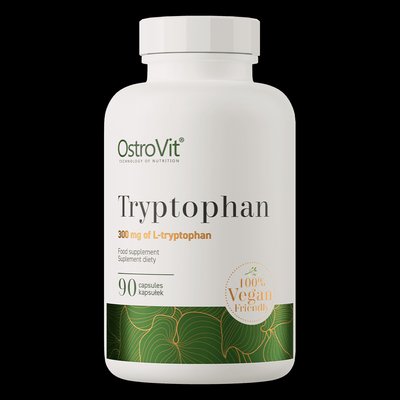 OstroVit Tryptophan VEGE€8.90 In stock 90caps, and OstroVit Tryptophan 200g — all suitable for supplementing dietary intake.
Browse the full tryptophan category at maxfit.ee.
Summary
For most people, natural tryptophan food sources — poultry, eggs, dairy, legumes — are sufficient to meet daily requirements. A supplement is worth considering when diet is restricted or sleep disturbances and high stress are present.
FAQ
Is turkey really the best tryptophan source?
Turkey does contain tryptophan, but it is not unique — chicken, tuna, cottage cheese, and pumpkin seeds also provide meaningful amounts.
Does eating tryptophan-rich food improve sleep?
Tryptophan is melatonin's precursor, but the amount obtained from a single meal alone may not be sufficient for noticeable sleep improvement. Pairing it with carbohydrates before bed may help tryptophan reach the brain more effectively (Fernstrom & Wurtman, 1972).
Can you consume too much tryptophan?
Tryptophan from food presents no risk under normal dietary conditions. With supplements, stick to the recommended doses.
References
Fernstrom, J. D., & Wurtman, R. J. (1972). Brain serotonin content: physiological regulation by plasma neutral amino acids. Science, 178(4059), 414-416. https://pubmed.ncbi.nlm.nih.gov/5077329/
Young, S. N., & Wurtman, R. J. (2003). The effect of single meals of protein or carbohydrate on plasma tryptophan and tyrosine ratios. Canadian Journal of Physiology and Pharmacology, 81(3), 268-279.
Richard, D. M., Dawes, M. A., Mathias, C. W., Acheson, A., Hill-Kapturczak, N., & Dougherty, D. M. (2009). L-tryptophan: basic metabolic functions, behavioral research and therapeutic indications. International Journal of Tryptophan Research, 2, 45-60. https://pubmed.ncbi.nlm.nih.gov/20651948/



