Tryptophan Benefits: What Research Shows
L-tryptophan is an essential amino acid that the human body cannot synthesise and must obtain through diet or supplementation. Its significance in nutrition and neuroscience stems from its role as the sole dietary precursor to serotonin — the neurotransmitter involved in mood regulation, appetite, and sleep — and, downstream, melatonin, the primary sleep-regulating hormone. This guide reviews the tryptophan benefits that are supported by controlled research, areas of genuine promise, and where expectations should stay grounded.
Primary Evidenced Benefits
Sleep Quality and Onset
The most robust tryptophan benefit is its effect on sleep. Tryptophan → 5-HTP → serotonin → melatonin is a well-characterised biosynthetic pathway. A double-blind placebo-controlled trial found that tryptophan supplementation significantly reduced subjective sleep latency and improved sleep quality in adults with mild insomnia (Hartmann, 1982). The sleeping-onset effect appears most clearly in populations with suboptimal tryptophan status or chronic sleep disruption.
Tryptophan's conversion to melatonin is also influenced by light exposure — supplementation is most effective when taken in a low-light environment in the evening, supporting the body's natural circadian cues.
Mood and Serotonin Pathway Support
Because tryptophan is the rate-limiting precursor for serotonin synthesis, depleting tryptophan in experimental settings reliably induces transient low mood, particularly in individuals with a personal or family history of depression (Booij et al., 2003). While this does not mean supplementation is a mood treatment, it confirms tryptophan's mechanistic importance in mood regulation.
Dietary patterns that support adequate tryptophan intake are associated with lower odds of depressive symptoms in observational research, though causality is difficult to establish from diet studies alone.
Secondary and Emerging Effects
Appetite and Carbohydrate Cravings
Serotonin plays a role in appetite regulation, particularly carbohydrate appetite. Some controlled studies suggest tryptophan supplementation may modestly reduce carbohydrate-seeking behaviour. This effect is preliminary and small in magnitude.
Cognitive Resilience Under Stress
Similar to the tyrosine literature, there is exploratory evidence that tryptophan helps maintain emotional and cognitive composure under prolonged stress, plausibly via sustained serotonin availability. This requires further RCT confirmation.
Where Evidence Is Weak
- Muscle growth or recovery: Tryptophan is not established as an ergogenic supplement. Its conversion to muscle protein is negligible relative to leucine-rich proteins.
- Anxiety disorders: Preliminary serotonin-pathway rationale exists, but tryptophan is not an evidence-based treatment for anxiety.
- Athletic performance: No consistent data support tryptophan supplementation improving endurance, strength, or power output.
Who Gains Most
People most likely to experience tryptophan benefits are those with disrupted sleep cycles, shift workers, individuals with dietary patterns low in high-tryptophan foods (poultry, fish, eggs, dairy), and those navigating period of prolonged stress. People with normal sleep and adequate protein intake are less likely to notice subjective differences.
At maxfit.ee, tryptophan products include MST L-Tryptophan 500mg 60caps, NOW L-Tryptophan 500mg 60 veg caps, and 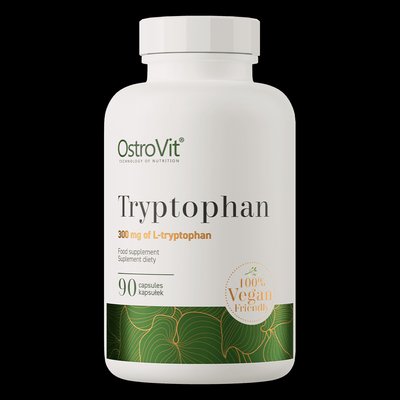 OstroVit Tryptophan VEGE€8.90 In stock 90caps — browse the full range at the tryptophan category.
Realistic Expectations
Tryptophan's primary strength as a supplement is in supporting sleep onset and quality. It is not a sedative and works through natural hormonal pathways. Effects on mood are real but indirect and depend on many cofactors. Do not expect tryptophan to replace clinical mood interventions or produce acute psychoactive effects. Its best use is as a sleep-stack complement, particularly when taken an hour before bed in dim light.
References
- Hartmann, E. (1982). Effects of L-tryptophan on sleepiness and on sleep. Journal of Psychiatric Research, 17(2), 107–113. https://pubmed.ncbi.nlm.nih.gov/6764927/
- Booij, L., Van der Does, A. J. W., & Riedel, W. J. (2003). Monoamine depletion in psychiatric and healthy populations: review. Molecular Psychiatry, 8(12), 951–973. https://pubmed.ncbi.nlm.nih.gov/14647394/
- Richard, D. M., Dawes, M. A., Mathias, C. W., Acheson, A., Hill-Kapturczak, N., & Dougherty, D. M. (2009). L-Tryptophan: basic metabolic functions, behavioral research and therapeutic indications. International Journal of Tryptophan Research, 2, 45–60. https://pubmed.ncbi.nlm.nih.gov/20651948/
FAQ
How is tryptophan different from melatonin?
Melatonin directly acts on melatonin receptors to signal sleep. Tryptophan is two enzymatic steps removed — it converts to 5-HTP, then serotonin, then melatonin. Tryptophan supplementation supports the upstream pathway; its effects are gentler and depend on adequate cofactors (vitamin B6, zinc, magnesium). For acute sleep rescue, melatonin acts faster. For longer-term sleep support through natural pathways, tryptophan may be preferable.
Can tryptophan be taken with 5-HTP?
Both work on the same pathway. Combining them is not standard practice and may increase serotonin production beyond what is needed. They are typically used as alternatives rather than together. If you consider combining them, consult a healthcare professional.
Does tryptophan cause daytime drowsiness?
At typical supplement doses taken at night, next-day drowsiness is unlikely for most people. Taking large doses during the day may cause mild sedation in sensitive individuals.



