How to Maximize Tryptophan Absorption
Tryptophan is the dietary precursor to serotonin and melatonin — neurotransmitters that regulate mood, sleep, and appetite. Unlike most amino acids, it is essential: the body cannot make it, so it must come from diet or supplements. Despite being found in many protein-rich foods, getting enough tryptophan to the brain is not straightforward, because the same transport system that carries tryptophan across the blood-brain barrier also serves several other large neutral amino acids. Understanding that competition is key to using tryptophan effectively.
What Limits Tryptophan Absorption
Competition at the blood-brain barrier
Tryptophan shares the large neutral amino acid transporter (LAT-1) at the blood-brain barrier with phenylalanine, leucine, isoleucine, valine, methionine, and tyrosine. This means that when these competitors are present in high concentrations in plasma — typically after consuming a high-protein meal — less tryptophan crosses into the brain, even if absolute plasma tryptophan levels are not low (Fernstrom & Wurtman, 1972).
This is the reason that a meal high in animal protein — though it contains tryptophan — does not necessarily raise brain tryptophan. The competing amino acids rise proportionally more, and the ratio of tryptophan to competitors actually falls.
Albumin binding
In the blood, most tryptophan is bound to albumin protein. Only the free, unbound fraction crosses the blood-brain barrier. Factors that compete with tryptophan for albumin binding sites — including non-esterified fatty acids — can affect how much free tryptophan is available.
Cofactors That Help
Converting tryptophan into serotonin requires:
- Vitamin B6 (pyridoxal-5-phosphate): a direct cofactor for the enzyme aromatic amino acid decarboxylase. Suboptimal B6 reduces conversion efficiency.
- Vitamin C: supports the conversion step from 5-hydroxytryptophan (5-HTP) to serotonin.
- Magnesium: broadly involved in enzymatic reactions in this pathway.
- Iron: needed for tryptophan hydroxylase, the first enzyme in the pathway.
For most people eating a balanced diet, these cofactors are not limiting. However, those with poor B6 status (common in people who eat little fish, poultry, or potatoes) or low magnesium may benefit from addressing these alongside tryptophan supplementation.
Form and Timing Effects
Free-form tryptophan vs 5-HTP
L-tryptophan and 5-HTP (5-hydroxytryptophan) take different routes. L-tryptophan is absorbed in the gut and must cross both the gut wall and the blood-brain barrier; it competes at both steps. 5-HTP, being one step closer to serotonin, bypasses the rate-limiting tryptophan hydroxylase step and crosses the blood-brain barrier via a different mechanism that is less subject to competition. Some practitioners prefer 5-HTP for this reason, but 5-HTP also cannot be stored and is metabolised quickly.
Timing relative to meals
The counterintuitive finding in tryptophan research is that a carbohydrate-rich meal without protein may actually raise brain tryptophan more than a protein-rich meal, even though the carbohydrate meal contains no tryptophan itself. The mechanism: insulin released after carbohydrate consumption drives competing branched-chain amino acids (BCAAs) into muscle tissue, reducing their plasma concentration and improving tryptophan's ratio relative to competitors (Fernstrom & Wurtman, 1972). Taking a tryptophan supplement with a carbohydrate-only snack — and away from high-protein foods — exploits this effect.
Food Pairings
- Carbohydrate-based snack at same time: helps clear competing amino acids from plasma via insulin.
- Avoid simultaneous high-protein foods: protein sources add competing large neutral amino acids.
- Warm milk: the folk belief that warm milk aids sleep is partly grounded in this mechanism — the lactose triggers mild insulin, though dairy also contains protein, creating a mixed picture.
Practical Tips
- Evening timing: Because tryptophan is the melatonin precursor, taking it in the evening — one to two hours before bed — aligns with the natural melatonin synthesis window.
- Pair with carbohydrates, not protein: a banana, some rice cakes, or a small portion of oats enhances delivery to the brain.
- Ensure B6 adequacy: if your diet is low in fish, poultry, or potatoes, consider checking or addressing B6 status.
- Do not combine with MAO inhibitors: tryptophan supplementation is contraindicated with MAO-inhibiting medications due to serotonin syndrome risk.
MST L-Tryptophan 500mg 60caps, NOW L-Tryptophan 500mg 60 veg caps, and 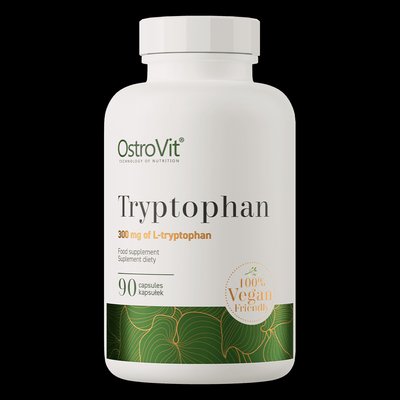 OstroVit Tryptophan VEGE€8.90 In stock 90caps are available at maxfit.ee, covering both capsule formats for flexible evening use.
FAQ
Is tryptophan better than melatonin for sleep?
They work differently. Melatonin directly signals the circadian system and is well supported for circadian rhythm disruption (e.g. jet lag). Tryptophan works upstream — it provides the precursor the body uses to make both serotonin and melatonin, so its effect is indirect and depends on multiple conversion steps. Tryptophan may be preferable if the goal is also mood support; melatonin is more direct for timing-based sleep issues.
How long does tryptophan take to work for sleep?
Effects on sleep typically require consistent use over several days to weeks, as the pathway builds serotonin stores. Single-dose effects are subtler than immediate-release melatonin. Consistency and correct timing are more important than dose size.
Can I take tryptophan every day?
L-tryptophan has a reasonable safety profile at supplemental doses. However, it should not be taken alongside serotoninergic medications without physician guidance. Long-term daily supplementation in healthy individuals is generally considered low risk, but individuals on antidepressants, antipsychotics, or migraine medications (triptans) should consult a healthcare provider first.
References
Fernstrom, J. D., & Wurtman, R. J. (1972). Brain serotonin content: physiological regulation by plasma neutral amino acids. Science, 178(4059), 414-416. https://pubmed.ncbi.nlm.nih.gov/5077329/
Shabbir, F., Patel, A., Mattison, C., Bose, S., Krishnamohan, R., Sweeney, E., Sandhu, S., Nel, W., Rais, A., Sandhu, R., Bhatt, N., & Sugaparker, H. (2013). Effect of diet on serotonergic neurotransmission in depression. Neurochemistry International, 62(3), 324-329. https://pubmed.ncbi.nlm.nih.gov/23306210/



