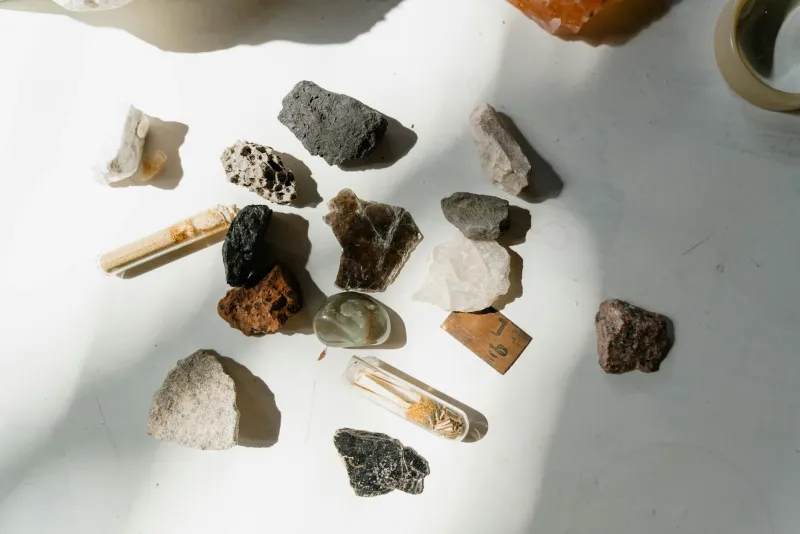
What Are Trace Minerals?
Trace minerals — or trace elements — are minerals the body requires in quantities below 100 milligrams per day, often in just micrograms. This distinguishes them from macrominerals like calcium, magnesium, and sodium, which are needed in hundreds to thousands of milligrams daily.
Despite their tiny required amounts, trace minerals are biologically indispensable. They function as enzyme cofactors, cellular signalling molecules, and building blocks for hormones and structural proteins. Small dose, enormous impact.
The Essential Trace Minerals
The World Health Organization classifies trace minerals into two categories:
Definitively essential: Iron (Fe), zinc (Zn), iodine (I), selenium (Se), copper (Cu), manganese (Mn), fluoride (F), chromium (Cr), molybdenum (Mo), cobalt (Co)
Probably beneficial: Boron (B), silicon (Si), vanadium (V), nickel (Ni)
Quick-Reference Functions Table
| Mineral | Primary Role | Deficiency Effect |
|---|---|---|
| Iron | Haemoglobin, oxygen transport | Anaemia, fatigue |
| Zinc | Immunity, 300+ enzymes | Infections, slow healing |
| Iodine | Thyroid hormones | Goitre, hypothyroidism |
| Selenium | GPx antioxidant, thyroid | Thyroid disease, weak immunity |
| Copper | Energy, collagen, iron | Anaemia, neuropathy |
| Manganese | Bones, energy, MnSOD | Weak bones, fatigue |
| Chromium | Insulin sensitivity | Blood sugar instability |
| Boron | Vitamin D, testosterone | Weaker bones, lower testosterone |
| Molybdenum | Enzyme cofactor | Very rare deficiency |
Who Is Most at Risk of Deficiency?
Vegetarians and Vegans
- Iron (only non-haem iron, which absorbs poorly)
- Zinc (phytates in plant foods reduce absorption)
- Iodine (no dairy or seafood)
- Selenium (depends on soil content of plant foods)
Intense Athletes
- Iron (footstrike haemolysis, sweat losses)
- Zinc (higher sweat losses and turnover)
- Selenium (higher oxidative stress demand)
- Manganese (bone and cartilage maintenance)
Older Adults
- Absorption efficiency declines for most trace minerals with age
- Chromium, zinc, selenium all tend to fall in elderly populations
Residents of Selenium-Poor Soils
- Estonia's soil is selenium-poor, making dietary selenium intake unreliable without seafood or supplementation
Getting Enough From Diet: A Practical Roadmap
The best strategy is dietary variety:
- 1–2 Brazil nuts per day → selenium (a single nut covers the RDA)
- Seafood 2–3 times per week → iodine, selenium, zinc, iron
- Red meat 1–2 times per week → iron, zinc, copper
- Whole grains daily → manganese, chromium, molybdenum
- Nuts and seeds → zinc, copper, manganese, boron
- Legumes → iron, zinc, manganese, molybdenum
- Iodised salt → iodine
When Supplementation Makes Sense
Supplementation is rational when:
- Diet is restricted — highly selective eating, eating disorder, very low-calorie diet
- Deficiency is confirmed — by blood tests with your doctor
- Needs are elevated — pregnancy, breastfeeding, intense sport
- Absorption is impaired — digestive conditions, acid-suppressing medications
Multiminerals vs. Standalone Supplements
For covering multiple trace minerals at once, multi-mineral complexes are often the most practical approach. However:
- Specific deficiencies (e.g., severe iron deficiency) need targeted higher doses
- Mineral competition (zinc vs. copper, calcium vs. iron) means not every mineral can be optimally included in a single tablet — balance is key
At maxfit.ee, BIOTECHUSA Multi Mineral Complex 100tab provides broad trace mineral coverage in a single daily tablet. For targeted needs, OstroVit Selenium Selenomethionine 220 tabs, OstroVit Iodine Potassium Iodide 200mcg 120 Tablets, MST Zinc Picolinate 100tabs, and OstroVit Boron 120caps each provide targeted, high-bioavailability options. SELF Multivitamin 120caps also offers a comprehensive vitamin and mineral spectrum.
The Risk of Too Much
Trace mineral toxicity at supplemental doses is generally low — but some elements have narrow safety windows:
| Mineral | Excess Risk |
|---|---|
| Selenium | Selenosis (nail brittleness, hair loss) |
| Iron | Liver damage (especially with haemochromatosis) |
| Manganese | Neurotoxicity (mostly from industrial exposure) |
| Zinc | Copper deficiency, nausea |
Bottom line: do not exceed stated upper limits, and check total intake across all supplements you take.
FAQ
Does a multivitamin cover all trace minerals?
Most multivitamins cover the major trace minerals but not always in optimal amounts. Selenium, zinc, and iodine are typically included; boron, iron, and copper vary widely. Always check the label.
Are trace mineral deficiencies easy to detect through blood tests?
Sometimes. Iron, zinc, and selenium can be measured reliably. Some trace minerals are harder to assess — tissue levels often lag behind serum levels. The best approach combines dietary assessment with targeted blood markers.
Do organic foods contain more trace minerals?
Partially — organic produce theoretically comes from more mineral-rich soil, but evidence for consistently higher trace mineral levels is mixed. Regional soil mineral content varies more than farming method.
Identifying Trace Mineral Gaps: When to Consider Supplementing
Trace mineral deficiencies often present as non-specific symptoms: persistent fatigue, impaired immune defence, slow wound healing, brittle hair and nails. Because these overlap with many conditions, trace mineral shortfalls are frequently overlooked by both individuals and healthcare providers.
Some targeted warning signs:
- Frequent colds → consider zinc (WHO recognises zinc's role in immune function)
- Fatigue combined with hair loss → thyroid dysfunction may signal iodine or selenium insufficiency
- Poor wound healing → copper deficiency affects collagen synthesis
- Muscle cramps and declining athletic performance → consider magnesium, zinc, and manganese together
Blood testing for specific trace minerals is available and worthwhile if symptoms persist. Ferritin (iron), serum zinc, and selenium levels are relatively low-cost panels. Copper and manganese testing is less routine but accessible through specialist labs.
At maxfit.ee, BIOTECHUSA Multi Mineral Complex 100tab provides a solid broad-spectrum mineral base, while individual options including OstroVit Selenium Selenomethionine 220 tabs, OstroVit Iodine Potassium Iodide 200mcg 120 Tablets, and MST Zinc Picolinate 100tabs allow targeted supplementation when specific gaps are identified.
References
- World Health Organization. (2001). Iron Deficiency Anaemia: Assessment, Prevention and Control. WHO Press.
- Aggett, P. J. (2012). Trace elements. In Present Knowledge in Nutrition (10th ed.). ILSI Press.
- Trumbo, P., Yates, A. A., Schlicker, S., & Poos, M. (2001). Dietary reference intakes: vitamin A, vitamin K, arsenic, boron, chromium, copper, iodine, iron, manganese, molybdenum, nickel, silicon, vanadium, and zinc. Journal of the American Dietetic Association, 101(3), 294–301.
- Rayman, M. P. (2008). Food-chain selenium and human health: emphasis on intake. British Journal of Nutrition, 100(2), 254–268.



