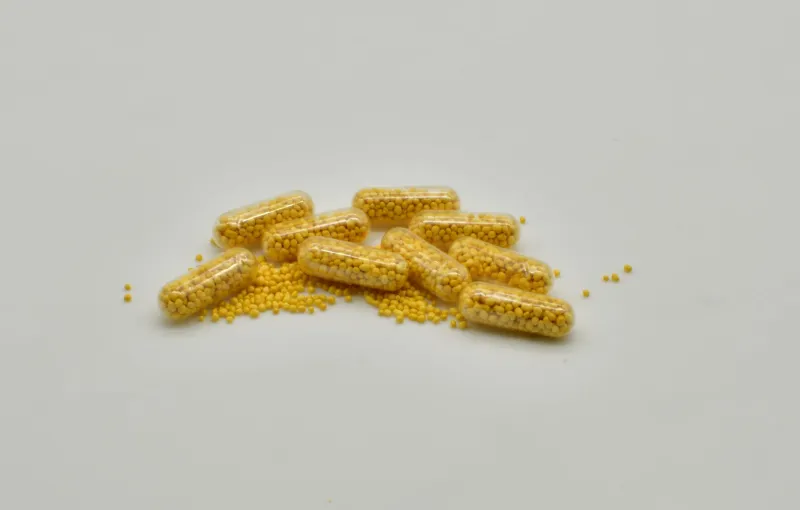
Thiamine (Vitamin B1): Why Energy Metabolism Depends on It
Thiamine — vitamin B1 — was among the first vitamins ever discovered. Despite being well-known by name, it remains widely under-appreciated in the supplement world. It is a critical cofactor for enzymes that convert carbohydrates, amino acids, and fatty acids into ATP (cellular energy). Without adequate thiamine, your cells simply cannot produce energy efficiently.
Core Functions in the Body
Thiamine, as thiamine pyrophosphate (TPP), is a cofactor for three major enzyme complexes:
- Pyruvate dehydrogenase — converts pyruvate to acetyl-CoA, the gateway to the citric acid cycle
- Alpha-ketoglutarate dehydrogenase — key citric acid cycle step
- Transketolase — pentose phosphate pathway enzyme needed for nucleic acid and fatty acid synthesis
For nerve function, thiamine is equally essential: it maintains myelin sheaths, supports nerve conduction velocity, and participates in the synthesis of acetylcholine and GABA (Lonsdale, 2006).
Who Is at Risk of Thiamine Deficiency?
In developed countries, deficiency is more common than textbooks suggest:
- Chronic alcohol use (blocks intestinal absorption and increases urinary excretion)
- High refined carbohydrate diets (increases thiamine demand while providing little)
- Diuretic medications (flush B vitamins)
- Bariatric surgery patients
- Diabetes (elevated renal clearance)
- High-intensity athletes (higher metabolic demand)
Severe deficiency causes beriberi (wet or dry), Wernicke's encephalopathy, or Korsakoff syndrome.
Supplement Forms Compared
| Form | Bioavailability | Notes |
|---|---|---|
| Thiamine HCl | Standard | Lowest cost, most common |
| Thiamine mononitrate | Similar to HCl | Better stability for fortification |
| Benfotiamine | Higher (fat-soluble derivative) | Better for neuropathy and diabetes |
| TTFD (allithiamine) | Very high | Best blood-brain barrier penetration |
Benfotiamine has shown particularly promising results for diabetic peripheral neuropathy and cognitive protection (Pan et al., 2010).
BIOTECHUSA B-Complex 60tab delivers thiamine alongside the full B-vitamin spectrum in a single daily dose.
ICONFIT Capsules B-Vitamin Complex N90 is a well-formulated complex available at maxfit.ee, popular among Estonian athletes.
Thiamine Requirements for Athletes
Intense exercise sharply increases carbohydrate metabolism — and with it, thiamine demand. Research suggests endurance and strength athletes may need up to 50% more thiamine than sedentary individuals (van der Beek et al., 1994). Insufficient B1 during hard training phases may manifest as:
- Greater-than-expected fatigue
- Muscle cramping
- Decreased power output and concentration
Early Deficiency Symptoms
Early thiamine deficiency symptoms are vague and easily missed:
- General fatigue and apathy
- Irritability
- Poor appetite
- Dizziness
- Muscle weakness, particularly in legs
The most accurate diagnostic test is erythrocyte transketolase activity — not routinely ordered but available through specialist labs.
Dosing Recommendations
EFSA adequate intake is 1.1–1.2 mg/day for adults. Athletes and those at risk may benefit from 5–50 mg/day. No upper tolerable intake has been set, as thiamine is water-soluble and excess is excreted harmlessly in urine (EFSA, 2016).
Best Food Sources
- Pork and liver (richest sources)
- Whole grains and wheat germ
- Sunflower seeds
- Legumes (peas, beans, lentils)
- Nutritional yeast
Browse the vitamin complex range at maxfit.ee for comprehensive B-vitamin stacks.
FAQ
Does thiamine directly boost energy?
Thiamine is a metabolic enabler, not a stimulant. It will dramatically restore energy in deficient individuals, but supplementing beyond adequate intake does not provide a direct energising effect in replete, healthy people.
What is benfotiamine and when should I choose it?
Benfotiamine is a fat-soluble thiamine derivative with significantly higher bioavailability. Research supports its use for diabetic peripheral neuropathy, advanced glycation end-product (AGE) damage, and potentially for Alzheimer's-related cognitive decline.
Does alcohol deplete thiamine?
Yes, profoundly. Alcohol impairs intestinal thiamine absorption, increases urinary excretion, and damages the liver's ability to convert thiamine to its active form. Heavy drinkers are at serious risk of Wernicke's encephalopathy — a neurological emergency.
References
- Lonsdale, D. (2006). A review of the biochemistry, metabolism and clinical benefits of thiamin(e) and its derivatives. Evidence-Based Complementary and Alternative Medicine, 3(1), 49–59.
- Pan, X., et al. (2010). Powerful beneficial effects of benfotiamine on cognitive impairment. Brain, 133(5), 1342–1351.
- van der Beek, E. J., et al. (1994). Thiamin, riboflavin, and vitamins B6 and C. American Journal of Clinical Nutrition, 48(6), 1451–1462.
- Bettendorff, L., & Wins, P. (2013). Thiamine triphosphate and thiamine triphosphatase activities. Cellular and Molecular Life Sciences, 70, 597–609.
- EFSA Panel on Dietetic Products (2016). Scientific opinion on dietary reference values for thiamine. EFSA Journal, 14(12), 4653.



