Testosterone Boosters for Energy and Fatigue: What Does the Science Say?
Testosterone boosters are among the most searched supplements for men dealing with low energy and persistent fatigue. The marketing promises are bold: more drive, faster recovery, sharper focus. But do testosterone boosters actually deliver on energy and fatigue, or is this mostly wishful thinking?
This guide cuts through the noise and looks at what peer-reviewed research tells us about the link between testosterone, energy metabolism, and fatigue.
Testosterone's Role in Energy Metabolism
Testosterone is not a direct fuel source, but it influences several processes that determine how energetic you feel day to day. It modulates red blood cell production, which affects oxygen delivery to muscles and the brain. It also plays a role in mitochondrial function and the regulation of mood and motivation through androgen receptors in the central nervous system.
When testosterone levels fall significantly below normal ranges, many men report increased fatigue, reduced motivation, and a general sense of low energy. This connection is well established in clinical literature. What is less clear is whether supplements that claim to raise testosterone within the normal range meaningfully improve these outcomes in healthy men who are not clinically deficient.
Evidence in Fatigue: What the Trials Show
Several ingredients found in commercial testosterone boosters have been studied individually. The most researched include D-aspartic acid (DAA), ashwagandha, fenugreek, and zinc.
Ashwagandha (Withania somnifera) has produced the most consistent results. One randomised controlled trial found that ashwagandha supplementation was associated with improvements in perceived energy and reduced fatigue scores in healthy adults (Choudhary et al., 2017). The mechanism appears to involve modulation of the hypothalamic-pituitary-adrenal axis and a reduction in cortisol, rather than a direct and dramatic increase in testosterone itself.
Zinc is essential for testosterone synthesis, and genuine zinc deficiency can suppress production. In populations with confirmed deficiency, correcting zinc status has been associated with improvements in testosterone levels (Prasad et al., 2005). However, supplementing zinc above adequate levels in people who are not deficient does not reliably raise testosterone further.
D-aspartic acid shows more mixed results. Some short-term trials in men with lower baseline testosterone saw modest increases, while trials in men with normal levels showed little effect. The evidence for sustained fatigue reduction from DAA alone is thin.
Who Is Likely to Respond?
The honest answer is that the men most likely to notice a real benefit from testosterone booster supplements are those who already have suboptimal status in one of the underlying factors: zinc deficiency, chronic high stress with elevated cortisol, poor sleep, or borderline-low testosterone due to lifestyle factors.
For men in this group, a supplement containing ashwagandha and zinc may genuinely help restore energy levels, not necessarily by dramatically pushing testosterone above normal, but by addressing the bottlenecks that are suppressing it.
Men with clinically confirmed hypogonadism should work with a doctor rather than relying on over-the-counter supplements. And healthy young men with normal testosterone levels are unlikely to experience significant energy gains from these products.
What Ingredients to Look For and at What Dose
If you decide to try a testosterone booster for energy and fatigue, prioritise products with transparent labels and evidence-backed ingredients:
- Ashwagandha (KSM-66 or Sensoril extract): studied at doses in the range of 300 to 600 mg of root extract daily
- Zinc: adequate intake matters more than high doses; product labels will specify per-serving amounts
- Magnesium: often depleted in athletes and associated with fatigue; well-paired with zinc in ZMA-style formulas
At maxfit.ee you can find dedicated testosterone support products such as MST Testo Boost Professional 90caps, MST Dominator Test 90caps, and 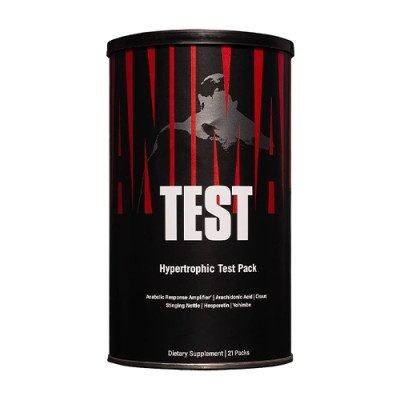 Universal Animal Test€97.90 In stock, which combine multiple evidence-informed ingredients in one formula. OstroVit D.A.A 3000mg 90caps and Mutant TEST 90 caps are also available for those who want targeted single-ingredient or stacked approaches.
Realistic Expectations
Testosterone boosters are not anabolic steroids. They will not produce dramatic changes in muscle mass, strength, or energy in healthy men with normal hormone levels. The realistic best-case scenario is a modest improvement in energy, mood, and exercise recovery, particularly for men who have identifiable lifestyle or nutritional factors suppressing their natural testosterone.
Give any supplement at least four to eight weeks of consistent use before evaluating results. Track how you sleep, your perceived energy on a simple 1-10 scale, and training performance. If nothing has shifted after two months, the product likely is not the right lever for your situation.
The bigger drivers of energy and testosterone are almost always sleep quality, resistance training, body composition, and managing chronic stress. Supplements can support these foundations but rarely replace them.
FAQ
Do testosterone boosters actually increase testosterone levels?
Some ingredients, particularly ashwagandha and zinc in deficient individuals, are associated with modest improvements in testosterone markers in certain populations. However, the effect in healthy men with normal levels is generally small and may not translate into perceptible energy changes.
How long does it take for a testosterone booster to affect energy?
Most trials that show positive results run for four to twelve weeks. It is reasonable to allow at least six weeks of consistent use before drawing conclusions.
Are testosterone boosters safe?
Ingredients like ashwagandha, zinc, and magnesium are generally well-tolerated at label-recommended doses. Always choose products with transparent labelling and avoid formulas with excessively long undisclosed proprietary blends.
References
Choudhary, D., Bhattacharyya, S., & Joshi, K. (2017). Body weight management in adults under chronic stress through treatment with ashwagandha root extract. Journal of Evidence-Based Integrative Medicine, 22(1), 96-106. https://pubmed.ncbi.nlm.nih.gov/27055824/
Prasad, A. S., Mantzoros, C. S., Beck, F. W., Hess, J. W., & Brewer, G. J. (2005). Zinc status and serum testosterone levels of healthy adults. Nutrition, 12(5), 344-348.
Wankhede, S., Langade, D., Joshi, K., Sinha, S. R., & Bhattacharyya, S. (2015). Examining the effect of Withania somnifera supplementation on muscle strength and recovery: a randomized controlled trial. Journal of the International Society of Sports Nutrition, 12, 43. https://pubmed.ncbi.nlm.nih.gov/26609282/



