
When to Take Spirulina: Optimal Timing
Spirulina is a blue-green microalgae that has been studied for its nutritional profile and antioxidant activity. It is rich in protein, B vitamins, iron, and phycocyanin – the pigment that gives it its deep green-blue colour and accounts for much of its antioxidant activity. Because spirulina is a whole-food supplement rather than an isolated compound, its timing is more flexible than something like iron or creatine, but there are still practical considerations worth knowing.
With or Without Food?
Spirulina can be taken with or without food. However, most people tolerate it better when taken with or shortly before a meal:
- Taken on an empty stomach, spirulina may cause mild nausea, particularly in those new to it or using higher amounts.
- Taken with food, the taste (which some find strong or algae-like) is easier to manage, and any mild digestive discomfort is reduced.
If you use spirulina powder, blending it into a smoothie or mixing it into juice alongside breakfast is the most common practical approach. For tablets or capsules such as OstroVit Spiruline 250g, OstroVit Spiruline 90tabs, or 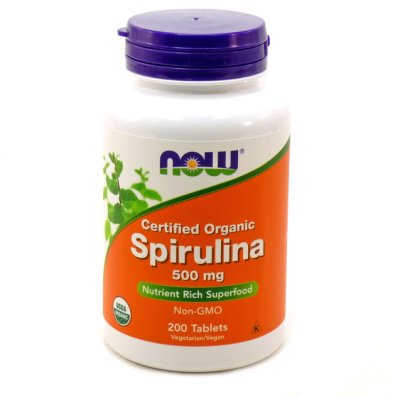 NOW Organic Spirulina€15.90 In stock 500mg 200tabs available at maxfit.ee, a glass of water with a light meal works well.
Time of Day and Training
Morning: spirulina's iron and B-vitamin content may support energy metabolism throughout the day, and many users find that a morning dose with breakfast fits naturally into their routine. Spirulina contains no caffeine, so it does not interfere with evening routines if you prefer a later time.
Pre-workout: some research has examined spirulina's effect on exercise performance. One randomised crossover trial found that spirulina supplementation was associated with a significant reduction in exercise-induced oxidative damage markers compared to placebo (Kalafati et al., 2010). Taking spirulina before training, about 30–60 minutes before exercise, aligns with this rationale, though results vary between individuals.
Any consistent time: because spirulina is a food-based supplement that delivers cumulative nutritional benefit rather than an acute pharmacological effect, the most important factor is taking it consistently each day.
Split Doses vs Single Dose
Most spirulina research has used single daily doses. Amounts used in studies have generally ranged from around 2 g to 7.5 g per day.
If you use a larger daily amount or are sensitive to the taste, splitting into two doses – one at breakfast and one at lunch – is a practical option. There is no strong evidence that splitting the dose changes the nutritional outcome; it is mainly a comfort and compliance consideration.
Interactions Affecting Timing
Iron and blood-thinning medications: spirulina contains non-haem iron. While this is generally beneficial for people with low iron status, those on anticoagulant medications (such as warfarin) should be aware that spirulina's vitamin K content may influence clotting factors. If you take anticoagulants, consult your doctor before using spirulina regularly.
Immunosuppressants: spirulina has shown immunostimulating activity in some studies. People taking immunosuppressant medications should discuss use with their physician.
Heavy metal considerations: spirulina quality and sourcing matter significantly. Contaminated batches have been associated with heavy metal load. Choose certified products from reputable manufacturers. Products like NOW Organic Spirulina 500mg 200tabs undergo third-party quality testing.
Phenylalanine: spirulina contains the amino acid phenylalanine. Individuals with phenylketonuria (PKU) should avoid spirulina.
Thyroid medication: spirulina contains iodine in small amounts. This is not generally a concern, but if you have a thyroid condition and carefully manage iodine intake, be aware of the total iodine contribution from spirulina.
Practical Schedule
| Time | Action |
|---|---|
| Breakfast | Main spirulina dose (powder in smoothie, or tablets with water and food) |
| Pre-workout (optional) | Second dose or full dose 30–60 min before training |
| Evening | Fine if preferred, though morning is a more common choice for energy-aligned use |
Start with a smaller amount in the first week to assess taste and digestive tolerance before reaching your full target.
FAQ
Is spirulina better taken in the morning or at night?
Most people take spirulina in the morning with breakfast because its nutritional content (iron, B vitamins, protein) maps naturally to daytime energy support. Evening use is also fine – spirulina contains no stimulants. Choose whichever time you can take consistently.
Can I mix spirulina with other supplements?
Yes. Spirulina combines well with vitamin C (which may enhance iron absorption from its plant-iron content), and it pairs well with smoothies containing fruit. Avoid mixing with hot liquids, as heat may degrade some heat-sensitive nutrients.
How long does it take to notice effects from spirulina?
Spirulina delivers gradual nutritional support rather than acute effects. Most people who report noticing changes in energy or recovery describe a timeframe of two to four weeks of daily use. This is consistent with the cumulative nature of nutritional repletion.
References
Kalafati, M., Jamurtas, A. Z., Nikolaidis, M. G., Paschalis, V., Theodorou, A. A., Sakellariou, G. K., Koutedakis, Y., & Kouretas, D. (2010). Ergogenic and antioxidant effects of spirulina supplementation in humans. Medicine and Science in Sports and Exercise, 42(1), 142–151. https://pubmed.ncbi.nlm.nih.gov/20010119/
Parikh, P., Mani, U., & Iyer, U. (2001). Role of Spirulina in the control of glycemia and lipidemia in type 2 diabetes mellitus. Journal of Medicinal Food, 4(4), 193–199. https://pubmed.ncbi.nlm.nih.gov/12639401/
Misbahuddin, M., Islam, A. Z., Khandker, S., Ifthaker-Al-Mahmud, Al Islam, N., & Anjumanara. (2006). Efficacy of spirulina extract plus zinc in patients of chronic arsenic poisoning: a randomized placebo-controlled study. Clinical Toxicology, 44(2), 135–141. https://pubmed.ncbi.nlm.nih.gov/16615668/



