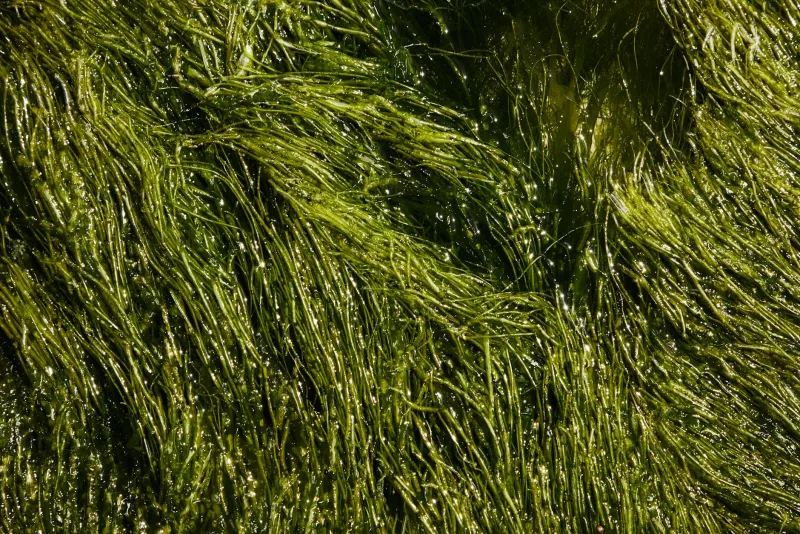
What Is Spirulina?
Spirulina (primarily Arthrospira platensis and Arthrospira maxima) is a blue-green microalgae consumed as food since Aztec times. NASA has even studied it as an ideal food source for long-duration space missions due to its extraordinary nutrient density.
Spirulina composition per 100 g dry weight:
- Protein: 60–70 g (higher than most plant proteins)
- Iron: ~28 mg (twice the amount in spinach)
- Vitamin B12: ~14–32 µg (though bioavailability is debated)
- Vitamins C, E and K
- Carotenoids: beta-carotene, zeaxanthin
- Phycocyanobilin (C-phycocyanin) — a unique antioxidant pigment
Phycocyanobilin: Spirulina's Secret
C-phycocyanin or phycocyanobilin is spirulina's blue pigment and one of its most unique compounds. It is a potent anti-inflammatory agent that inhibits NADPH oxidase — an enzyme that generates oxidative stress — and suppresses the NF-κB pathway, similarly to many pharmaceutical anti-inflammatory agents (McCarty, 2007).
Clinically Supported Benefits
Immune System
Spirulina enhances NK (natural killer) cell activity and stimulates interferon-γ production. A clinical study showed it reduced the duration and severity of respiratory tract infections (Ruitang et al., 2001).
Allergy Relief
A randomised controlled trial found that 2 g of spirulina per day significantly reduced allergic rhinitis symptoms — nasal itching, sneezing and congestion improved markedly versus placebo (Cingi et al., 2008).
Lipid Profile
Multiple studies have shown that spirulina reduces triglycerides and LDL cholesterol while increasing HDL cholesterol (Parikh et al., 2001).
Athletic Performance
Spirlina has been studied in endurance contexts. One trial found that 6 g per day improved performance in runners, reduced muscle damage markers and increased fat oxidation (Kalafati et al., 2010).
Spirulina Products in Estonia
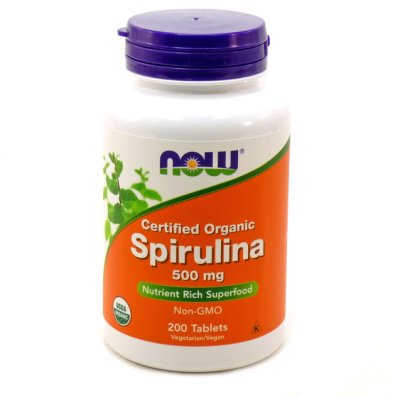 NOW Organic Spirulina€15.90 In stock 500mg 200tabs provides organically certified spirulina from a verified source. MST Spirulina 90 Tabs offers a convenient daily tablet format. OstroVit Spiruline 250g provides economical powder to blend into smoothies. All available at maxfit.ee.
Plant Protein Comparison
| Source | Protein (%) | Amino Acid Profile |
|---|---|---|
| Spirulina | 60–70% | Near-complete, high lysine |
| Pea | 25–30% | Complete, low methionine |
| Soy | 35–40% | Complete |
| Oats | 15–17% | Incomplete |
Spirlina is frequently used to supplement protein intake for vegans and vegetarians, but it does not replace complete whole food protein sources on its own at typical serving sizes.
Dosage
Typical doses:
- Basic maintenance: 1–3 g per day
- Athletic performance studies: 4–8 g per day
- Allergy studies: 2 g per day
Start at 1 g/day and increase gradually, as spirulina may initially cause mild digestive discomfort in some users.
Safety and Precautions
- Heavy metal contamination — always purchase certified products (GMP, verified source) from reputable manufacturers
- Phenylketonuria (PKU) — spirulina contains phenylalanine
- Anticoagulants — spirulina contains vitamin K, which may affect INR levels
- Autoimmune conditions — spirulina stimulates immune activity; consult a physician
References
- McCarty, M. F. (2007). Clinical potential of spirulina as a source of phycocyanobilin. Journal of Medicinal Food, 10(4), 566–570.
- Ruitang, D., et al. (2001). The effect of polysaccharides from spirulina on the immune function. Journal of Chinese Marine Drugs, 20(4), 32–35.
- Cingi, C., et al. (2008). The effects of spirulina on allergic rhinitis. European Archives of Oto-Rhino-Laryngology, 265(10), 1219–1223.
- Parikh, P., Mani, U., & Iyer, U. (2001). Role of spirulina in the control of glycemia and lipidemia in type 2 diabetes mellitus. Journal of Medicinal Food, 4(4), 193–199.
- Kalafati, M., et al. (2010). Ergogenic and antioxidant effects of spirulina supplementation in humans. Medicine & Science in Sports & Exercise, 42(1), 142–151.
FAQ
Is spirulina a good protein source for vegans?
Yes, spirulina is among the highest-protein-density plant-based supplements available. However, it is typically consumed in small amounts (1–5 g/day), so its contribution to total protein intake is modest — it supplements rather than replaces core protein sources.
Does spirulina contain true vitamin B12?
Spirluna contains B12-analogue compounds (pseudo-B12) that are not as biologically active as animal-derived B12 in the human body. Vegans should not rely on spirulina as their sole B12 source — genuine methylcobalamin or cyanocobalamin supplementation is necessary.
What does spirulina taste like?
Spirluna has a characteristic "algae" or seaweed flavour that many find unusual at first. The powder blends well into smoothies with strongly flavoured fruits or juice to mask the taste.



