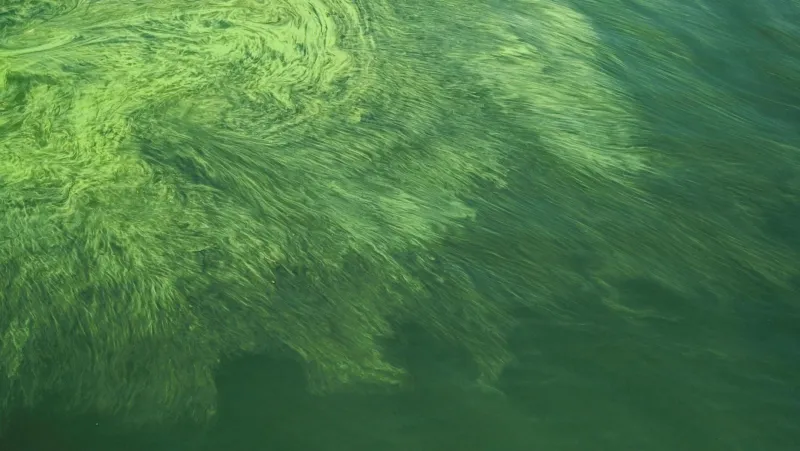
What to Stack with Spirulina: Synergies and Conflicts
Spirulina is a blue-green microalgae packed with protein, B vitamins, iron, antioxidants, and the pigment phycocyanin. It has attracted research interest for its anti-inflammatory and antioxidant properties, as well as its potential role in lipid metabolism and exercise performance. For vegans and vegetarians especially, spirulina is a practical concentrated source of several otherwise hard-to-get nutrients.
But spirulina stacking — combining it thoughtfully with other supplements — can significantly expand what you get from it.
What Spirulina Brings to a Stack
Before building a stack, it helps to understand what spirulina already provides:
- High protein content (approximately 60–70% by dry weight), though the total amount per daily dose is modest compared to a protein supplement
- Iron in the form of non-haem iron
- B vitamins (B1, B2, B3), though not meaningful amounts of B12 in bioactive form
- Phycocyanin and other antioxidant pigments
- Gamma-linolenic acid (GLA), a plant-sourced omega-6 fatty acid
This profile shapes which stacking combinations make sense.
Evidence-Based Synergies
Spirulina + Vitamin C
This is one of the most important pairings. Spirulina contains non-haem iron, which has lower bioavailability than haem iron from animal sources. Vitamin C (ascorbic acid) significantly enhances non-haem iron absorption when consumed together (Lynch & Cook, 1980). For vegans relying on spirulina as an iron source, taking it with a vitamin C-rich food or supplement at the same time maximises iron uptake.
Spirulina + Chlorella
These two algae are complementary rather than redundant. Chlorella has a higher chlorophyll content and is known for its ability to bind heavy metals in the gut, potentially supporting detoxification. Spirulina's phycocyanin adds anti-inflammatory and antioxidant properties. Together they are often marketed as a "greens blend" with broader micronutrient coverage. Research on combined algae products is limited but the safety of combining both at typical doses is well established.
Spirulina + Omega-3 (EPA/DHA)
Spirulina provides GLA, an omega-6 fatty acid, but does not provide significant EPA or DHA. Combining spirulina with a fish or algae-based omega-3 supplement creates a more complete fatty acid profile for anti-inflammatory support and cardiovascular health. The combination has no known antagonism and completes each other's profile.
Spirulina + Antioxidant Stack
Phycocyanin and other antioxidants in spirulina may complement vitamin C, vitamin E, and other antioxidant compounds. A 2010 study found that spirulina supplementation in exercise contexts was associated with reduced exercise-induced oxidative stress (Lu et al., 2006). Combining with other antioxidant-rich compounds is consistent with this mechanism.
Antagonistic Combinations
Spirulina + Immunosuppressant Medications
Spirulina has immune-stimulating properties. In people taking immunosuppressant drugs (e.g., for autoimmune conditions or post-transplant), stimulating the immune system may counteract treatment. This is a medical interaction, not a supplement pairing issue — anyone on immunosuppressants should consult their physician before adding spirulina.
Spirulina + Anticoagulant Medications
Spirulina may have mild antiplatelet effects. Combining with anticoagulant or antiplatelet medications may theoretically potentiate effects. Again, this is a clinical concern for people on relevant medications.
For healthy adults without medication interactions, spirulina is well tolerated and has no known supplement-level conflicts.
Timing Within a Stack
| Supplement | Optimal Timing with Spirulina |
|---|---|
| Vitamin C | Same time; crucial for iron absorption |
| Chlorella | Same time or different; no conflict |
| Omega-3 | Any time with food |
| Iron supplement | Avoid taking together; each provides iron and may exceed needs |
| Protein shake | Can be blended into the same shake |
OstroVit Spiruline 250g and 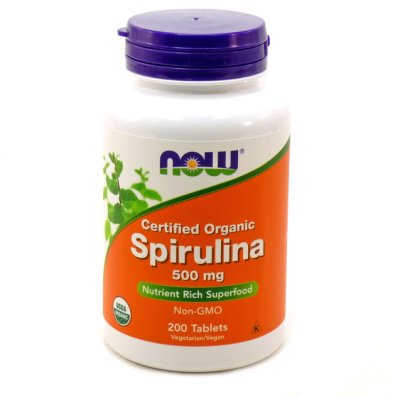 NOW Organic Spirulina€15.90 In stock 500mg 200tabs are available at maxfit.ee.
Sample Stacks by Goal
Vegan Micronutrient and Iron Support
- Spirulina (3–5 g/day)
- Vitamin C (250–500 mg with spirulina)
- Vitamin B12 (separate supplement — spirulina's B12 is largely inactive)
Antioxidant and Anti-Inflammatory Stack
- Spirulina (3 g/day)
- Omega-3 (1–2 g EPA+DHA)
- Vitamin C (250 mg with spirulina)
Green Detox and Metabolic Stack
- Spirulina (3 g)
- Chlorella (2–3 g)
- Vitamin C
What to Avoid
- Do not rely on spirulina as a primary B12 source — the form of B12 in spirulina is largely inactive in humans. Vegans should use a separate methylcobalamin or cyanocobalamin supplement.
- Avoid taking spirulina alongside iron supplements unless you have confirmed iron deficiency and are doing so under guidance — the combined iron intake may be excessive.
- Do not take if you have phenylketonuria (PKU) — spirulina contains phenylalanine.
Browse spirulina at maxfit.ee/et/category/spirulina.
FAQ
Can I blend spirulina with a protein shake?
Yes. Spirulina blends easily into smoothies and protein shakes. Adding vitamin C (from fruit or a supplement) in the same shake optimises the iron absorption benefit. The flavour of spirulina is strong — smaller amounts blend more palatably.
Does spirulina provide usable B12 for vegans?
No. While spirulina contains B12 analogues, research consistently shows these are largely inactive (pseudovitamin B12) and do not meet human B12 requirements. Vegans should use a dedicated B12 supplement (methylcobalamin or cyanocobalamin).
How long does it take to see effects from spirulina?
For subjective outcomes like energy and recovery, users typically report changes over 4–8 weeks of consistent use. For measurable changes in iron status when combined with vitamin C, effects on haemoglobin can be assessed after 8–12 weeks.
References
Lu, H. K., Hsieh, C. C., Hsu, J. J., Yang, Y. K., & Chou, H. N. (2006). Preventive effects of Spirulina platensis on skeletal muscle damage under exercise-induced oxidative stress. European Journal of Applied Physiology, 98(2), 220-226. https://pubmed.ncbi.nlm.nih.gov/16944194/
Lynch, S. R., & Cook, J. D. (1980). Interaction of vitamin C and iron. Annals of the New York Academy of Sciences, 355, 32-44. https://pubmed.ncbi.nlm.nih.gov/6940487/
Mathew, B., Sankaranarayanan, R., Nair, P. P., Varghese, C., Somanathan, T., Amma, B. P., Amma, N. S., & Nair, M. K. (1995). Evaluation of chemoprevention of oral cancer with Spirulina fusiformis. Nutrition and Cancer, 24(2), 197-202. https://pubmed.ncbi.nlm.nih.gov/8584455/



