Spirulina for Sleep and Stress: What the Evidence Shows
Spirulina is a blue-green microalgae (Arthrospira platensis) used for decades as a superfood for its dense micronutrient and protein content. More recently, people have started asking whether spirulina can also support sleep quality and stress reduction. The question is legitimate — but the honest answer is: the evidence is emerging and indirect rather than strong and specific.
Proposed Mechanism for Sleep and Stress
Spirulina contains several compounds that have theoretical relevance to stress and sleep:
- Phycocyanin: A blue pigment with documented antioxidant and anti-inflammatory properties. Chronic oxidative stress is associated with poor sleep quality and elevated cortisol.
- Tryptophan: Spirulina contains tryptophan, a precursor to serotonin and melatonin — both central to sleep regulation. However, the absolute amount of tryptophan in a typical serving is modest compared to protein-rich foods.
- Magnesium: Spirulina contains magnesium, a mineral with established links to muscle relaxation and sleep quality. The amount per serving is meaningful as a contribution but not sufficient as a sole magnesium source.
- B vitamins: B6 and B12 are involved in neurotransmitter synthesis. Spirulina is a meaningful source of B vitamins, including B12 in a form that has some (debated) bioavailability.
Collectively, these components suggest that spirulina may support the biochemical substrate for relaxation and sleep — but this is mechanistic reasoning, not proof of clinical effect.
RCT Evidence
Direct RCTs examining spirulina's effect on sleep outcomes or cortisol response in healthy adults are sparse. The available evidence comes from adjacent endpoints.
A randomized controlled trial in older adults found that spirulina supplementation was associated with improvements in fatigue and physical function scores compared to baseline (Selmi et al., 2011). Reduced fatigue does not equal improved sleep, but the two are correlated.
Another RCT found reductions in serum cholesterol oxidation products and inflammatory markers in subjects taking spirulina (Park et al., 2008). Lower systemic inflammation is associated with better sleep architecture in population studies — again, an indirect link.
No published RCT at the time of writing has used spirulina as a primary intervention specifically for sleep duration, sleep quality scores (such as PSQI), or salivary cortisol in a stress protocol. The claim that spirulina directly improves sleep or reduces cortisol remains unsubstantiated by direct human trial evidence.
OstroVit Spiruline 250g, 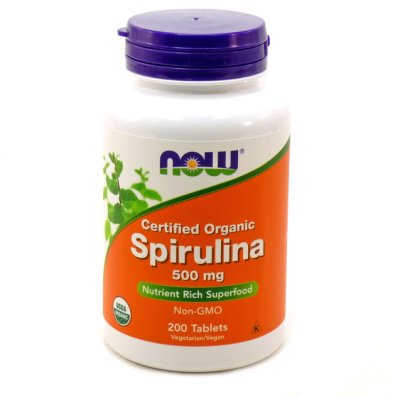 NOW Organic Spirulina€15.90 In stock 500mg 200tabs, and MST Spirulina 90tabs are available at maxfit.ee/et/category/spirulina.
Effective Dose and Timing
Trials showing antioxidant and anti-inflammatory effects used doses typically ranging from 1 g to 8 g per day. Powder forms allow flexible dosing. Capsule products at 500 mg per capsule are a practical entry point.
Spirulina has no sedative effect, so evening timing is not specifically indicated. It is often consumed in the morning as part of a general nutrition stack. If the intention is indirect sleep support via anti-inflammatory mechanisms, timing relative to sleep onset is probably not critical.
Who Benefits Most
Spirulina is most clearly beneficial for:
- Nutritional gap-filling: It is a genuine functional food with real micronutrient density (protein, B vitamins, iron, magnesium, antioxidants). For people with restricted diets, it may address multiple gaps simultaneously.
- Oxidative stress reduction: Those with high training loads producing elevated oxidative stress may benefit from its antioxidant components.
For specifically targeted sleep improvement, it is not the first-line choice. Magnesium, L-theanine, or melatonin each have more direct sleep-outcome trial evidence.
Honest Verdict
Spirulina is a nutritionally rich supplement with plausible indirect relevance to sleep and stress management — but direct clinical evidence for these outcomes is thin. It is excellent as a general micronutrient support tool. If sleep and stress are your primary concern, spirulina is best viewed as a complementary rather than a primary intervention, likely effective as part of a broader wellness routine that includes adequate sleep hygiene.
FAQ
Does spirulina help with anxiety?
Direct RCT data on anxiety as a primary outcome are lacking. The anti-inflammatory and antioxidant effects of spirulina may indirectly support mood regulation, but spirulina is not established as an anxiolytic.
How much spirulina should I take for sleep support?
There is no specific evidence-based dose for sleep. Studies showing general antioxidant benefits used 1–8 g daily. Starting with 1–3 g daily is a practical and safe approach.
Is spirulina better as powder or capsules for sleep and stress?
From an evidence standpoint, the form does not matter as long as the effective amount of spirulina is delivered. Powder allows more flexible dosing; capsules offer convenience.
References
Selmi, C., Leung, P. S., Fischer, L., German, B., Yang, C. Y., Kenny, T. P., Cysewski, G. R., & Gershwin, M. E. (2011). The effects of Spirulina on anemia and immune function in senior citizens. Cellular and Molecular Immunology, 8(3), 248-254. https://pubmed.ncbi.nlm.nih.gov/21278762/
Park, H. J., Lee, Y. J., Ryu, H. K., Kim, M. H., Chung, H. W., & Kim, W. Y. (2008). A randomized double-blind, placebo-controlled study to establish the effects of spirulina in elderly Koreans. Annals of Nutrition and Metabolism, 52(4), 322-328. https://pubmed.ncbi.nlm.nih.gov/18714150/



