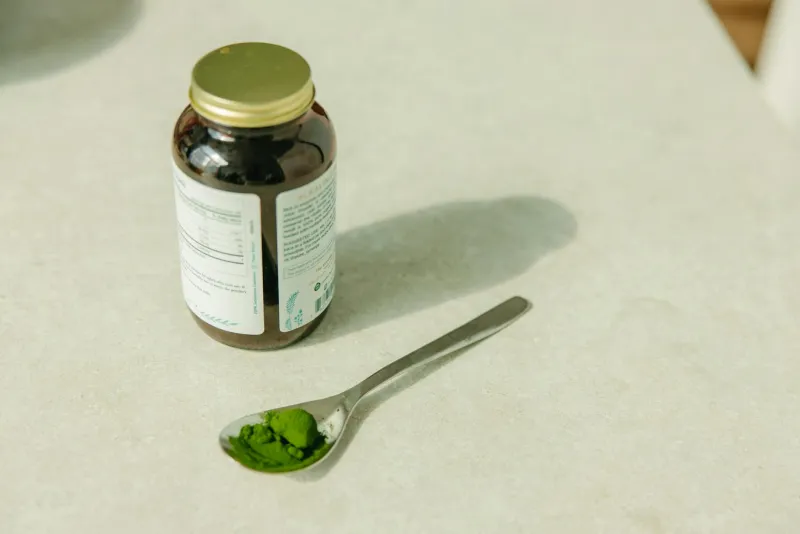
What Is Spirulina and Why Does Dosage Matter?
Spirulina is a blue-green microalgae prized for its dense nutritional profile — it provides protein, B vitamins, iron, and phycocyanin, a pigment with antioxidant properties. Because studies test specific dose ranges, picking the right spirulina dosage determines whether you see measurable results or none at all.
Studied Effective Dose Ranges
Most clinical research on spirulina falls in the range of 1–8 g per day, with the majority of positive outcomes seen at 2–4.5 g per day taken over 4–12 weeks.
A randomized controlled trial found that 4.5 g per day of spirulina supplementation improved lipid profiles in participants over 12 weeks (Mani et al., 2000). A later meta-analysis of multiple RCTs concluded that spirulina supplementation significantly reduced total cholesterol and triglycerides across studies using 1–8 g per day (Serban et al., 2016). For antioxidant support, a dose of 2 g per day showed measurable increases in antioxidant enzyme activity in a double-blind trial (Park et al., 2008).
Products available at maxfit.ee such as OstroVit Spiruline 250g, 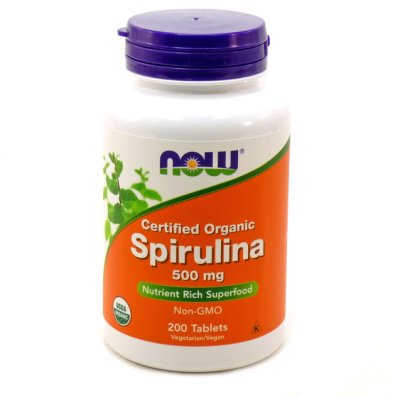 NOW Organic Spirulina€15.90 In stock 500mg 200tabs, and OstroVit Spiruline 90tabs make it easy to dial in these studied amounts.
Dose by Goal
| Goal | Suggested Daily Dose | Evidence Tier |
|---|---|---|
| General nutrition | 1–3 g | Moderate |
| Lipid management | 2–4.5 g | Stronger |
| Antioxidant support | 2–4 g | Moderate |
| Athletic endurance | 2–4 g | Preliminary |
Bodyweight does not play a major role in spirulina dosing in the published literature; doses are typically given as flat daily amounts regardless of body mass.
Upper Limits and Safety
Spirulina has a well-established safety record at doses used in research. Regulatory bodies note that the main safety concern is contamination — wild-harvested spirulina can be contaminated with other cyanobacteria or heavy metals. Choose products from reputable brands with third-party purity testing.
No formal tolerable upper intake level has been set for spirulina by EFSA, because it is classified as a food rather than a single isolated nutrient. Most clinical trials report good tolerability up to 8 g per day. Doses above this have not been well studied in humans. People on anticoagulant medication should consult a healthcare professional before supplementing, as spirulina contains vitamin K.
Timing and Form
Spirulina can be taken at any time of day. Many people prefer morning intake with a meal to minimize the mild gastrointestinal discomfort that can occur on an empty stomach. Splitting into two servings (morning and midday) may improve tolerability at higher doses.
Tablets and capsules offer the most precise dosing. Powder forms allow flexibility and can be blended into smoothies, but the strong taste can be off-putting. MST Spirulina 90tabs and OstroVit Spiruline VEGE 1000tabs are convenient tablet options available at maxfit.ee.
Practical Protocol
- Start low: Begin with 1–2 g per day for the first week to assess tolerance.
- Build up: Increase to your target dose (typically 2–4 g per day) over 1–2 weeks.
- Take with food: Pair with breakfast or lunch to reduce stomach discomfort.
- Be consistent: Benefits in clinical trials were seen after 4–12 weeks of daily use.
- Choose quality: Select products with transparent sourcing and purity certificates.
For most healthy adults seeking general antioxidant and nutritional support, 2–3 g per day is a practical starting point backed by available evidence.
FAQ
How long does it take for spirulina to work?
Most clinical studies measuring outcomes such as lipid changes or antioxidant markers ran for 4–12 weeks. Noticeable effects on energy or well-being are often reported within 2–4 weeks, but consistent daily intake is required.
Can I take spirulina every day?
Yes. The research supporting spirulina's effects is based on daily supplementation. There is no established reason to cycle on and off spirulina for general health purposes.
Is spirulina safe for vegetarians and vegans?
Yes. Spirulina is entirely plant-based (technically an algae) and provides iron and B vitamins that can be harder to obtain on fully plant-based diets. Choose a product labelled vegan to ensure no capsule contains gelatin.
References
Mani, U. V., Desai, S., & Iyer, U. (2000). Studies on the long-term effect of spirulina supplementation on serum lipid profile and glycated proteins in NIDDM patients. Journal of Nutraceuticals, Functional & Medical Foods, 2(3), 25–32.
Serban, M. C., Sahebkar, A., Dragan, S., Stoichescu-Hogea, G., Ursoniu, S., Andrica, F., & Banach, M. (2016). A systematic review and meta-analysis of the impact of Spirulina supplementation on plasma lipid concentrations. Clinical Nutrition, 35(4), 842–851. https://pubmed.ncbi.nlm.nih.gov/26433766/
Park, H. J., Lee, Y. J., Ryu, H. K., Kim, M. H., Chung, H. W., & Kim, W. Y. (2008). A randomized double-blind, placebo-controlled study to establish the effects of spirulina in elderly Koreans. Annals of Nutrition and Metabolism, 52(4), 322–328. https://pubmed.ncbi.nlm.nih.gov/18714150/



