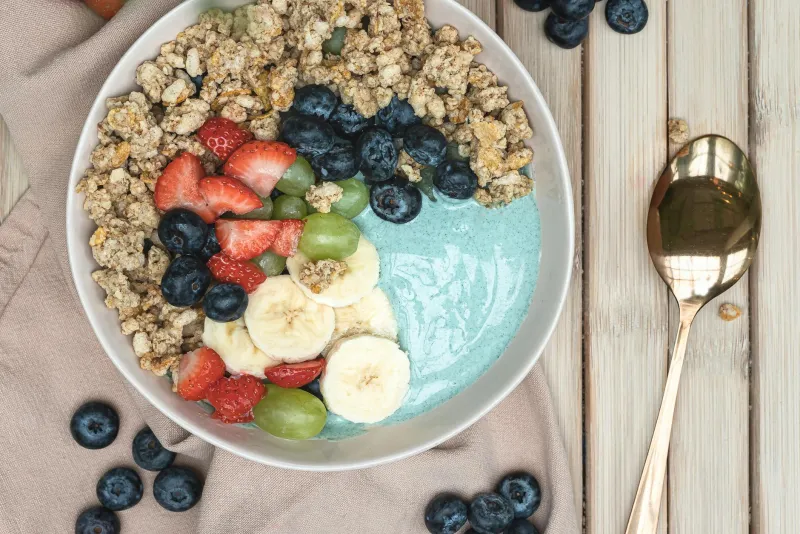
Spirulina Benefits: What the Evidence Actually Shows
Spirulina is a blue-green microalgae — technically a cyanobacterium — that has been consumed as food by indigenous populations for centuries and studied intensively as a nutritional supplement over the past few decades. Its remarkable nutrient density, including protein, phycocyanin, B vitamins, iron, and various antioxidants, makes it one of the more interesting whole-food supplements on the market. Here is an honest assessment of what the science shows about spirulina benefits.
Primary Evidenced Benefits
Antioxidant and Anti-inflammatory Activity
Spirulina's most consistent evidence base is in the area of oxidative stress. Its main active compound, phycocyanin, is a potent antioxidant that scavenges free radicals and inhibits lipid peroxidation. A randomised controlled trial in older adults found that spirulina supplementation significantly increased antioxidant enzyme activity and reduced markers of oxidative damage compared to placebo (Kulshreshtha et al., 2008).
These antioxidant effects are particularly relevant for athletes subject to exercise-induced oxidative stress, though translating antioxidant biomarker improvements into confirmed performance outcomes is not straightforward. OstroVit Spiruline 250g provides a convenient powder format for those preferring to blend spirulina into smoothies or shakes.
Lipid Profile Improvement
Multiple randomised trials and meta-analyses have found that spirulina supplementation is associated with reductions in total cholesterol, LDL cholesterol, and triglycerides, as well as modest increases in HDL cholesterol, in individuals with elevated baseline lipid levels (Serban et al., 2016). These effects, while not large in absolute terms, are statistically robust and clinically meaningful for those managing cardiovascular risk factors.
The proposed mechanisms include phycocyanin's inhibition of lipid peroxidation and the presence of gamma-linolenic acid (GLA), an anti-inflammatory fatty acid.
Blood Glucose Regulation
Some evidence suggests spirulina may improve insulin sensitivity and reduce fasting blood glucose in individuals with type 2 diabetes or pre-diabetic metabolic profiles. Trials have observed modest reductions in glycated haemoglobin (HbA1c), a marker of long-term blood glucose control. This is a promising but not yet definitive area — more high-quality trials are needed.
Secondary and Emerging Effects
Immune Modulation
Spirulina has demonstrated immunostimulatory properties in both laboratory and human studies. It appears to increase natural killer cell activity and stimulate production of antibodies and cytokines involved in immune defence. 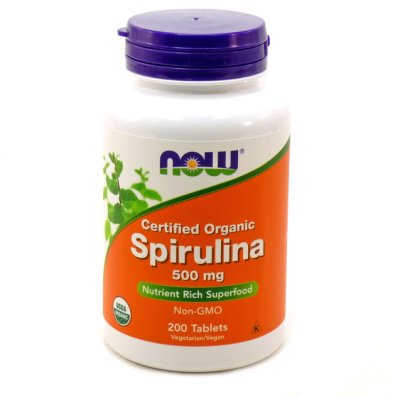 NOW Organic Spirulina€15.90 In stock 500mg 200tabs offers a standardised tablet form for consistent daily dosing.
However, the clinical significance of these immune effects — that is, whether they translate into fewer or shorter illnesses in healthy adults — has not been established through well-powered human trials.
Anaemia Prevention
Spirulina is a notable plant-based source of iron, and some trials in elderly individuals have observed improvements in haemoglobin levels with spirulina supplementation. For vegans and vegetarians, spirulina may help supplement dietary iron intake, though its iron is non-haem and absorption varies.
Exercise Performance
A small number of trials have investigated spirulina's potential ergogenic effects. Some have observed improvements in time to exhaustion and reductions in exercise-induced oxidative stress, but studies are typically small and heterogeneous. MST Spirulina 90tabs and OstroVit Spiruline 90tabs are practical capsule options for those interested in consistent daily supplementation.
Where Evidence Is Weak
Spirulina is often promoted as a detoxifier, weight loss aid, or comprehensive cancer-preventive. These claims go well beyond what the evidence supports.
On detoxification: spirulina does have some evidence for binding heavy metals like lead and arsenic in animal models, and small human studies have been conducted, but this is not established as a clinically meaningful human benefit.
On weight loss: spirulina is not a fat burner or appetite suppressant in any meaningful clinical sense. Some studies have noted modest reductions in body weight alongside lipid improvements, but these are likely indirect effects.
On cancer prevention: the in vitro (cell culture) evidence for anti-cancer properties of phycocyanin is interesting but should not be extrapolated to human cancer prevention claims. This is standard caution for many plant bioactives.
Who Gains Most
Based on current evidence, the populations most likely to experience meaningful spirulina benefits are:
- Individuals with elevated blood lipids: the lipid-lowering evidence is among the most consistent.
- Those with type 2 diabetes or pre-diabetes: modest blood glucose benefits have been observed in this group.
- Vegans and vegetarians: spirulina provides plant-based protein and iron in a concentrated form.
- Those experiencing oxidative stress: athletes, older adults, and smokers may benefit from spirulina's antioxidant activity.
Spirulina supplements are available at maxfit.ee in powder and tablet formats.
Realistic Expectations
Spirulina is a genuinely nutrient-dense supplement with real, if modest, effects on lipids, oxidative stress, and blood glucose in relevant populations. It is not a miracle food, will not detoxify the body dramatically, and will not replace medical management of lipid or blood glucose disorders. Think of it as a concentrated nutrition source and mild functional supplement rather than a therapeutic agent.
Typical supplementation periods in trials range from six weeks to several months. Effects develop gradually and are most meaningful as part of a broader healthy lifestyle.
References
Kulshreshtha, A., Sharma, A., Bhatt, Y., Malhotra, M., & Agrawal, S. (2008). Effect of spirulina supplementation on lipid profile and oxidative stress markers in elderly subjects. Food and Nutrition Sciences, 2008.
Serban, M. C., Sahebkar, A., Dragan, S., Stoichescu-Hogea, G., Ursoniu, S., Andrica, F., & Banach, M. (2016). A systematic review and meta-analysis of the impact of Spirulina supplementation on plasma lipid concentrations. Clinical Nutrition, 35(4), 842–851. https://pubmed.ncbi.nlm.nih.gov/26433766/
Deng, R., & Chow, T. J. (2010). Hypolipidemic, antioxidant, and antiinflammatory activities of microalgae Spirulina. Cardiovascular Therapeutics, 28(4), e33–e45. https://pubmed.ncbi.nlm.nih.gov/20633020/
FAQ
Does spirulina provide a meaningful amount of protein?
Spirulina is approximately 60–70% protein by dry weight and contains all essential amino acids, making it one of the more complete plant protein sources. However, practical serving sizes are typically small, so spirulina is best viewed as a nutritional complement rather than a primary protein source.
Is spirulina safe for daily long-term use?
Spirulina has a long history of safe use as a food. However, contaminated products (with heavy metals or harmful cyanobacterial toxins from poor-quality sources) can cause adverse effects. Choose reputable brands with third-party testing. Individuals with phenylketonuria (PKU) should avoid spirulina due to its phenylalanine content.
Does spirulina help athletes recover faster?
The antioxidant properties of spirulina may help modulate exercise-induced oxidative stress, but evidence for a direct effect on recovery speed or muscle soreness in athletes is limited and preliminary. It is a reasonable addition to a recovery-focused supplement plan, not a standalone solution.



