Skin, Hair and Nails for Sleep and Stress: What the Evidence Shows
Skin, hair, and nails are often the first visible signs of internal imbalances. Sleep deprivation and chronic psychological stress are two of the most significant lifestyle factors that can degrade their appearance and health — and many people turn to supplements in response. This article reviews the biological mechanisms linking sleep and stress to these tissues, the clinical evidence (primarily randomised controlled trials) for supplement interventions, effective doses and timing, who benefits most, and an honest verdict.
Mechanism: How Sleep and Stress Affect Skin, Hair, and Nails
Skin is the body's largest organ and is highly sensitive to hormonal and metabolic changes:
- Cortisol, elevated in chronic stress, degrades collagen through matrix metalloproteinase activation, impairs skin barrier function, and may worsen inflammatory skin conditions.
- Sleep deprivation reduces growth hormone secretion (which peaks during slow-wave sleep), impairs nocturnal skin repair, and elevates inflammatory cytokines that damage skin cells.
- Hair follicle cycling is tightly linked to stress hormones. Telogen effluvium — diffuse hair shedding triggered by physiological stress — is a well-documented clinical phenomenon following acute stressors including illness, surgery, and severe psychological stress.
- Nail growth is slower and nail plates become more brittle under prolonged nutritional or hormonal stress.
Nutritional interventions can support these tissues either by reducing oxidative damage, providing structural substrates (collagen precursors, biotin, zinc), or modulating the stress-hormone axis.
RCT Evidence for Key Supplements
Collagen peptides: A 2019 systematic review of collagen supplementation found that oral hydrolysed collagen improved skin elasticity and hydration in several randomised trials (Choi et al., 2019). Effects on skin texture were generally observed at doses of around 2.5–10 g/day after 8–12 weeks.
Biotin: The literature on biotin for hair and nail quality is mostly small studies and case series. Most well-controlled trials show biotin supplementation benefits people with demonstrable biotin deficiency — a condition less common than supplement marketing implies. Without a deficiency, the evidence for cosmetic benefit is weak.
Ashwagandha (Withania somnifera): As an adaptogen studied for its cortisol-lowering effects, ashwagandha may benefit the skin-hair-nails axis indirectly through stress modulation. A 2012 RCT found statistically significant reductions in perceived stress and serum cortisol levels with an ashwagandha root extract compared to placebo (Chandrasekhar et al., 2012). If chronic stress is the underlying driver of skin and hair changes, cortisol-modulating supplements may be more relevant than direct topical or structural support.
Zinc: Zinc is required for keratinocyte function and hair follicle cycling. Low zinc status is associated with hair loss; correction of deficiency often improves this. Supplementation in zinc-sufficient individuals is less clearly beneficial.
MST Collagen for joints Fortigel 500ml Ananass and OstroVit Collagen + Vitamin C 400g Ananass are collagen-containing products available at maxfit.ee that combine structural collagen peptides with vitamin C — a cofactor for collagen synthesis. 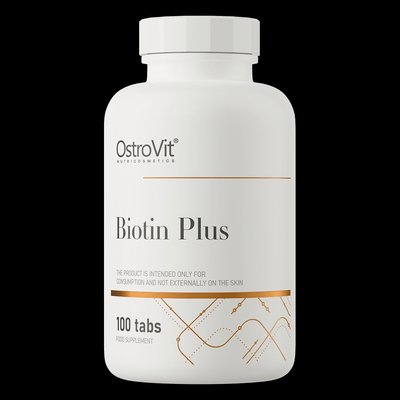 OstroVit Biotin Plus€6.90 In stock 100tabs provides biotin for those who may be deficient.
Effective Dose and Timing
- Collagen peptides: 2.5–10 g/day; taking with vitamin C may enhance collagen synthesis (vitamin C is a cofactor for prolyl and lysyl hydroxylase). Morning or evening timing does not appear critical.
- Biotin: the doses used in clinical studies range widely; standard supplement doses (2500–5000 mcg) are well above the adequate intake and tolerated without toxicity.
- Ashwagandha: 300–600 mg/day of a standardised root extract (KSM-66 or Sensoril) is the range used in most published RCTs.
- Zinc: 8–15 mg/day from a supplement is appropriate if dietary intake may be low; avoid sustained intake above tolerable upper limits.
Who Benefits Most
The evidence suggests the greatest benefit from skin-hair-nails supplements for sleep and stress is seen in:
- People with confirmed micronutrient deficiencies (zinc, biotin, iron) — addressing the deficiency is the intervention, not adding more of an already sufficient nutrient.
- Those under elevated chronic stress — the ashwagandha and adaptogen evidence is most relevant here.
- People in the first weeks after a significant acute stressor (illness, surgery, extreme psychological event) — telogen effluvium hair loss in this window is partly driven by nutritional support adequacy.
- Those with low dietary collagen precursor intake (e.g. people eating little meat, bone broth, or connective tissue).
Honest Verdict
Skin, hair, and nails respond to the same fundamental inputs as overall health: adequate sleep, manageable stress, sufficient protein, and good micronutrient status. Supplements fill gaps, they do not override neglect of the fundamentals.
Collagen peptides have the strongest trial evidence for skin elasticity at meaningful doses over several weeks. Zinc and biotin matter most if you have a deficiency. Adaptogens like ashwagandha are a reasonable evidence-backed choice if chronic stress is the root cause of the changes you're trying to address.
Browse the skin, hair and nails range at maxfit.ee to compare formulas.
FAQ
Why is my hair falling out more when I am stressed?
Stress triggers elevated cortisol, which can push more hair follicles from the growth phase (anagen) into the resting and shedding phase (telogen). The technical term is telogen effluvium. This shedding typically appears 2–3 months after the triggering stressor and usually resolves on its own when the stressor passes. Nutritional deficiencies can worsen the severity.
Does collagen actually reach the skin after you eat it?
Oral collagen peptides are digested into amino acids and small peptides, which are then absorbed. Studies show that certain peptides from hydrolysed collagen are bioavailable and appear to accumulate in skin tissue. The mechanism is not simply "eating collagen = more skin collagen" but the absorbed peptides appear to stimulate fibroblast activity (Choi et al., 2019).
Can poor sleep cause permanent skin damage?
Chronic sleep deprivation is associated with accelerated skin ageing and impaired barrier function, but these effects are largely reversible when sleep quality improves. Short-term poor sleep does not cause permanent damage; it is the chronic, sustained pattern that drives measurable changes.
References
Choi, F. D., Sung, C. T., Juhasz, M. L. W., & Mesinkovska, N. A. (2019). Oral collagen supplementation: a systematic review of dermatological applications. Journal of Drugs in Dermatology, 18(1), 9-16. https://pubmed.ncbi.nlm.nih.gov/30681787/
Chandrasekhar, K., Kapoor, J., & Anishetty, S. (2012). A prospective, randomized double-blind, placebo-controlled study of safety and efficacy of a high-concentration full-spectrum extract of ashwagandha root in reducing stress and anxiety in adults. Indian Journal of Psychological Medicine, 34(3), 255-262. https://pubmed.ncbi.nlm.nih.gov/23439798/
Lee, W. S., Hwang, E. H., Yoon, J. S., & Cho, E. H. (2002). Dermatology aspects and role of zinc in hair biology. Annals of Dermatology, 14(4), 200-205.



