
Skin, Hair & Nails Myths vs Facts
The beauty supplement market is enormous, and skin, hair and nails products occupy a disproportionate share of it. Marketing promises range from thicker hair and stronger nails to visibly younger-looking skin. Some of these claims rest on real biological mechanisms; many are stretched beyond what the evidence supports. This article gives an honest account of where the science stands.
Common Myths
Myth 1: Biotin supplementation grows hair and strengthens nails in everyone. Biotin (vitamin B7) is genuinely essential for keratin production — the protein that makes up hair, skin, and nails. However, supplemental biotin has demonstrated meaningful clinical benefit primarily in people with confirmed biotin deficiency. In biotin-replete individuals, several controlled trials and systematic reviews have found that the effect of supplemental biotin on hair or nail growth is modest or non-significant. Biotin deficiency is uncommon in adults consuming varied diets (Zempleni et al., 2009).
Myth 2: Collagen supplements reach the skin and rebuild it directly. Oral collagen peptides are broken down into amino acids and small peptides during digestion. The claim that these peptides travel intact to the skin is an oversimplification. What the evidence does support is that oral hydrolysed collagen supplementation is associated with improved skin elasticity and hydration in some trials — likely through stimulating the body's own collagen synthesis rather than direct incorporation (Proksch et al., 2014). The effect is real but modest, and it takes time (typically 8–12 weeks of consistent use).
Myth 3: Taking a dedicated "beauty" supplement is superior to a good diet. The majority of deficiencies affecting skin, hair, and nail quality — iron, zinc, vitamin C, vitamin D — are diet-correctable. If you are deficient in zinc, supplementing zinc helps; if you are not deficient, supplementing zinc does not cause hair to grow faster. The beauty supplement industry profits from the implication that supplements add benefit beyond dietary adequacy, but the evidence does not consistently support this.
What the Evidence Actually Shows
Well-evidenced benefits from specific interventions:
- Hydrolysed collagen (2.5–10g/day): Associated with improvements in skin elasticity and hydration markers in RCTs (Proksch et al., 2014). Evidence is more consistent in older women.
- Zinc: Correcting zinc deficiency improves hair loss and nail quality. No benefit demonstrated in zinc-replete individuals for hair growth.
- Iron: Iron deficiency is a documented cause of diffuse hair loss (telogen effluvium). Correcting deficiency reverses this. Supplementing in iron-sufficient individuals has not been shown to increase hair growth.
- Vitamin C: Essential cofactor for collagen synthesis. Deficiency causes skin fragility and poor wound healing. Ensuring adequacy matters; megadosing above adequacy has no additional cosmetic benefit.
Marketing Claims vs Reality
| Claim | Reality |
|---|---|
| "Clinically proven to grow hair" | Most trials are small, short, and industry-funded; deficiency correction is what drives results |
| "Revolutionary collagen matrix formula" | Hydrolysed collagen peptides all work similarly; branding varies, mechanism does not |
| "Visible results in 2 weeks" | Meaningful structural changes to skin, hair, and nails take 8-16 weeks minimum |
| "Contains 5,000 mcg biotin for maximum results" | Doses above dietary needs confer no extra benefit in replete individuals |
Grey Areas
The honest grey area is collagen supplementation in well-nourished individuals. Unlike biotin or zinc — where deficiency drives results — collagen peptides may stimulate endogenous production even without frank deficiency. The evidence is encouraging but not conclusive, and quality varies across products. A product providing hydrolysed marine or bovine collagen peptides in the 2.5–10g range is a reasonable choice if skin elasticity or joint support is the goal.
For those exploring this category, OstroVit Collagen + Vitamin C 400g Ananass, MST Fish collagen + Verisol 500ml Metsik kirss, and 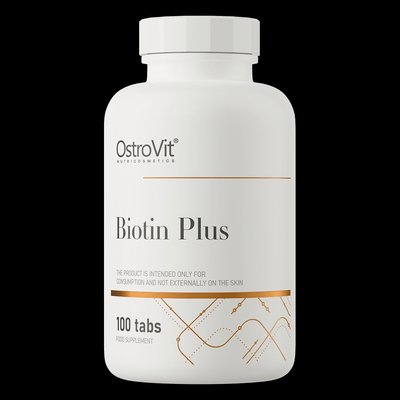 OstroVit Biotin Plus€6.90 In stock 100tabs are available at maxfit.ee/en/category/nahale-juustele-ja-kuuntele. The Vitamin C pairing in collagen products is not mere marketing — ascorbic acid is a required cofactor for collagen crosslinking.
Bottom Line
Skin, hair, and nail supplements deliver the most benefit when they correct an underlying deficiency. Collagen peptides are the exception — there is reasonable evidence for benefit even in non-deficient individuals, though effects are modest and time-dependent. A varied diet covering zinc, iron, vitamin C, and adequate protein addresses the most common deficiency-driven issues without relying on expensive single-purpose supplements.
FAQ
How long should I take collagen before expecting results?
Most RCTs showing skin elasticity improvements run for 8–12 weeks. Expect to commit to at least this timeframe before assessing whether a product is working for you.
Is biotin worth taking if I don't have a deficiency?
Probably not for hair or nail benefits specifically. Biotin is water-soluble and safe in high doses, but excess is excreted rather than stored. High biotin doses can also interfere with certain thyroid and cardiac laboratory tests — relevant to disclose if you have any bloodwork scheduled.
Does silica help with hair growth?
Silica (silicon dioxide) is sometimes included in beauty supplements for its theoretical role in connective tissue integrity. The evidence in humans is limited and mixed. It is not a first-line recommendation based on current data.
References
Proksch, E., Segger, D., Degwert, J., Schunck, M., Zague, V., & Oesser, S. (2014). Oral supplementation of specific collagen peptides has beneficial effects on human skin physiology: a double-blind, placebo-controlled study. Skin Pharmacology and Physiology, 27(1), 47-55. https://pubmed.ncbi.nlm.nih.gov/23949208/
Zempleni, J., Wijeratne, S. S., & Hassan, Y. I. (2009). Biotin. BioFactors, 35(1), 36-46. https://pubmed.ncbi.nlm.nih.gov/19319844/
Guo, E. L., & Katta, R. (2017). Diet and hair loss: effects of nutrient deficiency and supplement use. Dermatology Practical & Conceptual, 7(1), 1-10. https://pubmed.ncbi.nlm.nih.gov/28243487/



