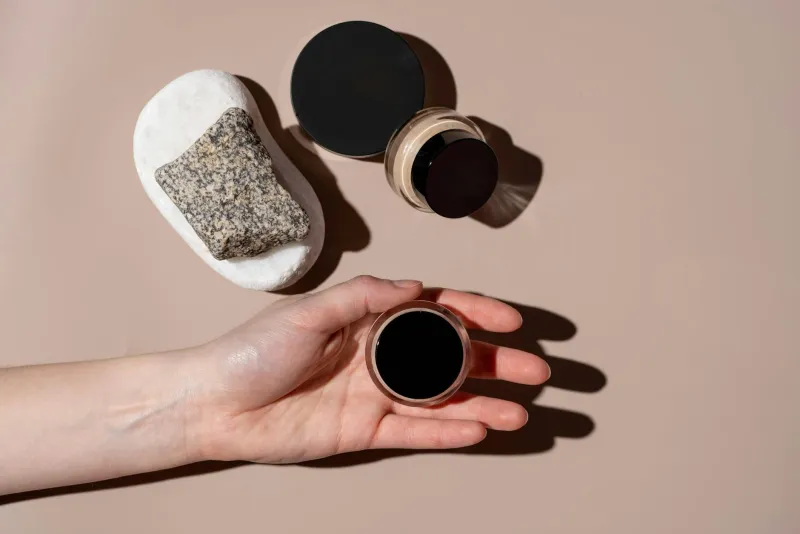
What is Shilajit?
Shilajit is a natural dark resinous substance that forms slowly in mountain rock crevices over millennia — primarily in the Himalayan range, but also in the Altai, Caucasus, and Andes regions. It consists of decomposed plant and organic material processed by microorganisms over centuries.
Shilajit contains over 80 minerals in ionic form, and its primary bioactive component is fulvic acid, which is considered central to many of its mechanisms of action.
In Ayurvedic medicine, Shilajit has been used for over 3,000 years and has been called the "conqueror of mountains" — a substance that imparts strength and vitality.
How it works
Shilajit's effects are primarily attributed to fulvic acid and its mineral content. Fulvic acid is a natural compound that may improve nutrient absorption at the cellular level and support mitochondrial function — the cell's energy production centers.
Research suggests that Shilajit may support the body's energy production at the mitochondrial level (Bhattacharyya et al., 2009) and help the body absorb nutrients more efficiently. However, the exact mechanisms still require further investigation.
Evidence and benefits
Currently there are no EU-approved specific health claims for Shilajit. However, research suggests several interesting areas of potential benefit:
- Energy and fatigue: Some studies suggest Shilajit may support energy levels and reduce feelings of fatigue, likely through its influence on mitochondrial function (Surapaneni et al., 2012).
- Mineral absorption: Fulvic acid improves the bioavailability of minerals, which may contribute to better nutrient uptake (Winkler & Ghosh, 2018).
- CoQ10 support: Some research suggests that Shilajit may support the body's CoQ10 levels (Sharma et al., 2003).
- Antioxidant activity: The antioxidant properties of fulvic acid have been confirmed in laboratory studies (Schepetkin et al., 2009).
- Testosterone research: Some small-scale studies suggest a moderate support of free testosterone levels in healthy men (Pandit et al., 2016).
It is important to note that many studies have been conducted with small sample sizes and require confirmation in larger trials (Wilson et al., 2011).
How to take
Common forms:
- Purified resin (traditional form) — dissolve in warm water, milk, or tea
- Capsules (more convenient, standardized dose)
- Powder
Typical dosages:
- Resin: 300–500 mg per day (a pea-sized amount)
- Standardized extract in capsules: per manufacturer's instructions, typically 250–500 mg
- Take in the morning or before lunch, with food
Start with a lower dose. Quality Shilajit should be purified and tested for heavy metal content.
Who should consider it
- People experiencing chronic fatigue and low energy
- Athletes looking to support recovery and energy levels
- Men over 40 interested in testosterone support
- Individuals looking to improve mineral absorption
- Those interested in traditional Ayurvedic supplements
Consult a healthcare professional before starting any new supplement. Only purchase tested and purified Shilajit — raw, unprocessed resin may contain heavy metals and contaminants.
Frequently asked questions
Is Shilajit safe? Purified and tested Shilajit is generally well tolerated. However, unprocessed forms that may contain contaminants should be avoided. Only purchase from reputable manufacturers.
How quickly will I notice results? Some users report improved energy within the first 1–2 weeks. Studies have typically used 8–12 week periods to evaluate effects.
Can Shilajit be combined with CoQ10? Some research suggests that Shilajit and CoQ10 may complement each other in supporting mitochondrial function.
Can vegans take Shilajit? Shilajit is a natural mineral substance and does not contain animal-derived ingredients, making it suitable for vegans.
What is the difference between purified resin and capsules? Traditional resin form is closest to the original material. Capsules are more convenient and precisely dosed, but both forms can be effective.
References
- Bhattacharyya, S. et al. (2009). Shilajit dibenzo-alpha-pyrones: Mitochondria targeted antioxidants. Pharmacologyonline, 2, 690-698.
- Pandit, S. et al. (2016). Clinical evaluation of purified Shilajit on testosterone levels in healthy volunteers. Andrologia, 48(5), 570-575.
- Schepetkin, I.A. et al. (2009). Biological activities of humic substances. Mini Reviews in Medicinal Chemistry, 9(8), 943-965.
- Sharma, P. et al. (2003). Shilajit: evalution of its effects on blood chemistry of normal human subjects. Ancient Science of Life, 23(2), 114-119.
- Surapaneni, D.K. et al. (2012). Shilajit attenuates behavioral symptoms of chronic fatigue syndrome by modulating the hypothalamic-pituitary-adrenal axis. Journal of Ethnopharmacology, 143(1), 91-99.
- Wilson, E. et al. (2011). Review on shilajit used in traditional Indian medicine. Journal of Ethnopharmacology, 136(1), 1-9.
- Winkler, J. & Ghosh, S. (2018). Therapeutic potential of fulvic acid in chronic inflammatory diseases and diabetes. Journal of Diabetes Research, 2018, 5391014.
See also:
Browse plant-based supplements at MaxFit →
Disclaimer
A food supplement is not a substitute for a varied and balanced diet and a healthy lifestyle.



