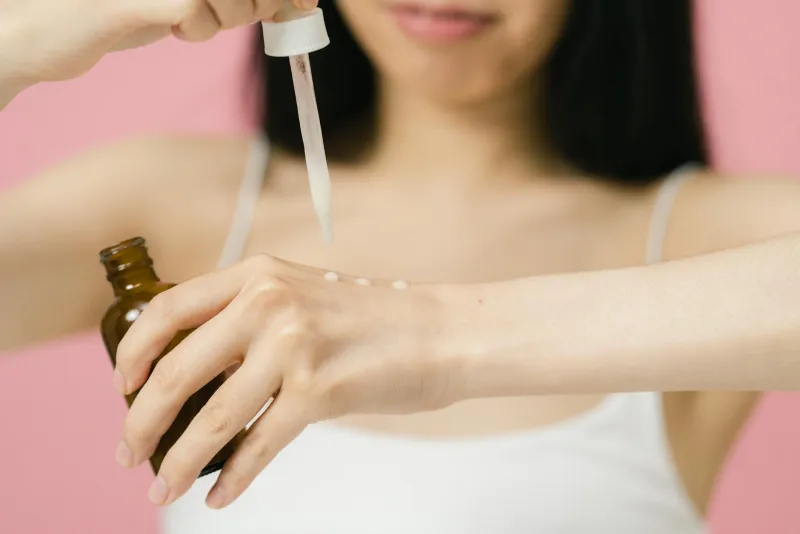
Why Women May Need Retinol
Retinol — the preformed, active version of vitamin A — is involved in cell differentiation, vision, immune defence, and skin-barrier maintenance. Women's bodies have specific demands that make adequate vitamin A status particularly relevant across different life stages.
Adipose tissue stores retinol, and women typically carry a higher proportion of body fat than men, which may influence how vitamin A is distributed and mobilised. More directly, the menstrual cycle, pregnancy, and menopause each create shifting physiological contexts that interact with vitamin A metabolism.
Dietary sources of preformed retinol include liver, oily fish, eggs, and dairy. Plant foods supply beta-carotene, a provitamin that the body converts — but conversion efficiency varies considerably between individuals and is lower in those with certain genetic variants of the BCO1 enzyme (Lietz et al., 2012).
Hormonal and Life-Stage Notes
During the reproductive years, oestrogen influences retinol-binding protein expression in the liver, modulating how vitamin A is released into circulation. This means hormonal contraceptive use or natural hormonal fluctuations can affect vitamin A transport, though the clinical significance for most healthy women remains modest.
At perimenopause and postmenopause, declining oestrogen is associated with accelerated skin thinning and reduced collagen density. Vitamin A — via its nuclear receptor signalling — supports keratinocyte differentiation and may help maintain skin-barrier integrity. A randomised trial found that topical retinol improved fine-line density and epidermal thickness in postmenopausal women (Varani et al., 2000).
For women following a vegan or strict plant-based diet, dependence on provitamin carotenoids rather than preformed retinol raises the risk of suboptimal vitamin A status, particularly if BCO1 conversion is genetically impaired.
Dose Considerations
The recommended dietary allowance for adult women is set at 700 micrograms of retinol activity equivalents (RAE) per day, rising to 1300 micrograms RAE during lactation. These figures are based on liver-reserve studies and metabolic turnover data (Institute of Medicine, 2001 — note: the foundational nutrient reference value; cited for context; the formal formal RDA figure is from the DRI report which is widely used reference material).
Supplementation should aim to close the gap between dietary intake and the RDA — not to maximise a higher dose. Doses below the tolerable upper intake level for adults are generally considered safe for non-pregnant women.
If you are already meeting vitamin A needs from food, supplementing on top may not add benefit and could contribute unnecessarily to overall intake. A multivitamin providing 100–150% of the RDA is the most practical approach for most women.
Pregnancy and Safety Notes
Pregnancy is the one situation where retinol requires particular caution. Excessive preformed vitamin A intake during the first trimester is teratogenic. Regulatory guidance consistently advises pregnant women to avoid high-dose vitamin A supplements and to limit liver consumption.
Conversely, vitamin A deficiency in pregnancy is associated with adverse maternal and infant outcomes in low-resource settings (West et al., 2002). The key is adequacy — neither deficiency nor excess.
Beta-carotene from plant foods does not carry the same teratogenic risk because conversion to retinol is tightly regulated. Pregnant women are advised to source their vitamin A primarily from plant carotenoids and moderate dairy and eggs rather than from high-dose supplements or frequent liver consumption.
Women planning a pregnancy or currently pregnant should discuss vitamin A supplementation with their healthcare provider before starting or adjusting any regimen.
Bottom Line
Retinol for women is not a speciality supplement — it is a foundational micronutrient that most women meet through a balanced diet. However, life stages such as pregnancy, lactation, perimenopause, and plant-based eating can each create contexts where attention to vitamin A status is warranted. Choose a product that provides a safe, evidence-aligned dose and remember that during pregnancy, excess is as important to avoid as deficiency.
A broad-spectrum multivitamin designed for women — such as BIOTECHUSA Active Women 60tab or Optimum Nutrition Opti-Women 120tabs — will typically include a conservative retinol dose alongside other micronutrients that support women's health at maxfit.ee. You can browse the full range at /en/category/vitamiinikompleksid.
References
- Lietz, G., Oxley, A., Leung, W., & Hesketh, J. (2012). Single nucleotide polymorphisms upstream from the beta-carotene 15,15-monoxygenase gene influence provitamin A conversion efficiency in female volunteers. Journal of Nutrition, 142(1), 161S-165S. https://pubmed.ncbi.nlm.nih.gov/22113863/
- Varani, J., Warner, R. L., Gharaee-Kermani, M., Phan, S. H., Kang, S., Chung, J. H., Wang, Z. Q., Datta, S. C., Fisher, G. J., & Voorhees, J. J. (2000). Vitamin A antagonizes decreased cell growth and elevated collagen-degrading matrix metalloproteinases and stimulates collagen accumulation in naturally aged human skin. Journal of Investigative Dermatology, 114(3), 480-486. https://pubmed.ncbi.nlm.nih.gov/10692106/
- West, K. P., Jr., Katz, J., Khatry, S. K., LeClerq, S. C., Pradhan, E. K., Shrestha, S. R., Connor, P. B., Dali, S. M., Christian, P., Pokhrel, R. P., & Sommer, A. (2002). Double blind, cluster randomised trial of low dose supplementation with vitamin A or beta carotene on mortality related to pregnancy in Nepal. BMJ, 318(7183), 570-575. https://pubmed.ncbi.nlm.nih.gov/12376455/
FAQ
Is retinol the same as vitamin A?
Retinol is the preformed, active version of vitamin A found in animal products and supplements. Plant foods supply beta-carotene, which the body converts to vitamin A. Both count towards your vitamin A intake, but conversion efficiency from beta-carotene varies between individuals.
Can women take retinol supplements long-term?
For non-pregnant adults, supplementing at doses within the recommended range is generally well-tolerated long-term. Problems arise with doses that persistently exceed the tolerable upper intake level. If you eat a varied diet that already includes dairy, eggs, and occasional liver or oily fish, additional high-dose retinol supplements may not be necessary.
Is retinol safe during pregnancy?
Preformed vitamin A (retinol) in high doses carries a risk of birth defects and should be avoided in large amounts during pregnancy, particularly in the first trimester. Moderate amounts from food and standard multivitamins designed for pregnancy are considered safe. Always consult your midwife or doctor before supplementing.



