Quercetin for Vegans: Getting the Most from a Plant-Based Flavonoid
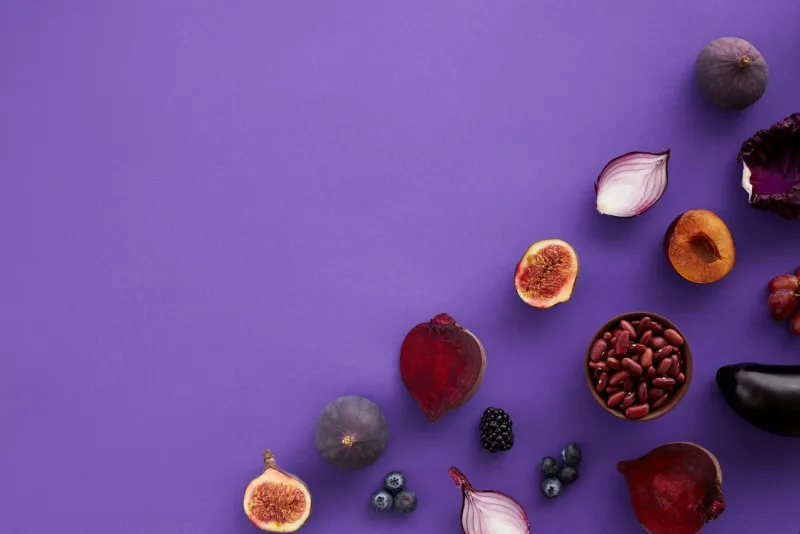
Quercetin is a polyphenol flavonoid found naturally in a wide variety of plant foods -- apples, onions, capers, kale, and berries among them. Because it is inherently plant-derived, vegans might assume their diet already provides optimal amounts. In practice, the picture is more complicated: food quercetin is absorbed inconsistently, and the amounts most people consume through diet fall well below those used in clinical research.
Why Plant-Based Diets May Still Fall Short
Vegan and vegetarian diets do tend to contain more quercetin than omnivore diets on average, given higher fruit and vegetable intake. However, several factors limit the practical yield:
Variable bioavailability. Quercetin from food is absorbed at widely varying rates depending on the food matrix, gut microbiome composition, and whether it is consumed as a glycoside or the free aglycone. Estimates of absorption from food range broadly.
Cooking losses. Boiling and long cooking reduce quercetin content in vegetables considerably. Most of the research showing benefits used standardised extracts, not whole foods.
Total daily intake from diet. Epidemiological estimates of average quercetin intake from food in European populations have been reported in the range of 10 to 30 mg per day (Manach et al., 2004). Clinical trials have used doses many times higher than this, typically 500 to 1000 mg of a standardised supplement per day.
So while a vegan diet provides a better dietary baseline than a low-plant diet, it does not automatically close the gap between habitual intake and therapeutic doses.
Vegan-Friendly Food Sources of Quercetin
| Food | Notes |
|---|---|
| Capers (raw) | Among the highest concentrations per 100 g |
| Red onions | Widely available, consistent source |
| Apples with skin | Skin contains the majority of quercetin |
| Kale and dark leafy greens | Moderate amounts |
| Blueberries and berries | Moderate amounts |
| Broccoli | Lower but worthwhile contribution |
Eating a variety of these foods raw or minimally cooked maximises dietary quercetin intake.
Dose Targets
For general antioxidant and immune support purposes, clinical trials have typically used quercetin at doses of 500 to 1000 mg per day of a standardised extract. A meta-analysis by Serban et al. (2016) found that quercetin supplementation was associated with reductions in blood pressure and inflammatory markers across pooled trials, with effects more pronounced at higher doses and longer durations.
For vegan users seeking immune-supportive effects specifically, lower supplement doses (around 250 to 500 mg) used alongside a quercetin-rich diet may be a practical starting point.
What to Combine with Quercetin
Two combinations have good evidence behind them:
Quercetin + bromelain. Bromelain, an enzyme derived from pineapple, may improve quercetin absorption and has independent anti-inflammatory activity. Several products combine them in a single capsule.
Quercetin + vitamin C. Vitamin C and quercetin have complementary antioxidant mechanisms. Vitamin C can regenerate quercetin in tissues after it donates electrons, potentially extending its activity.
Avoid taking quercetin with thyroid medications or antibiotics without medical advice, as interactions may reduce medication absorption.
Choosing a Vegan Quercetin Supplement
For vegans, the checklist when selecting a quercetin supplement includes:
- Vegetable capsules or vegan tablets (no gelatin)
- No lactose, animal-derived magnesium stearate, or gelatin-based excipients
- Standardised quercetin content stated per serving
- Consider a combined quercetin + bromelain formula for enhanced absorption
At maxfit.ee, 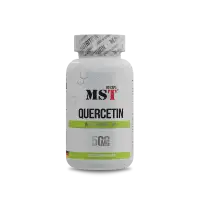 MST Quercetin Bromelain€26.90 In stock 60caps combines quercetin with bromelain for improved bioavailability -- a practical choice for vegans. OstroVit Quercetin 90caps is another straightforward option. Browse the kvertsetiin category for the full range.
References
- Manach, C., Scalbert, A., Morand, C., Remesy, C., & Jimenez, L. (2004). Polyphenols: food sources and bioavailability. American Journal of Clinical Nutrition, 79(5), 727-747. https://pubmed.ncbi.nlm.nih.gov/15113710/
- Serban, M. C., Sahebkar, A., Zanchetti, A., Mikhailidis, D. P., Howard, G., Antal, D., ... & Banach, M. (2016). Effects of quercetin on blood pressure: a systematic review and meta-analysis of randomized controlled trials. Journal of the American Heart Association, 5(7), e002713. https://pubmed.ncbi.nlm.nih.gov/27405810/
- Boots, A. W., Haenen, G. R., & Bast, A. (2008). Health effects of quercetin: from antioxidant to nutraceutical. European Journal of Pharmacology, 585(2-3), 325-337. https://pubmed.ncbi.nlm.nih.gov/18417116/
FAQ
Do vegans already get enough quercetin from their diet?
Often more than omnivores, but usually far less than doses used in clinical research. Diet provides a meaningful baseline, but not the amounts that most studies associate with immune or cardiovascular effects.
Is quercetin safe for long-term vegan supplementation?
Quercetin has a good safety profile in human trials at doses up to 1000 mg per day over several months. No significant toxicity has been reported in the dose ranges used in clinical research.
Why is quercetin sometimes combined with bromelain in supplements?
Bromelain may improve quercetin absorption by disrupting the gut environment and has independent anti-inflammatory activity. The combination is thought to be more effective than quercetin alone, which is why products like MST Quercetin Bromelain are popular.



