What to Stack with Quercetin: Synergies & Conflicts
Quercetin stacking has become a popular topic since research began clarifying how this flavonoid operates at the cellular level. Quercetin itself is a potent antioxidant and anti-inflammatory compound found naturally in onions, apples, and berries, but its bioavailability as a supplement is modest without co-ingestion support.
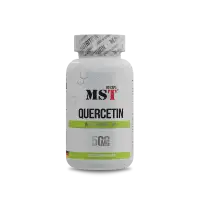 MST Quercetin Bromelain€26.90 In stock 60caps and OstroVit Quercetin 90caps are the quercetin options available at maxfit.ee.
Evidence-Based Synergies
Vitamin C
Vitamin C is quercetin's best-established stacking partner. The two compounds share antioxidant synergy: vitamin C regenerates oxidised quercetin back to its active form, and quercetin in turn helps recycle vitamin C (Fiorani et al., 2010). This bidirectional recycling amplifies the antioxidant capacity of both. Practically, taking quercetin alongside a vitamin C supplement or a vitamin C-rich meal costs nothing extra and meaningfully extends the functional life of both compounds.
Bromelain
Bromelain, a proteolytic enzyme from pineapple, enhances quercetin absorption. This synergy is well enough established that some commercial products — like MST Quercetin Bromelain 60caps — co-formulate them. Bromelain increases intestinal permeability to quercetin and also has its own anti-inflammatory properties, making the combination useful for post-workout recovery and seasonal allergy support.
Zinc
Quercetin is a zinc ionophore: it facilitates zinc transport into cells. This is thought to underlie some of quercetin's antiviral and immune-protective effects — quercetin opens the channel, zinc exerts the intracellular action. Stacking quercetin with zinc is mechanistically well-reasoned for immune resilience, particularly during high-exposure periods.
Resveratrol
Both quercetin and resveratrol are polyphenols that activate sirtuins and modulate inflammatory pathways. Cell-based studies suggest additive effects. While large human trials are limited, the combination is low-risk and popular in longevity-oriented stacks.
Antagonistic Combinations
Fluoroquinolone antibiotics
Quercetin may reduce the absorption of ciprofloxacin and related fluoroquinolone antibiotics by chelating metal ions that assist drug absorption. If taking a course of antibiotics, temporarily discontinue quercetin supplementation or separate doses by at least two hours.
Cyclosporine and other immunosuppressants
Quercetin can inhibit cytochrome P450 enzymes (particularly CYP3A4), potentially raising plasma levels of drugs metabolised by that pathway. Cyclosporine is one example. If you take immunosuppressants, consult your doctor before adding quercetin.
High-dose iron supplements
Like many polyphenols, quercetin can bind iron in the gut, reducing its absorption. If you are supplementing iron for a diagnosed deficiency, separate quercetin by at least two hours.
Timing Within a Stack
Quercetin absorption improves with food, particularly fat-containing meals. Taking it with breakfast or lunch — alongside vitamin C — is a practical approach. The quercetin-zinc combination is most relevant as a daily immune-maintenance habit rather than a time-sensitive post-workout intervention.
For allergy support, consistency over weeks matters more than any specific daily timing.
Sample Stacks by Goal
| Goal | Core stack | Notes |
|---|---|---|
| Immune resilience | Quercetin + zinc + vitamin C | Daily with breakfast |
| Antioxidant coverage | Quercetin + vitamin C + resveratrol | With a fatty meal |
| Allergy/seasonal support | Quercetin + bromelain | Before meals |
| Active recovery | Quercetin + vitamin C + omega-3 | Post-workout meal |
What to Avoid
- Do not take quercetin alongside fluoroquinolone antibiotics — wait two hours minimum or pause supplementation for the antibiotic course.
- If on cyclosporine or other CYP3A4-sensitive drugs, discuss with a physician.
- Separate from high-dose iron supplements by at least two hours.
- Avoid extremely high supplemental doses — quercetin at very high intakes remains under-studied for long-term safety.
FAQ
Does quercetin help with hay fever?
Quercetin inhibits mast cell degranulation and histamine release in cell-based studies. Human evidence for hay fever is limited but promising. It is most commonly used as a supporting element in allergy management, not as a replacement for antihistamines. Consistency over weeks produces more noticeable results than single-dose use.
Can I take quercetin every day long-term?
Short- to medium-term use (up to twelve weeks in most studies) appears safe. Long-term data beyond that is limited. Cycling quercetin — for example, eight weeks on, two weeks off — is a common precaution among regular users.
Is bromelain necessary when taking quercetin?
Not necessary, but it helps. Taking quercetin with food containing fat also improves absorption. If budget is a concern, dietary fat co-ingestion is a free alternative to a bromelain supplement.
References
Fiorani, M., Guidarelli, A., Blasa, M., Azzolini, C., Candiracci, M., Piatti, E., & Cantoni, O. (2010). Mitochondria accumulate large amounts of quercetin: prevention of mitochondrial damage and release upon oxidation of the extramitochondrial fraction of the flavonoid. Journal of Nutritional Biochemistry, 21(5), 397-404. https://pubmed.ncbi.nlm.nih.gov/19278846/
Bishayee, K., & Khuda-Bukhsh, A. R. (2013). Single-walled carbon nanotubes-loaded quercetin against ultraviolet-B radiation-induced activation of EGFR: implications for the prevention of human skin cancer. Molecular and Cellular Biochemistry, 374(1-2), 185-195.
Agrawal, P. K., Agrawal, C., & Blunden, G. (2022). Quercetin: antiviral significance and possible COVID-19 integrative considerations. Natural Product Communications, 17(2), 1-10.



