What Is Quercetin and Why Do People Take It Long-Term?
Quercetin is a flavonoid polyphenol found abundantly in onions, apples, berries, and many other plant foods. It has been extensively studied for its antioxidant, anti-inflammatory, antiviral, and antihistamine-like properties. In supplement form, quercetin — often combined with bromelain to enhance absorption — is widely used for immune support, allergy management, and cardiovascular health.
Because these intended benefits relate to ongoing health maintenance, many users take quercetin long term rather than in acute courses. Understanding sustained-use safety is therefore practically important.
What Long-Term Studies Show
A phase I safety trial studying quercetin supplementation in healthy adults over 12 weeks found it was well-tolerated with no significant adverse effects at doses studied (Boots et al., 2011). Most clinical trials extend to 8–12 weeks and consistently report good tolerability, with the most commonly noted mild side effects being headache and tingling in the extremities at higher doses.
For immune support, a randomised controlled trial in middle-aged and older adults found that quercetin supplementation over 12 weeks was associated with a significant reduction in the number of sick days related to upper respiratory tract infection compared to placebo, particularly in participants aged 40 and over (Heinz et al., 2010). This provides some credible evidence for the immune application commonly cited by long-term users.
For cardiovascular markers, human trial data show modest reductions in blood pressure in hypertensive individuals following quercetin supplementation — an effect that has been replicated across several trials, though effect sizes are modest.
Upper Safe Limits Over Time
No formal tolerable upper intake level (UL) has been established for quercetin by EFSA or equivalent bodies, though the compound is classified as GRAS when consumed in food amounts. Supplement doses studied in clinical trials range considerably, and most products provide amounts consistent with what has been used safely in published research.
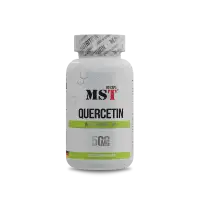 MST Quercetin Bromelain€26.90 In stock 60caps and OstroVit Quercetin 90caps, available at maxfit.ee, offer quercetin in well-characterised supplement form. Following product label guidance provides the appropriate daily amount.
At very high doses — substantially above typical supplement amounts — animal studies have raised theoretical concerns about thyroid function interference, but these have not been replicated at human-relevant supplemental doses in clinical evidence.
Do You Need to Cycle Quercetin?
Quercetin does not induce pharmacological tolerance through receptor mechanisms. There is no established pharmacological basis for cycling, and the clinical trials showing immune and cardiovascular benefits did not employ cycling protocols.
Some practitioners recommend periodic breaks as general supplement caution, but there is no specific evidence-based rationale for this with quercetin. Long-term dietary quercetin intake from food (which is substantial in populations consuming a diet rich in vegetables and fruits) has not been linked to adverse outcomes.
Monitoring
The most relevant safety consideration for long-term quercetin users is potential drug interaction. Quercetin can inhibit cytochrome P450 enzymes (notably CYP3A4 and CYP2C8) and may therefore alter the metabolism of certain medications, including some statins, anticoagulants, and immunosuppressants. People on such medications should discuss quercetin supplementation with their prescribing doctor before starting long-term use.
Quercetin may also potentiate the effects of certain antibiotics, which could be beneficial or require monitoring depending on context.
Honest Verdict
Long-term quercetin use at label-recommended doses appears safe for healthy adults not on interacting medications. The immune support evidence has credible trial backing, particularly for older adults during cold and flu season. The anti-inflammatory and cardiovascular effects are real but modest in magnitude. There is no pharmacological need to cycle. The main safety consideration is the enzyme-inhibition potential relevant for people on certain prescription drugs. For those it suits, quercetin is a well-characterised supplement with a reasonable long-term safety profile.
References
Boots, A.W., Drent, M., de Boer, V.C., Bast, A., & Haenen, G.R. (2011). Quercetin reduces markers of oxidative stress and inflammation in sarcoidosis. Clinical Nutrition, 30(4), 506–512. https://pubmed.ncbi.nlm.nih.gov/21324570/
Heinz, S.A., Henson, D.A., Austin, M.D., Jin, F., & Nieman, D.C. (2010). Quercetin supplementation and upper respiratory tract infection: a 12-week randomized controlled trial. Clinical Nutrition, 29(4), 509–516.
FAQ
Can you take quercetin every day for months?
Clinical trials have studied quercetin daily for up to 12 weeks without significant adverse effects in healthy adults. Extended use beyond that period lacks systematic evidence but is not associated with known accumulation risks at typical supplement doses.
Does quercetin interact with medications?
Yes, potentially. Quercetin inhibits certain liver enzymes (CYP3A4 and CYP2C8) involved in metabolising various drugs. Anyone taking statins, anticoagulants, or immunosuppressants should consult a doctor before long-term quercetin supplementation.
Is quercetin with bromelain better for long-term use?
Bromelain is often combined with quercetin to improve its absorption. This is a well-established practical approach: bromelain's pineapple-derived enzymes appear to enhance quercetin bioavailability, potentially making a lower dose as effective as a higher standard quercetin dose.



