Quercetin Interactions: Drugs, Nutrients & Foods
Quercetin is a flavonoid found naturally in onions, apples, berries, and capers. Supplemental forms — such as 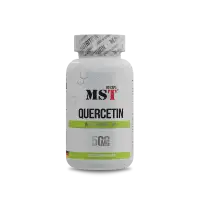 MST Quercetin Bromelain€26.90 In stock 60caps and OstroVit Quercetin 90caps — are used for their anti-inflammatory, antioxidant, and immune-modulating properties. Before you begin supplementing, it is important to understand quercetin interactions with medications, nutrients, and food.
Drug Interactions
Anticoagulants and Antiplatelet Agents
Quercetin has demonstrated antiplatelet activity in laboratory studies. Combining it with warfarin, aspirin, clopidogrel, or other antiplatelet or anticoagulant drugs may theoretically enhance bleeding risk. Patients on anticoagulant therapy should inform their physician before starting quercetin supplements.
CYP450 Enzyme Inhibition
Quercetin is one of the more extensively studied flavonoids for CYP450 interactions. In vitro studies show that it inhibits CYP3A4, CYP2C9, and CYP2D6 (Moon et al., 2006). CYP3A4 metabolises many commonly used drugs — statins, calcium channel blockers, benzodiazepines, certain immunosuppressants. CYP2C9 handles drugs such as warfarin and some NSAIDs. Inhibition could raise plasma drug levels. Clinical significance at common supplement doses (500–1000 mg/day) has not been definitively established, but the interaction potential is real and warrants disclosure to prescribers.
P-Glycoprotein and OATP Transporters
Quercetin can inhibit P-glycoprotein and certain organic anion transporting polypeptides (OATPs), which are drug efflux and uptake transporters respectively. This may increase intestinal absorption or tissue uptake of drugs that rely on these proteins, including some statins and anticancer agents.
Quinolone Antibiotics
Quercetin and quinolone antibiotics (ciprofloxacin, levofloxacin) share the same basic structural scaffold. In vitro, quercetin has been shown to compete with quinolones for transport and may interfere with their antibacterial activity (Eumkeb et al., 2010). Separate quercetin supplements from quinolone antibiotics during an acute infection course.
Cyclosporine (Immunosuppressant)
Cyclosporine is a CYP3A4 substrate with a narrow therapeutic index. Quercetin's CYP3A4 inhibition could raise cyclosporine levels and risk of toxicity. Organ transplant patients on cyclosporine must avoid quercetin supplementation without medical supervision.
Nutrient Competition and Synergy
Vitamin C
Quercetin and vitamin C have complementary antioxidant roles. Vitamin C can regenerate oxidised quercetin back to its active form in cell culture models. Many quercetin formulations include ascorbic acid as a co-ingredient. No adverse interaction is known.
Bromelain
Bromelain — the pineapple enzyme found in MST Quercetin Bromelain — is frequently combined with quercetin because it may enhance quercetin absorption and has its own anti-inflammatory properties. No safety concern has been identified with this combination in healthy adults.
Iron
Quercetin chelates iron ions, which can reduce absorption of non-haem iron. Individuals with iron-deficiency anaemia should separate quercetin supplements from iron-rich foods and iron tablets by at least 2 hours. Conversely, this iron-chelating property may be beneficial in conditions of iron overload.
Zinc
Quercetin has been studied as an ionophore that may facilitate zinc entry into cells, which has attracted interest in the context of immune support. This interaction is generally considered positive and no adverse effect is documented at supplement doses.
Food Effects
Fatty Meals
Quercetin's bioavailability from supplements is improved when taken with fat-containing food. The flavonoid is moderately lipophilic and food-matrix effects influence its uptake (Manach et al., 2004).
Grapefruit
Grapefruit independently inhibits CYP3A4. Consuming grapefruit and quercetin simultaneously while taking a CYP3A4-metabolised drug could produce a greater-than-expected increase in drug plasma levels. Avoid this triple combination if on such medications.
Onion, Apples, and Capers
Foods naturally rich in quercetin — red onion, apples, capers — will add to total quercetin intake but are not clinically problematic as food sources. The bioavailability of dietary quercetin is much lower than that of supplemental forms.
Alcohol
Alcohol may modestly inhibit quercetin metabolism, potentially prolonging its activity. No significant safety concern exists for moderate drinking combined with quercetin supplements.
Who Must Be Cautious
- Patients on warfarin, cyclosporine, or other CYP3A4/CYP2C9-metabolised drugs: disclose quercetin supplementation to your prescriber.
- Individuals on quinolone antibiotics: separate quercetin from antibiotic doses during treatment.
- Organ transplant recipients on immunosuppressants: avoid without specialist approval.
- People with iron-deficiency anaemia: separate quercetin and iron supplements.
- Pregnant and breastfeeding women: insufficient safety data at high supplement doses; avoid beyond food amounts.
Practical Rules
- Take quercetin with a fat-containing meal to improve bioavailability.
- Disclose quercetin supplementation to your prescriber if you take any drugs metabolised by CYP3A4 or CYP2C9.
- Separate from quinolone antibiotics during infection treatment.
- Separate from iron supplements by 2 hours if iron status is a concern.
- Source from transparent brands with verified quercetin content — look for products like those at maxfit.ee with clear label information.
FAQ
Can quercetin be taken daily long term?
Short-term use at typical supplement doses appears safe in trials of up to 12 weeks. Long-term safety data are limited. Given its CYP enzyme interactions, continuous very high doses are not recommended without medical oversight.
Does quercetin affect thyroid medication (levothyroxine)?
Quercetin may inhibit OATP transporters involved in levothyroxine uptake. Separating quercetin supplementation from levothyroxine by at least 4 hours is a cautious approach for thyroid patients.
Is quercetin safe with antihistamines?
Quercetin has mild antihistamine properties in laboratory models. Combining it with pharmaceutical antihistamines is unlikely to cause significant harm at standard doses, but there are no robust clinical data confirming safety of the combination.
References
Moon, Y. J., Wang, X., & Morris, M. E. (2006). Dietary flavonoids: effects on xenobiotic and carcinogen metabolism. Toxicology in Vitro, 20(2), 187–210. https://pubmed.ncbi.nlm.nih.gov/16289744/
Manach, C., Williamson, G., Morand, C., Scalbert, A., & Remesy, C. (2004). Bioavailability and bioefficacy of polyphenols in humans. American Journal of Clinical Nutrition, 81(1 Suppl), 230S–242S.
Eumkeb, G., Smithtikarn, S., Phitaktim, S., Niwaspragrit, C., & Thammawat, S. (2010). Synergistic activity and mode of action of flavonoids with antibiotics against bacteria. Journal of Applied Microbiology, 108(4), 1513–1524.



