Quercetin After 50: The Flavonoid Getting Serious Scientific Attention
Quercetin is one of the most abundant flavonoids in the human diet, found in onions, apples, capers, berries and many leafy vegetables. As a supplement, it has attracted research attention for anti-inflammatory, antihistamine and — more recently — senolytic properties (the ability to help clear damaged senescent cells). For adults over 50, this combination of potential effects makes quercetin one of the more interesting plant-derived supplements available.
Age-Related Reasons to Consider Quercetin
Cellular senescence — the accumulation of non-dividing, dysfunctional cells — increases with age and is associated with chronic low-grade inflammation (sometimes called "inflammaging"). Quercetin, often in combination with dasatinib or other compounds in research settings, has been studied as a senolytic agent. A small human pilot study found that a brief quercetin + dasatinib protocol reduced senescent cell markers in older adults with diabetic kidney disease (Kirkland et al., 2019). This is early-stage research, but it illustrates the unique mechanisms being explored.
Allergic conditions — including seasonal allergic rhinitis — often persist or shift with age. Quercetin stabilises mast cells, reducing histamine release. A systematic review found that quercetin had comparable antihistamine effects to cromolyn sodium in cell and animal models (Mlcek et al., 2016). Human clinical data in this area remain limited.
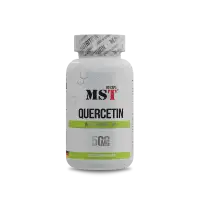 MST Quercetin Bromelain€26.90 In stock 60caps and OstroVit Quercetin 90caps are available at maxfit.ee.
Absorption Changes After 50
Quercetin from food is absorbed primarily in the small intestine, with gut microbiota playing a role in converting quercetin glycosides to free aglycone forms. Age-related changes in the gut microbiome and mucosal absorption may reduce quercetin bioavailability.
Supplement forms vary: quercetin dihydrate, quercetin aglycone, and quercetin complexed with lectins or enzymes (like bromelain). Bromelain co-supplementation is commonly included in quercetin products to enhance absorption — this is the rationale for the quercetin-bromelain combination. Quercetin is best taken with a meal containing fat.
Dose and Safety Considerations
Clinical trials have used quercetin at doses ranging from 500 mg to 1000 mg per day. At these doses, quercetin is generally well tolerated; headache, tingling and stomach discomfort have been occasionally reported at doses above 1 g per day.
Long-term safety at high doses has not been extensively studied. At supplemental doses of 500–1000 mg per day, the available human data suggest a reasonable safety profile for most healthy adults. The regulatory view across most European markets is that quercetin at typical supplement doses is safe.
Interactions with Medications — Important for Older Adults
Quercetin has several clinically relevant interactions:
- Anticoagulants (warfarin): Quercetin may inhibit CYP2C9, slowing warfarin metabolism and potentially increasing anticoagulant effect and bleeding risk.
- Cyclosporine: Quercetin inhibits CYP3A4, which can raise cyclosporine blood levels — a potentially serious interaction in transplant patients.
- Antibiotics (fluoroquinolones, ciprofloxacin): Quercetin may reduce absorption of some antibiotics; space doses.
- Chemotherapy agents: Quercetin has shown both synergistic and antagonistic interactions with various chemotherapy drugs in cell studies; avoid concurrent use without oncologist guidance.
Older adults on polypharmacy should always inform their pharmacist before starting quercetin supplements.
When Quercetin Supplementation Makes Sense After 50
Quercetin is best suited as a complement to a diet already rich in flavonoid-containing foods. Its potential anti-inflammatory, antihistamine and senolytic properties are supported by accumulating evidence, though most compelling human data are still at early stages.
Adults with seasonal allergies, general inflammatory concerns or an interest in longevity-oriented supplementation may find quercetin worth exploring. Those on anticoagulants or immunosuppressants should seek medical guidance first. Browse quercetin supplements at maxfit.ee for in-stock options.
FAQ
How does quercetin help with allergies after 50?
Quercetin stabilises mast cells, which release histamine during allergic reactions. By reducing histamine secretion, it may ease allergy symptoms. However, evidence from large human RCTs for seasonal allergic rhinitis is still limited.
Can I take quercetin with anticoagulants?
Quercetin may slow the breakdown of warfarin via CYP2C9 inhibition, which could increase anticoagulant effect. If you take warfarin or similar blood thinners, consult your physician or anticoagulation clinic before adding quercetin.
Is quercetin the same as what is found in onions?
Quercetin in onions is bound to sugar molecules (quercetin glucosides), which require gut bacteria to convert to the active aglycone form. Supplements typically provide the free aglycone or dihydrate form, which may absorb differently. The bromelain combination aims to improve this.
References
Kirkland, J. L., Tchkonia, T., Zhu, Y., Niedernhofer, L. J., & Robbins, P. D. (2019). The clinical potential of senolytic drugs. Journal of the American Geriatrics Society, 65(10), 2297-2301. https://doi.org/10.1111/jgs.14969
Mlcek, J., Jurikova, T., Skrovankova, S., & Sochor, J. (2016). Quercetin and its anti-allergic immune response. Molecules, 21(5), 623. https://pubmed.ncbi.nlm.nih.gov/27187333/



