Quercetin for Athletes: The Flavonoid With a Research Track Record
Quercetin is a polyphenolic flavonoid found abundantly in apples, onions, capers, and berries. Among plant-derived compounds studied for athletic performance, quercetin has one of the more developed human research profiles. 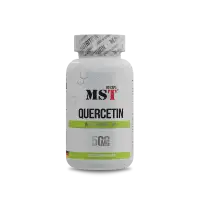 MST Quercetin Bromelain€26.90 In stock 60caps and OstroVit Quercetin 90caps are the quercetin options at maxfit.ee.
Mechanism in Sport
Quercetin works through several pathways relevant to athletic performance:
Mitochondrial biogenesis: Quercetin activates PGC-1alpha (peroxisome proliferator-activated receptor gamma coactivator 1-alpha), a master regulator of mitochondrial development. More mitochondria per muscle cell means greater aerobic energy production capacity – the physiological basis for improved endurance.
Antioxidant and anti-inflammatory effects: Quercetin chelates transition metals and scavenges superoxide and hydroxyl radicals. It also inhibits cyclooxygenase enzymes, reducing prostaglandin-mediated inflammation in a manner relevant to muscle recovery.
Immune modulation: Heavy training transiently suppresses immune function. Quercetin has demonstrated antiviral and immunomodulatory properties that may reduce upper respiratory infection incidence in athletes under high training loads.
Bronchodilatory effects: Some evidence suggests quercetin may support airway function, which is relevant for endurance athletes.
Strength and Endurance Evidence
A meta-analysis by Kressler et al. (2011) pooled data from eleven studies and found that quercetin supplementation produced a statistically significant improvement in VO2 max and endurance performance time compared to placebo, though the absolute effect size was modest. This is meaningful in that VO2 max improvements from any supplement are rarely replicated.
A randomised crossover trial by Cureton et al. (2009) found that quercetin supplementation improved cycling time-trial performance and was associated with higher maximal oxygen uptake in recreationally active men. This is one of the directly applicable sport performance trials.
For immune resilience, a well-designed study by Nieman et al. (2007) found that quercetin-supplemented cyclists had significantly lower incidence of upper respiratory tract infections in the two weeks following an intensive three-day exercise protocol compared to a placebo group. This is particularly relevant for athletes in heavy training blocks.
Effective Protocol
Most human performance studies have used quercetin at doses of around 1000 mg per day, typically divided into two servings of 500 mg, taken with meals containing fat to improve absorption (quercetin is fat-soluble). Supplementation periods in the research ranged from one to twelve weeks.
MST Quercetin Bromelain 60caps pairs quercetin with bromelain – a pineapple-derived enzyme with its own anti-inflammatory properties, making this combination particularly well-suited for recovery-focused athletes.
Absorption varies significantly between individuals and formulations. Quercetin glycosides (found in food) are generally better absorbed than quercetin aglycone (common in supplements). Some advanced formulations use phytosome or nanoparticle technology to improve uptake.
Who Benefits Most
- Endurance athletes (runners, cyclists, triathletes) seeking modest VO2 max support alongside conventional training
- Athletes in heavy training blocks where immune suppression and upper respiratory infections are common risks
- Masters athletes who may particularly benefit from mitochondrial support as mitochondrial density naturally declines with age
- Vegetarians and vegans who already consume quercetin-rich diets but wish to ensure consistent therapeutic-range intake
Honest Verdict
Quercetin is one of the few plant compounds with a reasonable RCT evidence base for endurance performance. Effect sizes are modest – it is not a silver bullet – but the combination of aerobic capacity support, immune protection, and anti-inflammatory properties makes it a rational addition to a comprehensive supplement protocol for high-volume athletes. Pair it with a meal, choose quality formulations, and allow several weeks for mitochondrial effects to accumulate.
Explore quercetin supplements at maxfit.ee.
References
Kressler, J., Millard-Stafford, M., & Warren, G. L. (2011). Quercetin and endurance exercise capacity: a systematic review and meta-analysis. Medicine and Science in Sports and Exercise, 43(12), 2396–2404. https://pubmed.ncbi.nlm.nih.gov/21606866/
Cureton, K. J., Tomporowski, P. D., Singhal, A., Pasley, J. D., Bigelman, K. A., Lambourne, K., Trilk, J. L., King, J. L., Ugrinowitsch, C., & Passe, D. H. (2009). Dietary quercetin supplementation is not ergogenic in untrained men. Journal of Applied Physiology, 107(4), 1095–1104. https://pubmed.ncbi.nlm.nih.gov/19679747/
Nieman, D. C., Henson, D. A., Gross, S. J., Jenkins, D. P., Davis, J. M., Murphy, E. A., Carmichael, M. D., Dumke, C. L., Utter, A. C., McAnulty, S. R., McAnulty, L. S., & Mayer, E. P. (2007). Quercetin reduces illness but not immune perturbations after intensive exercise. Medicine and Science in Sports and Exercise, 39(9), 1561–1569. https://pubmed.ncbi.nlm.nih.gov/17805089/
FAQ
Does quercetin directly increase VO2 max?
Meta-analyses have found small but statistically significant improvements in VO2 max from quercetin supplementation across multiple trials. The mechanism is primarily through mitochondrial biogenesis (via PGC-1alpha activation). The effect is more pronounced in previously sedentary or recreationally active individuals than in already highly trained athletes, where aerobic ceilings are harder to raise through supplementation.
Can I get enough quercetin from food?
Apples, onions, capers, and dark berries are good food sources of quercetin, but consistent therapeutic-range intake (around 1000 mg/day) from food alone is difficult to achieve without very high consumption of these foods. Supplementation is practical for athletes targeting specific performance or immune resilience effects.
Does quercetin interact with medications?
Quercetin can inhibit certain cytochrome P450 enzymes involved in drug metabolism, which may affect the plasma levels of some medications. If you take prescribed medication, particularly for cardiovascular conditions or immunosuppression, consult your doctor before supplementing with quercetin.



