What Is Quercetin?
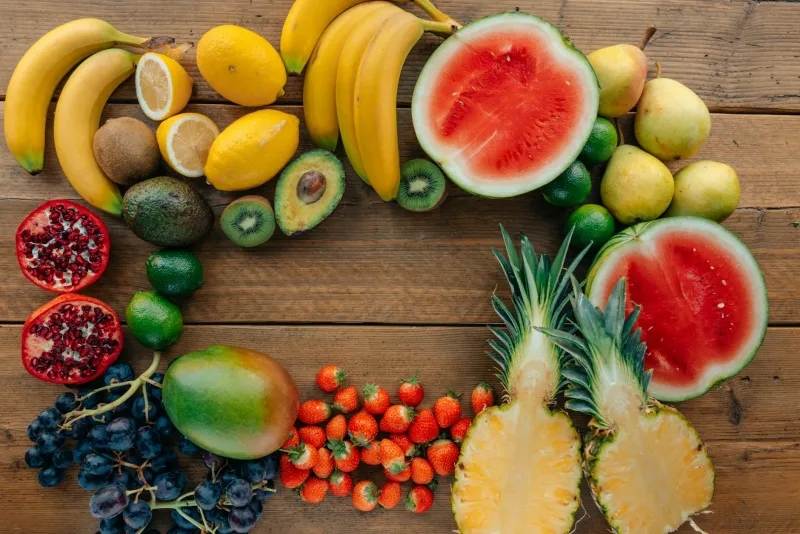
Quercetin is a polyphenolic flavonoid that occurs naturally in many plant foods — fruits, vegetables, grains, and teas. It belongs to the flavonol subgroup and is one of the most widely studied plant antioxidants.
Quercetin is recognised for its potential antioxidant and immune-supporting properties, and has attracted interest in athletic contexts in recent years.
Top Natural Food Sources of Quercetin
Quercetin is widespread in plant-based foods. The richest sources are:
| Food | Approximate quercetin (mg / 100 g) |
|---|---|
| Capers (raw) | 180 mg |
| Red onion (raw) | 35–40 mg |
| Kale | 23–25 mg |
| Broccoli (raw) | 15–20 mg |
| Cherries | 12–15 mg |
| Blueberries | 7–10 mg |
| Apples (with skin) | 4–7 mg |
| Black tea (per cup) | 2–5 mg |
Values are approximate; quercetin content varies by variety, growing location, and ripeness.
Capers are the absolute highest dietary source of quercetin globally, but they are not part of everyday Estonian cuisine. Red onion is the most practically significant everyday source in the Estonian context.
Bioavailability: Food vs. Supplement
Quercetin absorption from food is modest. In nature, quercetin mostly exists as a glycoside (quercetin attached to a sugar chain), which is converted to free quercetin in the intestine. Absorption rate is estimated at roughly 20–50% depending on the food and digestive conditions (Harwood et al., 2007).
Quercetin used in supplements is typically the aglycone form (free quercetin), which absorbs differently than the glycoside form from food. Bioavailability is often improved by combining quercetin with bromelain (a pineapple enzyme) that supports absorption. 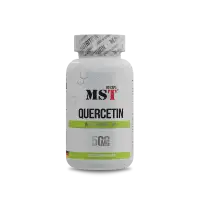 MST Quercetin Bromelain€26.90 In stock 60caps is precisely such a combination.
Daily Targets from Diet
Quercetin has no official daily reference intake. Estimated daily intake from food in Western European populations is roughly 10–30 mg per day (Harwood et al., 2007), but this varies widely based on food choices.
Regularly eating onions, apples, berries, and kale provides a meaningful amount of dietary quercetin.
Cooking and Storage Effects
- Heating moderately reduces quercetin content in vegetables; boiling onions for 15 minutes reduces quercetin by roughly 65%
- Microwaving is better than boiling for quercetin preservation
- Storage: freezing moderately reduces quercetin in berries, but less than heating
- Eating raw (e.g. raw onions, apples with skin) best preserves quercetin
Quercetin and Immune Health
Quercetin research has found that it may support the body's natural defences against oxidative stress in cell culture conditions (Russo et al., 2012). Clinical trials have also examined quercetin in athletic contexts.
Quercetin and Athletic Performance
A number of studies have examined quercetin in athletic contexts, prompted by its apparent influence on mitochondrial biogenesis and anti-inflammatory pathways. A meta-analysis by Kressler et al. (2011) found a small but statistically significant improvement in maximal oxygen uptake (VO2max) with quercetin supplementation across several trials. The magnitude of effect was modest — roughly 3% — and the clinical relevance for well-trained athletes is uncertain.
For recreational athletes or those just starting endurance training, even a modest effect on oxygen metabolism may be more meaningful. Quercetin's combination of anti-inflammatory properties and possible mitochondrial support makes it a logical companion supplement for endurance sports.
Combining Quercetin with Other Nutrients
Quercetin is often combined with other nutrients to enhance its effects:
- Bromelain (pineapple enzyme): improves quercetin absorption and has complementary anti-inflammatory properties
- Vitamin C: may support quercetin stability and regeneration in the body
- Resveratrol: another flavonoid with complementary antioxidant properties
The combination of quercetin with bromelain is the most common pairing in the supplement market and has a reasonable basis in bioavailability research.
When Does a Supplement Make Sense?
Those who want a reliable quercetin dose — particularly during periods when immune support is a priority — find supplements the most dependable option. Quercetin combined with bromelain improves bioavailability.
MST Quercetin Bromelain 60caps and OstroVit Quercetin 90caps are available at maxfit.ee. Browse the quercetin supplement range at /en/category/kvertsetiin.
Quercetin and Seasonal Food Sources
Quercetin is in an interesting position with respect to seasonal availability: summer and autumn bring the highest natural quercetin intake through fresh fruits and vegetables.
Seasonally higher quercetin intake periods:
- Summer: cherries, blueberries, and ripe apples have higher quercetin content
- Autumn: red onion, cabbage, and nuts are available and good sources
- Winter: green tea and onions are year-round sources; fresh red onion remains easily accessible
For athletes training intensively, supplementing quercetin to maintain a more consistent year-round intake is particularly useful during winter and early spring, when fresh berries are not available.
FAQ
Can you get enough quercetin from food?
With a plant-rich diet, meaningful amounts of quercetin can come from food. However, quantities are often much lower than those used in supplements. People with a low plant intake may benefit from supplementation.
Is quercetin useful for allergy contexts?
Quercetin has been attributed mast-cell-stabilising properties in cell culture conditions, but clinical evidence for relieving allergy symptoms in humans is limited (Russo et al., 2012). Do not use quercetin to treat any condition without medical advice.
Is quercetin suitable for vegans?
Yes, quercetin is a plant-derived compound. Most quercetin capsules are made from plant-based capsule materials and are vegan-friendly, but always check the specific product label.
References
- Harwood, M. et al. (2007). A critical review of the data related to the safety of quercetin and the lack of evidence of in vivo toxicity, including lack of genotoxic/carcinogenic properties. Food and Chemical Toxicology, 45(11), 2179–2205. https://pubmed.ncbi.nlm.nih.gov/17698276/
- Russo, M. et al. (2012). The flavonoid quercetin in disease prevention and therapy: facts and fancies. Biochemical Pharmacology, 83(1), 6–15. https://pubmed.ncbi.nlm.nih.gov/21856292/
- Kressler, J. et al. (2011). Quercetin and endurance performance: a systematic review and meta-analysis. Medicine & Science in Sports & Exercise, 43(12), 2396–2404. https://pubmed.ncbi.nlm.nih.gov/21606866/
- Hollman, P.C. et al. (2001). Addition of glucose to quercetin glycosides of onions does not affect absorption in ileostomy patients. European Journal of Clinical Nutrition, 55(11), 903–906.



