What Is Quercetin and How Does It Work?
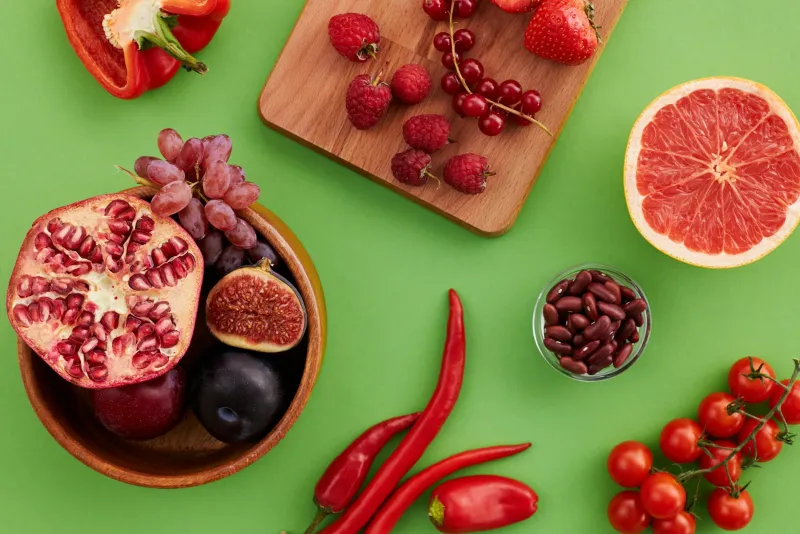
Quercetin is a flavonoid — a type of polyphenol — found naturally in onions, capers, apples, and berries. As a supplement, it is sold in capsule and powder form and marketed primarily for its antioxidant and anti-inflammatory potential.
In cellular studies, quercetin inhibits certain pro-inflammatory enzymes and acts as a free-radical scavenger. It also shows modest antiviral properties in laboratory models. The key question is whether these in-vitro effects translate to measurable benefits in living humans — and the evidence here is more nuanced.
What the RCT and Meta-Analysis Evidence Shows
The most comprehensive meta-analysis on quercetin and blood pressure, covering 7 randomised controlled trials (RCTs), found that supplementation was associated with a statistically significant reduction in systolic blood pressure (Serban et al., 2016). The effect was seen primarily in doses above 500 mg/day.
For exercise performance and recovery, a meta-analysis of 11 RCTs found a small but statistically significant improvement in maximal oxygen uptake (VO₂max) and endurance performance (Kressler et al., 2011). The authors noted high heterogeneity across studies, meaning individual responses vary considerably.
Another well-cited RCT examined quercetin's effect on upper respiratory tract infection (URTI) incidence in cyclists. Participants who received quercetin reported fewer days of illness compared to placebo over a 12-week period (Nieman et al., 2007). While promising, this was a single trial and has not been consistently replicated.
Effect Sizes and Who Benefits
Honest summary: the effects are real but modest. The blood pressure reduction observed in the meta-analysis (Serban et al., 2016) was small in absolute terms and relevant mainly for people with mildly elevated blood pressure rather than those already in the normal range.
For endurance athletes, quercetin appears most interesting as a recovery or immune-support adjunct rather than a direct performance booster. The anti-inflammatory and antioxidant properties may help reduce exercise-induced oxidative stress, though again the clinical magnitude is not dramatic.
Populations that may see the clearest benefit:
- People with mild hypertension or elevated CRP
- Endurance athletes with high training loads (immune resilience focus)
- Those looking for broad antioxidant coverage alongside a diet low in fruits and vegetables
EFSA-Approved Claims
Important caveat: the European Food Safety Authority (EFSA) has not approved any health claim for quercetin specifically. No EU-authorised claim exists linking quercetin to immune function, cardiovascular health, or performance. Any product making specific health promises about quercetin is not backed by EFSA-approved language.
This does not mean quercetin is ineffective — it means the regulatory bar for approved claims is high and the quercetin dossier has not cleared it. Consumers should read supplement labelling critically.
Practical Considerations
Doses used in the positive RCTs range roughly from 500 mg to 1,000 mg per day, typically split across two doses. Quercetin has poor oral bioavailability on its own; some formulations combine it with bromelain or piperine to improve absorption.
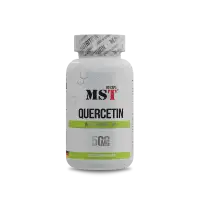 MST Quercetin Bromelain€26.90 In stock 60caps combines quercetin with bromelain precisely to address this absorption issue — the bromelain acts as a bioavailability enhancer. OstroVit Quercetin 90caps provides quercetin in a straightforward single-ingredient format. Both are available at maxfit.ee.
Quercetin is generally well tolerated. No serious adverse effects have been reported in RCTs at doses up to 1,000 mg/day. Interactions with certain medications (especially those metabolised by cytochrome P450 enzymes) are theoretically possible — consult a healthcare provider if in doubt.
Honest Verdict
Quercetin is one of the better-studied plant flavonoids with genuine, if modest, evidence for blood pressure support and endurance recovery. It is not a magic bullet, and EFSA has not approved specific health claims. If your diet is already rich in polyphenol-containing vegetables and fruits, the incremental benefit may be small. For athletes under heavy training loads or those with mild cardiovascular risk, it is a reasonable, low-risk addition to a well-structured supplement stack.
FAQ
Does quercetin help with immunity?
Some evidence from RCTs — notably Nieman et al. (2007) — suggests quercetin may reduce URTI incidence in athletes. However, the evidence is not consistent across all studies, and EFSA has not approved an immune function claim for quercetin. It should not replace foundational immune support (adequate sleep, vitamin D, zinc).
How much quercetin should I take?
RCTs showing benefit have typically used 500–1,000 mg per day. Combining quercetin with bromelain or piperine may improve absorption and allow lower absolute doses to achieve similar plasma levels.
Is quercetin safe?
Clinical trials up to 1,000 mg/day have reported good tolerability with no serious adverse effects. Very high doses have not been rigorously tested in long-term human trials. Standard supplemental doses (500–1,000 mg/day) are considered safe for most healthy adults.
References
Serban, M. C., Sahebkar, A., Zanchetti, A., Mikhailidis, D. P., Howard, G., Antal, D., ... & Banach, M. (2016). Effects of quercetin on blood pressure: a systematic review and meta-analysis of randomized controlled trials. Journal of the American Heart Association, 5(7), e002713. https://pubmed.ncbi.nlm.nih.gov/27405810/
Kressler, J., Millard-Stafford, M., & Warren, G. L. (2011). Quercetin and endurance exercise capacity: a systematic review and meta-analysis. Medicine & Science in Sports & Exercise, 43(12), 2396–2404. https://pubmed.ncbi.nlm.nih.gov/21606866/
Nieman, D. C., Henson, D. A., Gross, S. J., Jenkins, D. P., Davis, J. M., Murphy, E. A., ... & Mayer, E. P. (2007). Quercetin reduces illness but not immune perturbations after intensive exercise. Medicine & Science in Sports & Exercise, 39(9), 1561–1569.



