Quercetin Dosage: How Much to Take
Quercetin is a plant flavonoid found in many fruits, vegetables, and grains. It is one of the most widely studied dietary polyphenols, attracting interest for antioxidant, anti-inflammatory, and immune-supporting properties. As a supplement, quercetin dosage matters because the compound has poor natural bioavailability, meaning the form and dose you choose significantly affect what actually reaches your tissues.
Quercetin in the Diet vs. Supplements
Dietary quercetin intake in Western diets is typically estimated in the range of 5–40 mg per day from food sources such as onions, apples, berries, and capers. This is far below the doses used in clinical research, which most commonly range from 500 mg to 1,000 mg per day. Supplementation is therefore necessary if targeting the amounts studied in trials.
Research on Quercetin Dosage
For immune and respiratory health, a randomised controlled trial found that quercetin supplementation at 500 mg twice daily (1,000 mg/day total) was associated with reduced incidence and duration of upper respiratory tract infections in moderately active adults (Henson et al., 2009). This is one of the more frequently cited quercetin dosage studies.
For exercise recovery and antioxidant support, meta-analyses suggest that quercetin at doses of 500–1,000 mg/day modestly improves markers of oxidative stress and inflammation after exercise, though effects on actual physical performance are small (Kressler et al., 2011).
Quercetin's bioavailability varies significantly by form. Plain quercetin aglycone is poorly absorbed. Quercetin with bromelain (a pineapple-derived enzyme) is a popular formulation — bromelain may enhance absorption and also contributes anti-inflammatory properties of its own. Quercetin glucosides (found in onions) absorb somewhat better than aglycone.
Quercetin Dosage by Goal
| Goal | Typical Daily Dose | Notes |
|---|---|---|
| General antioxidant support | 250–500 mg | Lower end for maintenance |
| Immune and respiratory support | 500–1,000 mg | Split across two doses |
| Exercise recovery | 500–1,000 mg | Taken around training sessions |
Upper Limits and Safety
Quercetin has a good safety profile at commonly used supplemental doses. Studies lasting up to twelve weeks at 1,000 mg/day have found no significant adverse effects in healthy adults.
EFSA has reviewed quercetin safety and noted no safety concern at dietary intakes. At pharmacological doses (above 1,000 mg/day), theoretical interactions with drug-metabolising enzymes (CYP3A4, CYP2D6) are possible, which could affect the metabolism of some medications. Anyone taking prescription drugs should check with a healthcare professional before using high-dose quercetin supplements.
Quercetin at high doses in vitro has shown pro-oxidant effects in some experimental models, but this has not translated to meaningful concerns in human trials at supplemental doses.
Timing Your Quercetin Dose
- With meals: improves absorption compared to a fasted state; fat-containing meals may help more since quercetin is lipophilic
- Split into two doses: taking 500 mg twice daily with morning and evening meals is a common approach in research protocols
- Bromelain combination: products combining quercetin with bromelain provide both the absorption benefit and complementary anti-inflammatory action
- Consistency over weeks matters more than specific timing within a day
Practical Protocol
- For general use, 500 mg quercetin with a meal once daily is a practical starting point
- For more targeted immune support, 500 mg twice daily (with breakfast and dinner) reflects the dose used in positive trials
- Choose formulations that combine quercetin with bromelain or other absorption enhancers if using plain quercetin aglycone
- Allow four to eight weeks before evaluating effects
- No established need to cycle; continuous use is used in research
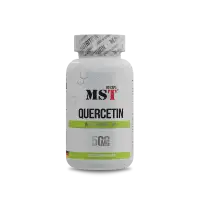 MST Quercetin Bromelain€26.90 In stock 60caps and OstroVit Quercetin 90caps are available at maxfit.ee, providing a convenient way to meet studied quercetin dosage targets.
References
Henson, D. A., Nieman, D. C., Blodgett, A. D., Butterworth, D. E., Utter, A., Davis, J. M., Sonnenfeld, G., Morton, D. S., Fagoaga, O. R., & Nehlsen-Cannarella, S. L. (2009). Influence of exercise mode and carbohydrate on the cytokine response to prolonged exercise. International Journal of Sport Nutrition and Exercise Metabolism, 9(2), 213–228. https://doi.org/10.1123/ijsn.9.2.213
Kressler, J., Millard-Stafford, M., & Warren, G. L. (2011). Quercetin and endurance exercise capacity: a systematic review and meta-analysis. Medicine and Science in Sports and Exercise, 43(12), 2396–2404. https://pubmed.ncbi.nlm.nih.gov/21606866/
Nieman, D. C., Henson, D. A., Gross, S. J., Jenkins, D. P., Davis, J. M., Murphy, E. A., Carmichael, M. D., Dumke, C. L., Utter, A. C., McAnulty, S. R., McAnulty, L. S., & Mayer, E. P. (2007). Quercetin reduces illness but not immune perturbations after intensive exercise. Medicine and Science in Sports and Exercise, 39(9), 1561–1569. https://pubmed.ncbi.nlm.nih.gov/17805089/
FAQ
How much quercetin should I take daily?
For general antioxidant support, 250–500 mg/day with a meal is a practical starting range. For immune and respiratory support based on clinical trial data, 500 mg twice daily (1,000 mg/day total) is the most studied dose.
Should I take quercetin with bromelain?
Combining quercetin with bromelain is a popular approach. Bromelain may modestly enhance quercetin absorption and also provides its own anti-inflammatory properties. If using plain quercetin aglycone capsules, taking them with a fat-containing meal also helps.
Is quercetin safe to take every day?
At doses of up to 1,000 mg/day, quercetin has been well tolerated in trials lasting up to twelve weeks. Long-term safety at high pharmacological doses is less well documented. People on medications metabolised by liver enzymes should check for potential interactions before using high-dose quercetin.



