What Is Quercetin and Where Is It Found?
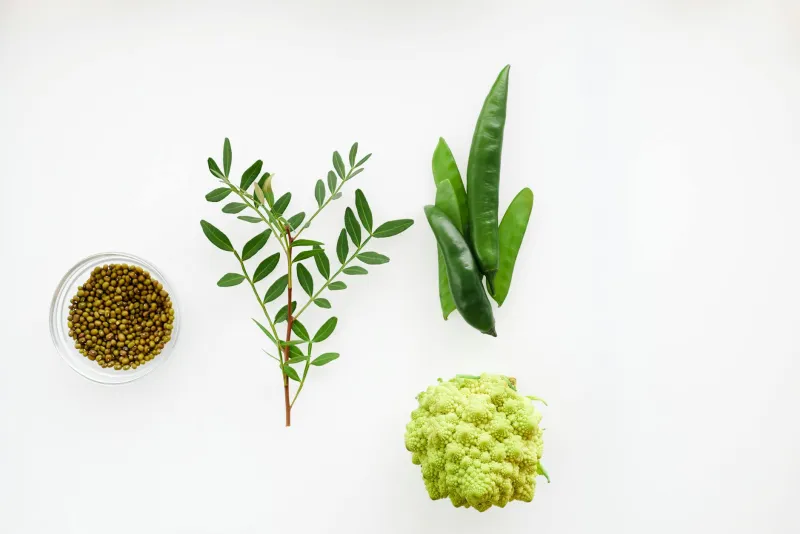
Quercetin is a polyphenol belonging to the flavonoid class, found widely in food — apples, onions, broccoli, berries, capers, and black tea. It is one of the most researched flavonoids used as a supplement.
Quercetin acts through several mechanisms: it inhibits histamine release from mast cells (antihistamine effect), suppresses pro-inflammatory enzymes (COX and LOX pathways), acts as an antioxidant, and may influence mitochondrial biogenesis.
Primary Evidenced Benefits
Allergy and antihistamine effect
Quercetin stabilises mast cell membranes, reducing histamine release. Laboratory studies have shown that quercetin inhibits IgE-mediated mast cell degranulation — the primary mechanism of allergic reactions (Mlcek et al., 2016). Clinical human trials are limited but support a moderate antihistamine effect.
Anti-inflammatory effect
Quercetin inhibits the NF-kB pathway — similarly to curcumin. Studies have shown that quercetin reduces inflammation markers (IL-6, TNF-α, CRP) in both laboratory and clinical settings (Boots et al., 2008). The effect is reproducible but typically requires adequate dosing and bioavailability enhancement.
Secondary and Emerging Effects
Aerobic performance
Quercetin is of interest to athletes — several studies have found that quercetin supplementation supports aerobic capacity by improving mitochondrial function and VO2max. A meta-analysis found a modest but statistically significant increase in aerobic capacity (Kressler et al., 2011). The effect is stronger in untrained individuals.
Immune support
Quercetin-related research has hinted at possible immune-modulating effects — protection against infection and respiratory health. Evidence level is moderate.
Antiviral activity
In vitro studies show that quercetin may inhibit the replication of several viruses. Human trial evidence is limited, but this is an active area of research.
Neuroprotection
Quercetin may support brain health through reducing oxidative stress and suppressing neuroinflammation — but clinical evidence from human trials is limited.
Where Evidence Is Weak
- Weight loss: quercetin's direct fat-burning effect has not been confirmed in clinical trials
- Long-term outcomes: most studies are short-term (8–12 weeks)
- Bioavailability: standard quercetin form has low absorption — the same problem as curcumin
- Clinical allergy relief: antihistamine effect is proven in the lab, but clinical human studies are limited
Who Gains Most
Quercetin is best suited for:
- People with allergies who want natural antihistamine support (especially for seasonal allergy)
- Endurance athletes (running, cycling, triathlon) seeking aerobic capacity support
- Those experiencing chronic inflammation as a dietary supplement
- People who consume few quercetin-rich foods (few apples, onions, berries)
At maxfit.ee you can find 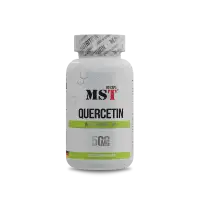 MST Quercetin Bromelain€26.90 In stock 60caps (combined with bromelain — improves bioavailability and adds anti-inflammatory action) and OstroVit Quercetin 90caps.
Improving Bioavailability
Like curcumin, quercetin has low bioavailability. Bioavailability is improved by:
- Combining with bromelain (pineapple enzyme) or piperine
- Taking with fat
- Taking with vitamin C — quercetin regenerates oxidised vitamin C
- Combining with quercetin-rich foods like quinoa and berries
FAQ
What dose of quercetin per day?
Most studies use 500–1,000 mg per day. For allergy support, even smaller doses may help; athletes have used up to 1,000 mg/day.
Does quercetin work for seasonal allergy?
Quercetin may help prevent allergy symptoms when started 4–6 weeks before the season. It is not a fast-acting antihistamine drug — its effect is slower.
Is quercetin safe for long-term use?
Yes — quercetin is well-tolerated. High doses (above 1 g per day) may rarely cause headache or gastrointestinal side effects. Below 1 g per day is generally safe.
References
- Mlcek J, Jurikova T, Skrovankova S, Sochor J. (2016). Quercetin and its anti-allergic immune response. Molecules, 21(5), 623. https://pubmed.ncbi.nlm.nih.gov/27187333/
- Boots AW, Haenen GR, Bast A. (2008). Health effects of quercetin: from antioxidant to nutraceutical. European Journal of Pharmacology, 585(2-3), 325-337. https://pubmed.ncbi.nlm.nih.gov/18417116/
- Kressler J, Millard-Stafford M, Warren GL. (2011). Quercetin and endurance exercise capacity: a systematic review and meta-analysis. Medicine and Science in Sports and Exercise, 43(12), 2396-2404. https://pubmed.ncbi.nlm.nih.gov/21606866/



