Signs You Need Protein Bars: Protein Deficiency and Who Benefits
Protein bars are a popular convenience product — quick, portable, and pre-measured for protein content. But they exist to solve a specific problem: insufficient protein intake from whole food. Understanding whether you have a protein deficiency and whether protein bars are the right tool is more practical than it might seem.
Deficiency Symptoms: What Low Protein Intake Looks Like
Clinical protein deficiency — severe enough to cause kwashiorkor or marasmus — is rare in high-income countries. More common is suboptimal protein intake, which manifests less dramatically:
Muscle loss and weakness: Protein is the primary substrate for muscle maintenance. In older adults, a chronic protein intake below requirements is a key driver of sarcopenia — age-related muscle loss. Morton et al. (2018) demonstrated that protein supplementation in older adults who engaged in resistance training significantly increased muscle mass gains compared to carbohydrate placebo.
Slow recovery after exercise: Insufficient protein means insufficient raw material for muscle protein synthesis following training. Athletes who consistently under-eat protein often experience prolonged soreness and stagnant performance.
Poor satiety and frequent hunger: Protein is the most satiating macronutrient. Diets low in protein tend to drive overconsumption of carbohydrate and fat because hunger signals remain high. If you feel hungry shortly after meals, protein intake may be a contributing factor.
Brittle nails, dry skin, and hair thinning: Keratin (the protein in nails and hair) and collagen require adequate amino acid substrates. Chronically low protein intake reduces the raw material available for these structural proteins.
Frequent illness or slow wound healing: Immune cells and repair processes require amino acids. Suboptimal protein can compromise immune function and tissue repair, though this is rarely the sole cause.
At-Risk Groups
Certain groups are more likely to have protein intake below their physiological needs:
- Older adults: protein needs per kg of body weight may increase with age due to reduced anabolic sensitivity; appetite often declines, making it harder to eat enough
- Vegetarians and vegans: plant proteins have lower digestibility and different amino acid profiles; meeting leucine thresholds for muscle protein synthesis requires more careful planning
- Athletes with high training volume: needs are elevated; a general adult target of 0.8 g/kg is insufficient for those training more than a few hours per week
- People on calorie-restricted diets: when total energy intake falls, protein intake often falls proportionally unless actively maintained
- Busy professionals who skip meals: protein intake is highly meal-timing dependent; skipping meals disproportionately reduces protein
How Protein Status Is Assessed
There is no single blood test for suboptimal protein intake. Serum albumin reflects overall protein status, but falls only in significant deficiency. More useful indicators include:
- Dietary recall or food diary analysis against body-weight-adjusted targets
- Body composition tracking (muscle mass maintenance over time)
- Clinical markers of muscle function in older adults (grip strength, gait speed)
Nordic and Estonian Context
Traditional Estonian diets are not inherently protein-poor — fish, pork, eggs, and dairy feature prominently. However, modern eating patterns with more convenience foods and reduced cooking often mean lower protein quality and quantity at specific meals. Breakfast, in particular, tends to be the most protein-poor meal for many adults. Protein bars are a practical intervention precisely here: a Barebells proteiinibatoon 55g Soolane maapähkel or ICONFIT Posh Bar Cookie Bliss 55g consumed as a mid-morning snack can meaningfully close a daily protein gap without requiring meal preparation.
When Protein Bars Make Sense vs Whole Food
When bars are the right tool:
- Post-training when a whole meal is not immediately available
- During long workdays without meal breaks
- Travel situations where protein-rich food is unavailable or inconvenient
- Bridging protein between meals for active individuals
When whole food is preferable:
- Regular meals where time and kitchen access are available — whole food provides fibre, micronutrients, and satiety signals that bars often lack
- If sugar alcohols or artificial sweeteners in bars cause digestive discomfort
Available at maxfit.ee, ON Whipped Protein Bar 60g Soolatud karamell and Barebells proteiinibatoon 55g Küpsised ja kreem offer quality protein profiles for active individuals. 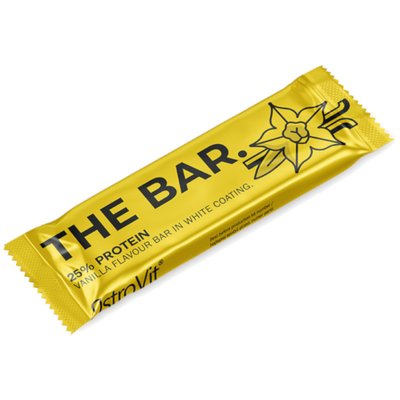 OstroVit The Bar 60g Vanill€1.99 In stock is a competitively priced option. Explore the full protein bars range at maxfit.ee.
FAQ
How much protein do I need per day?
The evidence-based range for active adults engaged in regular resistance training is approximately 1.6–2.2 g per kg of body weight per day (Morton et al., 2018). The general adult recommendation of 0.8 g/kg is a minimum to prevent deficiency, not an optimal target for those exercising. Older adults may benefit from the upper end of this range due to anabolic resistance.
Can I rely on protein bars as my main protein source?
Protein bars are a supplement tool, not a replacement for a varied diet. They typically provide 15–25 g of protein per bar and are formulated around convenience. They lack the micronutrient density of whole food and provide little dietary fibre. Using 1–2 bars per day as part of a broader diet that includes meat, fish, dairy, eggs, or legumes is practical; depending on them exclusively is not recommended.
Are protein bars suitable for weight loss?
Protein bars can support a weight loss diet by providing satiating protein in a controlled portion. A higher protein diet is associated with greater preservation of lean mass during caloric restriction (Leidy et al., 2015). Choose bars with lower added sugar content and moderate total calories if fat loss is the goal.
References
Morton, R. W., Murphy, K. T., McKellar, S. R., Schoenfeld, B. J., Henselmans, M., Helms, E., Aragon, A. A., Devries, M. C., Banfield, L., Krieger, J. W., & Phillips, S. M. (2018). A systematic review, meta-analysis and meta-regression of the effect of protein supplementation on resistance training-induced gains in muscle mass and strength in healthy adults. British Journal of Sports Medicine, 52(6), 376–384. https://pubmed.ncbi.nlm.nih.gov/28698222/
Leidy, H. J., Clifton, P. M., Astrup, A., Wycherley, T. P., Westerterp-Plantenga, M. S., Luscombe-Marsh, N. D., Woods, S. C., & Mattes, R. D. (2015). The role of protein in weight loss and maintenance. American Journal of Clinical Nutrition, 101(6), 1320S–1329S. https://pubmed.ncbi.nlm.nih.gov/25926512/
Bauer, J., Biolo, G., Cederholm, T., Cesari, M., Cruz-Jentoft, A. J., Morley, J. E., Phillips, S., Sieber, C., Stehle, P., Teta, D., Visvanathan, R., Volpi, E., & Boirie, Y. (2013). Evidence-based recommendations for optimal dietary protein intake in older people: a position paper from the PROT-AGE study group. Journal of the American Medical Directors Association, 14(8), 542–559. https://pubmed.ncbi.nlm.nih.gov/23867520/



