
Why the Science Has Moved
Probiotics and digestive enzymes are among the most purchased supplement categories globally, yet the research landscape has shifted noticeably since the early 2010s. Strain-specific evidence has replaced broad claims, gut microbiome sequencing has revealed how individual differences shape response, and the regulatory position of digestive enzymes as therapeutic agents versus food supplements has become better defined. This update synthesises where the evidence now stands.
For those looking to support digestion at maxfit.ee, products like SELF Probiotic Lactospore 60 caps, ICONFIT Boulardii 60caps, and 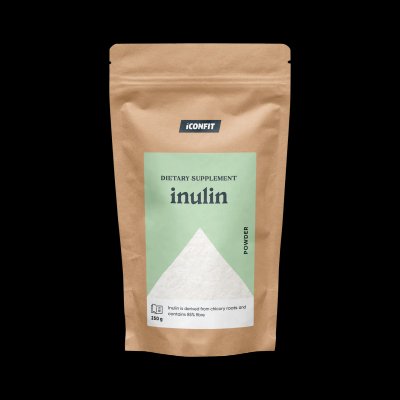 ICONFIT Superfoods Inulin Powder€7.40 In stock 250g reflect the more targeted direction modern research endorses. For fibre-based prebiotic support, NOW Psyllium Husk 500mg 200 veg caps and OstroVit Berberine 90tabs also appear in this category.
What Recent Trials Show
Probiotics: Strain Specificity Is Everything
The most important insight from recent research is that not all probiotics are equivalent. A large meta-analysis confirmed that Lactobacillus rhamnosus GG is one of the best-supported single strains for reducing the duration of acute infectious diarrhoea in children (Szajewska et al., 2019). However, the same analysis found that many other commercial strains showed no significant benefit for the same outcome. The genus-level "probiotic" label conceals enormous variation.
For irritable bowel syndrome, a network meta-analysis found that multi-strain formulations outperformed single strains on global symptom scores (Ford et al., 2018). This has driven a trend toward combination products in clinical practice.
Digestive Enzymes: Real Benefits in Specific Conditions
Pancreatic enzyme replacement therapy (PERT) for exocrine pancreatic insufficiency has a robust evidence base. For healthy individuals without enzyme deficiency, the story is more nuanced. There is modest clinical evidence that oral bromelain reduces post-exercise muscle soreness, though the mechanism may be anti-inflammatory rather than purely digestive. Lactase supplementation reliably reduces symptoms in lactose-intolerant individuals, which is one of the clearest enzyme supplement use cases.
Shifts in Consensus
The Microbiome Diversity Paradigm
Earlier thinking held that simply adding probiotic colony-forming units would colonise the gut and improve health. More recent research, including microbiome sequencing studies, shows that most commercial probiotic strains do not durably colonise the gut after supplementation ends (Zmora et al., 2018). The clinical effects that do occur appear to be mediated by transient interactions with resident bacteria and immune signalling rather than permanent colonisation. This reframes the goal: probiotics may be best viewed as functional foods that temporarily modulate immune and metabolic activity, not as permanent gut settlers.
Prebiotics as the Overlooked Partner
Research increasingly emphasises that dietary fibre and prebiotic compounds including inulin and fructooligosaccharides may have a larger and more durable impact on microbiome composition than probiotic supplementation alone. A fibre-rich diet creates conditions that allow beneficial bacteria already resident in the gut to thrive. This places prebiotic-rich additions in a more central role than previously acknowledged.
Still-Open Questions
Optimal dosing and duration: Most trials run for four to twelve weeks. Whether benefits persist or accumulate with longer supplementation, or whether cycling on and off is preferable, is unknown.
Athlete-specific microbiome: Endurance athletes show distinct microbiome profiles from sedentary individuals. Whether these differences require athlete-tailored probiotic formulations, or whether standard strains are sufficient, is an active research area.
Enzyme synergy: Whether combining multiple digestive enzymes produces additive benefits versus single-enzyme approaches has not been adequately studied in healthy populations.
Delivery systems: Enteric-coated vs. non-enteric-coated probiotic capsules, and the impact of stomach acid exposure on viable cell delivery, remain areas where practical guidance is inconsistent.
What It Means Practically
| Situation | Evidence-backed approach |
|---|---|
| Antibiotic-associated diarrhoea | L. rhamnosus GG or S. boulardii (Saccharomyces boulardii) show best evidence |
| IBS symptom management | Multi-strain formulations have moderate evidence |
| Lactose intolerance | Lactase enzyme supplementation is well-supported |
| General gut health in healthy adults | Prebiotic fibre (inulin, psyllium) has stronger evidence for microbiome diversity than most probiotic strains |
| Post-exercise recovery | Bromelain has modest evidence for soreness; probiotics lack sport-specific RCT support |
Bottom Line
The field has matured. Generic "probiotic" and "digestive enzyme" labels are no longer sufficient for informed decision-making. The most defensible approach is to choose strain-specific or condition-specific products, prioritise prebiotic fibre as the foundation of microbiome support, and use enzyme supplementation where a clear physiological need exists (lactose intolerance, confirmed enzyme insufficiency) rather than as a general digestive booster.
FAQ
Should probiotics be taken with food or on an empty stomach?
Most research on probiotic survival through the gastrointestinal tract suggests that taking probiotics with or just before a meal containing some fat improves viable cell delivery compared to taking them on an empty stomach. However, the practical difference may be small for enteric-coated formulations.
Do digestive enzyme supplements help healthy people digest protein faster?
For healthy people with normal pancreatic function, there is limited evidence that enzyme supplements meaningfully accelerate protein digestion or improve amino acid absorption from a normal mixed meal. The benefit is more clearly established for people with confirmed enzyme deficiency or specific intolerances.
Can you take probiotics and digestive enzymes together?
There is no established pharmacological interaction between probiotics and digestive enzymes. Taking them together is common practice. However, taking enzyme supplements simultaneously with live probiotic bacteria raises a theoretical concern about whether proteolytic enzymes could damage probiotic bacteria, so spacing them by a meal may be a reasonable precaution.
References
Szajewska, H., Kołodziej, M., Gieruszczak-Białek, D., Skórka, A., Ruszczynski, M., Shamir, R. (2019). Systematic review with meta-analysis: Lactobacillus rhamnosus GG for treating acute gastroenteritis in children. Alimentary Pharmacology & Therapeutics, 49(11), 1212-1224. https://doi.org/10.1111/apt.15267
Ford, A. C., Harris, L. A., Lacy, B. E., Quigley, E. M. M., Moayyedi, P. (2018). Systematic review with meta-analysis: the efficacy of prebiotics, probiotics, synbiotics and antibiotics in irritable bowel syndrome. Alimentary Pharmacology & Therapeutics, 48(10), 1044-1060. https://pubmed.ncbi.nlm.nih.gov/30294792/
Zmora, N., Zilberman-Schapira, G., Suez, J., Mor, U., Dori-Bachash, M., Bashiardes, S., Kotler, E., Zur, M., Regev-Lehavi, D., Brik, R. B., Federici, S., Cohen, Y., Liber, R., Rothschild, D., Werber, A. Z., Ben-Zeev, O., Dahan, D., Suez, A., Schwartz, B., Kuperman, Y., Harmelin, A., Halpern, Z., Segal, E., Elinav, E. (2018). Personalized gut mucosal colonization resistance to empiric probiotics is associated with unique host and microbiome features. Cell, 174(6), 1388-1405. https://pubmed.ncbi.nlm.nih.gov/30193112/



