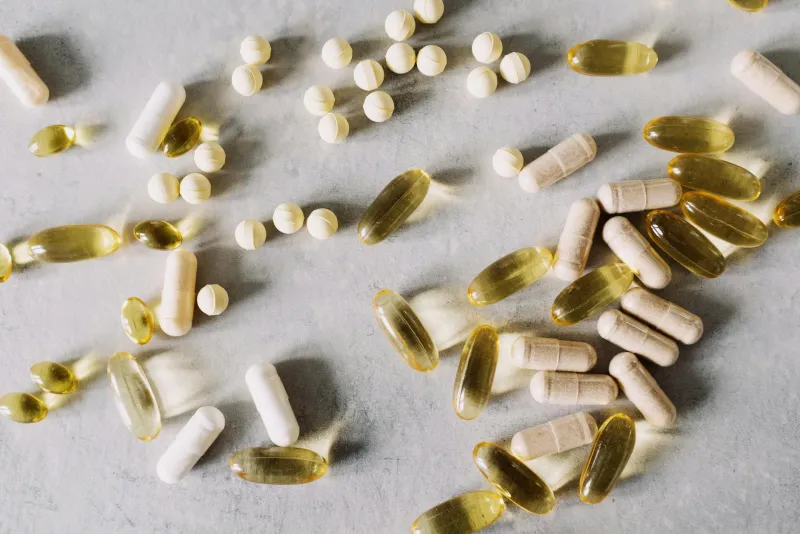
Probiotics & Digestive Enzymes: Myths vs Facts
The supplement aisle is overflowing with probiotics and digestive enzymes, each promising to transform your gut. Marketing claims have outpaced the science, leaving consumers confused about what actually works. This guide cuts through the noise on the most common probiotics and digestive enzymes myths and anchors each claim in peer-reviewed evidence.
Myth 1: All Probiotics Work the Same Way
One of the most persistent myths is that any probiotic product delivers the same benefits. In reality, probiotic effects are profoundly strain-specific. A meta-analysis by Goldenberg et al. (2017) found that certain Lactobacillus and Saccharomyces boulardii strains significantly reduced antibiotic-associated diarrhoea, while other strains showed no benefit in the same condition. Choosing a probiotic without knowing which strain addresses your concern is a bit like picking a medication by its bottle colour.
SELF Probiotic Lactospore 60 caps and ICONFIT Boulardii 60caps are two products available at maxfit.ee that use documented probiotic species — worth checking if the strain matches your goal.
Myth 2: More Colony-Forming Units Always Means Better Results
Higher CFU counts are a popular selling point, but survival to the colon matters more than the number on the label. Many bacteria never reach the large intestine alive. Formulation, encapsulation technology, and storage conditions all influence what arrives where it is needed. A well-formulated lower-CFU product can outperform a poorly protected high-CFU capsule.
Myth 3: Digestive Enzymes Replace a Poor Diet
Digestive enzyme supplements are sometimes marketed as a way to eat anything without consequences. This is a significant exaggeration. Supplemental enzymes can help people with documented deficiencies — such as lactase insufficiency or exocrine pancreatic insufficiency — but they do not replicate the full digestive capacity of a healthy gut, nor do they remove the downstream effects of a diet high in processed food. Enzymes are a support tool, not a dietary free pass.
What the Evidence Actually Shows
The strongest evidence for probiotics relates to specific clinical contexts. Hempel et al. (2012) conducted a systematic review and meta-analysis across 82 randomised controlled trials and found that probiotics were associated with a reduction in antibiotic-associated diarrhoea risk (relative risk approximately 0.58 compared with placebo). Evidence for broader claims — such as weight loss, immune enhancement in healthy adults, or mood improvement — is more preliminary and context-dependent.
For digestive enzymes, the clearest benefit is in conditions of enzyme insufficiency. Beyond that, the data for healthy adults taking broad-spectrum enzyme blends is limited.
Marketing Claims vs Reality
| Claim | Evidence Status |
|---|---|
| Probiotics cure IBS | Mixed — some strains help some IBS subtypes |
| Digestive enzymes improve protein absorption in healthy adults | Insufficient robust evidence |
| Probiotics boost immunity in healthy people | Inconsistent; highly strain- and dose-dependent |
| Prebiotics feed beneficial bacteria | Well-supported — fibre intake matters |
A diet rich in fermented foods and prebiotic fibre remains the most evidence-backed foundation. Supplements like ICONFIT Superfoods Inulin Powder 250g (a prebiotic fibre) and ICONFIT Superfoods Organic Psyllium Husk Powder 150g (soluble fibre) can complement dietary fibre intake in a straightforward way.
Grey Areas
Some genuinely uncertain areas exist. Probiotic effects on mental health through the gut-brain axis are intriguing but early-stage. Probiotic use after antibiotic courses is commonly recommended, yet some research suggests it may actually delay the natural recovery of microbiome diversity in healthy individuals (Suez et al., 2018). Individual variation is enormous, and personalised approaches will likely outperform one-size-fits-all protocols.
Bottom Line
Probiotics and digestive enzymes are legitimate tools in specific circumstances — not universal health boosters. Strain selection, formulation quality, and matching the product to an actual need all matter. If you are considering a supplement, look for products with named strains and honest labelling, and consult a healthcare professional if you have an underlying digestive condition.
FAQ
Should I take probiotics every day?
For most healthy adults, consistent daily use does not have strong independent support in the research. Short-term use during or after antibiotic treatment is the best-supported application. Long-term daily supplementation may be helpful for specific conditions, but routine use in the absence of a clear indication is not firmly evidence-backed.
Do digestive enzymes help with bloating?
They may help if bloating is related to a specific enzyme deficiency, such as lactase insufficiency causing discomfort after dairy. For general bloating in healthy people, the evidence is limited. Dietary changes — reducing processed foods and increasing fibre gradually — tend to have stronger and more durable effects.
Are there risks to taking probiotics?
For healthy adults, probiotics are generally considered safe. However, individuals with compromised immune systems or serious underlying conditions should consult a doctor before use, as rare but serious adverse events have been reported in vulnerable populations.
References
Goldenberg, J. Z., Lytvyn, L., Steurich, J., Parkin, P., Mahant, S., & Johnston, B. C. (2015). Probiotics for the prevention of pediatric antibiotic-associated diarrhea. Cochrane Database of Systematic Reviews.
Hempel, S., Newberry, S. J., Maher, A. R., Wang, Z., Miles, J. N. V., Shanman, R., Johnsen, B., & Shekelle, P. G. (2012). Probiotics for the prevention and treatment of antibiotic-associated diarrhea: a systematic review and meta-analysis. JAMA, 307(18), 1959-1969. https://pubmed.ncbi.nlm.nih.gov/22570464/
Suez, J., Zmora, N., Zilberman-Schapira, G., Mor, U., Dori-Bachash, M., Bashiardes, S., Zur, M., Regev-Lehavi, D., Brik, R. B. Z., Federici, S., Horn, M., Cohen, Y., Moor, A. E., Zeevi, D., Korem, T., Kotler, E., Harmelin, A., Itzkovitz, S., Maharshak, N., Shapiro, H., Segal, E., & Elinav, E. (2018). Post-antibiotic gut mucosal microbiome reconstitution is impaired by probiotics and improved by autologous FMT. Cell, 174(6), 1406-1423. https://pubmed.ncbi.nlm.nih.gov/30193113/



