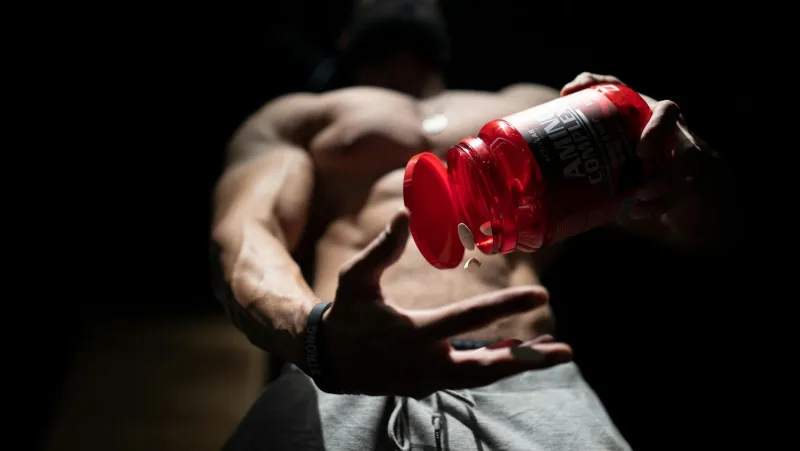
Pre-Workout Supplements Benefits: Evidence-Backed Effects
Pre-workout supplements are multi-ingredient formulas taken shortly before exercise to enhance performance. The market is crowded with bold claims, but the underlying science is more nuanced: a handful of ingredients have strong evidence, several have emerging support, and others add mostly marketing. This guide focuses on what research actually demonstrates.
Primary Evidenced Benefits
1. Caffeine: The Most Robust Performance Ingredient
Caffeine is the backbone of virtually every pre-workout formula and has the strongest evidence base of any legal ergogenic substance. A comprehensive meta-analysis by Grgic et al. (2018) found that caffeine significantly improved muscular strength and endurance performance, with the effect size varying by exercise type but consistently favourable (Grgic et al., 2018). The mechanism — adenosine receptor antagonism — is well established.
Effective doses in the literature fall between approximately 3 and 6 mg per kg of body weight. Common pre-workout formulas typically deliver 150–300 mg of caffeine per serving, which covers this range for most users weighing 50–90 kg.
C4 Original Pre-Workout 30serv Icy Blue Razz contains 150 mg caffeine per serving — a moderate, well-tolerated dose for most training-day use.
2. Beta-Alanine: Buffering High-Intensity Fatigue
Beta-alanine raises muscle carnosine concentrations over several weeks of consistent use. Carnosine acts as a pH buffer during high-intensity exercise, delaying the acidosis-related fatigue that limits performance in efforts lasting roughly 1–4 minutes. Hobson et al. (2012) conducted a meta-analysis showing that beta-alanine supplementation significantly improved exercise capacity in this duration range (Hobson et al., 2012).
The characteristic tingling (paraesthesia) is a benign side effect that occurs at doses above about 800 mg per bolus — it does not signal harm.
3. L-Citrulline: Pump and Endurance
L-citrulline increases plasma arginine and subsequently nitric oxide production, which promotes vasodilation. Research supports modest improvements in endurance exercise performance and muscle oxygenation. A common effective dose in studies is 6–8 g of L-citrulline per serving, or equivalent citrulline malate. Many pre-workout formulas underdose citrulline; checking the label is worthwhile.
OstroVit Pump Pre-Workout 300g Orange features L-citrulline as a primary active ingredient alongside other pump-focused compounds.
Secondary and Emerging Effects
Creatine in Pre-Workout Blends
Some pre-workout formulas include creatine (typically 2–5 g per serving). Creatine monohydrate has a strong independent evidence base for increasing power output and lean mass over time. However, creatine's benefits are cumulative (saturation of muscle stores takes 1–4 weeks) rather than acute — so acute pre-workout timing is less critical than consistent daily supplementation.
B-Vitamins and Other Additives
Many formulas include B-vitamins (B6, B12, niacin), tyrosine, and taurine. These are generally safe and may contribute to energy metabolism, but robust sport-performance evidence for these as standalone additions at typical pre-workout doses is limited. They add to formula completeness rather than delivering clearly measurable performance gains on their own.
Where the Evidence Is Weak
- Proprietary blends with undisclosed quantities: if a formula hides ingredient amounts behind a blend-weight total, you cannot verify that active ingredients reach studied effective doses.
- Duplicate stimulant stacks: ingredients like guarana and green tea extract overlap substantially with caffeine's mechanism rather than adding independent benefit.
- Acute fat-oxidation claims: stimulants may slightly increase resting metabolic rate, but the effect on actual fat loss during a single training session is not meaningfully supported.
Who Gains Most
Pre-workout supplements offer the clearest benefits to:
- Trained individuals doing high-intensity or high-volume sessions — caffeine and beta-alanine effects are more pronounced at training intensities that actually approach muscular or cardiovascular limits.
- People training with low habitual caffeine intake — caffeine tolerance attenuates the acute performance effect; regular heavy coffee drinkers will see smaller gains.
- Those training in a caloric deficit — the stimulant and anti-fatigue properties can offset energy availability-related performance drops.
Novice exercisers in the first weeks of training will likely see performance improvements from training itself that far exceed any supplement contribution.
Realistic Expectations
A well-formulated pre-workout can help you train harder, push more volume, and feel more alert during your session. It will not replace adequate sleep, consistent training progression, or sufficient dietary protein. The research supports modest but real performance enhancements — not dramatic transformations.
For best results, cycle caffeine-containing products periodically (e.g., avoid them on easy or active-recovery days) to prevent tolerance build-up.
Explore the full pre-workout supplement range at MaxFit.ee including pre-workout powders and pre-workout shots.
Optimum Nutrition Gold Standard Pre-Workout Shot 60ml Mixed Berries is a convenient single-serve option when you need a precise, portable dose.
References
Grgic, J., Trexler, E. T., Lazinica, B., & Pedisic, Z. (2018). Effects of caffeine intake on muscle strength and power: a systematic review and meta-analysis. Journal of the International Society of Sports Nutrition, 15, 11. https://pubmed.ncbi.nlm.nih.gov/29527137/
Hobson, R. M., Saunders, B., Ball, G., Harris, R. C., & Sale, C. (2012). Effects of beta-alanine supplementation on exercise performance: a meta-analysis. Amino Acids, 43(1), 25–37. https://pubmed.ncbi.nlm.nih.gov/22270875/
Perez-Guisado, J., & Jakeman, P. M. (2010). Citrulline malate enhances athletic anaerobic performance and relieves muscle soreness. Journal of Strength and Conditioning Research, 24(5), 1215–1222.
FAQ
How long before training should I take a pre-workout supplement?
For caffeine, peak plasma concentration occurs roughly 30–60 minutes after ingestion. Taking your pre-workout 20–30 minutes before training typically aligns well with the onset of performance effects. Citrulline has a slower onset and benefits more from consistent daily use than precise acute timing.
Are pre-workout supplements safe to use every day?
For healthy adults, daily use of correctly dosed pre-workout products is generally well tolerated. The main practical concern is caffeine tolerance — daily use at high doses will reduce the acute performance effect over weeks. Many coaches suggest reserving pre-workouts for demanding sessions and training without them on lower-intensity days.
Do pre-workout supplements help with fat loss?
Indirectly, yes — to the extent that they allow you to train harder and accumulate more volume, they support the training stimulus that drives body composition change. Direct acute fat-burning claims from pre-workout ingredients are not well supported by the evidence. The core driver of fat loss remains a sustained caloric deficit.



