What Recent Trials Show About Potency and Prostate Support
Potency and prostate support remain among the most commercially active areas of men's health supplementation, and the research landscape has shifted meaningfully over the past decade. This update reviews the current state of evidence for the most commonly used supplement ingredients in this category, focusing on what recent randomised controlled trials have added to our understanding.
This article covers four well-studied areas: zinc, maca (Lepidium meyenii), saw palmetto (Serenoa repens) for prostate symptoms, and vitamin D for testosterone and prostate health.
Zinc: Still the Foundation
Zinc occupies a special place in men's reproductive health because it is required for testosterone biosynthesis, sperm maturation, and prostate function. The prostate gland has one of the highest zinc concentrations of any tissue in the body.
A meta-analysis by Te et al. (2011) found that zinc supplementation in zinc-deficient men was associated with increased serum testosterone levels. Crucially, this benefit is seen when correcting deficiency — zinc supplementation in men with already adequate zinc status does not reliably raise testosterone further. This distinction matters for product selection.
For prostate health specifically, observational data suggest that zinc insufficiency is associated with higher risk of prostate enlargement and prostate cancer, though supplementation trials have not consistently shown protective effects in already zinc-replete men.
ICONFIT Capsules Zinc N90, SELF Zinc 100tabs, and 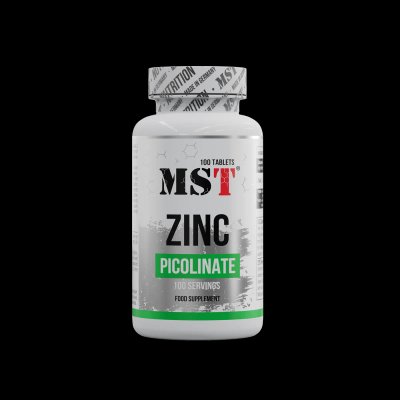 MST Zinc Picolinate€13.90 In stock 100tabs are in-stock zinc supplements at maxfit.ee covering different forms (picolinate, gluconate) with different bioavailability profiles. Zinc picolinate and zinc bisglycinate are generally considered more bioavailable than zinc oxide.
Shifts in Consensus: Maca
Maca root has been marketed extensively for libido and sexual function, and the evidence base has grown more nuanced. Earlier reviews found positive effects on self-reported libido in men, but testosterone levels were not consistently affected. Gonzales et al. (2002) conducted a randomised double-blind trial showing that maca improved self-reported sexual desire in men without altering testosterone, LH, FSH, oestradiol, or prolactin — suggesting a non-hormonal mechanism.
More recently, interest has shifted toward maca's potential role in antidepressant-induced sexual dysfunction. A double-blind trial found that maca at higher doses improved sexual dysfunction in patients on antidepressants (Brooks et al., 2008). This is a more specific application than general libido support and represents a useful shift in how practitioners frame maca's clinical role.
NOW Maca 500mg 250 veg. caps. and Ostrovit Maca 90tab are available at maxfit.ee — both providing standardised maca root powder at established doses from clinical research.
Saw Palmetto for Benign Prostatic Hyperplasia: Still-Open Questions
Saw palmetto (Serenoa repens) extract has been used for decades to relieve lower urinary tract symptoms (LUTS) associated with benign prostatic hyperplasia (BPH). The proposed mechanism is inhibition of 5-alpha-reductase (the enzyme converting testosterone to dihydrotestosterone, which drives prostate growth) and anti-inflammatory activity.
However, the evidence has become more controversial. A large, high-quality randomised controlled trial — the CAMUS trial by Barry et al. (2011) — found that escalating doses of saw palmetto extract (from 320 mg to 960 mg/day over 72 weeks) produced no greater improvement in urinary symptoms than placebo. This finding was a significant challenge to the conventional wisdom supporting saw palmetto.
Previous smaller trials had shown positive results, and a 2012 Cochrane systematic review concluded that saw palmetto was not more effective than placebo for improving urinary symptoms. The consensus among urologists has since shifted toward recommending saw palmetto with lower confidence for BPH symptom relief, while acknowledging it is generally safe and that some individuals report subjective benefit.
For men over 50 with lower urinary tract symptoms, consultation with a physician is recommended before relying on supplemental approaches, as BPH can worsen and effective prescription treatments exist.
Vitamin D, Testosterone, and Prostate Health
Vitamin D has attracted growing interest for men's health after observational studies found associations between low vitamin D status and lower testosterone levels, as well as between vitamin D deficiency and higher prostate cancer risk.
In a randomised trial, Pilz et al. (2011) found that men with low vitamin D levels who supplemented with vitamin D showed significantly higher testosterone levels at 12 months compared to placebo — an increase of a clinically modest but measurable magnitude. This suggests that correcting vitamin D deficiency (which is common in Northern Europe, including Estonia) may support testosterone levels.
OstroVit Vitamin D3 4000 IU 120caps and OstroVit Vitamin D3 + K2 90 tabs are high-dose vitamin D options at maxfit.ee relevant for men living at northern latitudes where sun exposure is insufficient for adequate synthesis much of the year.
What It Means Practically
The practical picture emerging from recent research is that:
- Address deficiencies first: zinc and vitamin D are the two supplements most likely to produce measurable effects when there is actual deficiency — and deficiency is relatively common. Testing status before supplementing avoids unnecessary cost and potential excess.
- Maca for libido and specific applications: realistic expectation is subjective improvement in desire and possibly benefit in antidepressant-induced dysfunction; no reliable testosterone effect.
- Saw palmetto for BPH: the evidence has weakened. It remains safe but should not be relied upon as primary treatment for significant urinary symptoms.
- Testosterone-boosting claims on multi-ingredient products (tribulus, D-aspartic acid, etc.) generally lack robust clinical support in men with normal testosterone — these are not reviewed here but deserve the same sceptical, evidence-based lens.
Browse Potency and Prostate Support Products
Explore products in the men's health category at maxfit.ee/en/category/potents-ja-seksuaaltervis.
References
- Gonzales, G. F., Cordova, A., Vega, K., Chung, A., Villena, A., Gonez, C., & Castillo, S. (2002). Effect of Lepidium meyenii (MACA) on sexual desire and its absent relationship with serum testosterone levels in adult healthy men. Andrologia, 34(6), 367–372.
- Barry, M. J., Meleth, S., Lee, J. Y., Kreder, K. J., Avins, A. L., Nickel, J. C., & Roehrborn, C. G. (2011). Effect of increasing doses of saw palmetto extract on lower urinary tract symptoms: a randomized trial. JAMA, 306(12), 1344–1351. https://pubmed.ncbi.nlm.nih.gov/21954478/
- Pilz, S., Frisch, S., Koertke, H., Kuhn, J., Dreier, J., Obermayer-Pietsch, B., & Zittermann, A. (2011). Effect of vitamin D supplementation on testosterone levels in men. Hormone and Metabolic Research, 43(3), 223–225. https://pubmed.ncbi.nlm.nih.gov/21154195/
FAQ
Will zinc supplements increase testosterone if I already have normal levels?
Unlikely in a meaningful way. The testosterone-boosting effect of zinc is documented when correcting deficiency. Men with normal serum zinc and normal testosterone should not expect significant hormonal changes from supplementation.
Is saw palmetto still worth taking for prostate symptoms?
The evidence is weaker than it once appeared. It is generally safe and some men report subjective benefit, but the largest high-quality trial showed no superiority over placebo. Men with troublesome urinary symptoms should see a physician for proper assessment.
Should men in Estonia supplement vitamin D for testosterone support?
Yes, for correcting deficiency — which is common at Estonian latitudes, particularly from October to April. Vitamin D insufficiency is associated with lower testosterone in observational data, and a randomised trial showed a benefit from correcting deficiency. Standard supplementation of 1000–4000 IU/day is broadly recommended for Northern Europeans during low-sunlight months.



