


Who this guide is for
This guide was written for two people. The first is a vegan or vegetarian who lifts and wants to know whether pea protein really builds muscle as well as whey. The second is someone who tolerates whey badly - bloating, gas, a heavy feeling after the shaker - and is looking for something that leaves the stomach alone.
If you belong to either group, pea protein is probably the best plant-based starting point. But there are details most articles skip: the methionine content, the dose you actually need, the taste, and the fact that pure pea protein isolate is almost impossible to buy off a shelf in Estonia. Let us go through them one at a time.
What pea protein actually is and how it is made
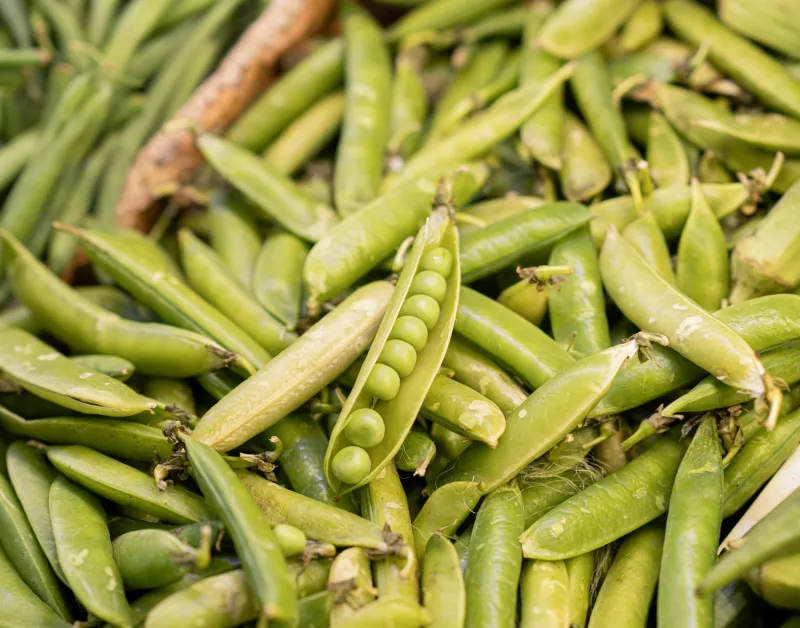
Pea protein comes from the yellow field pea (Pisum sativum) - not the green garden pea you eat in summer. The yellow pea is the same crop Estonian farms grow as a field legume, and its dried seed is the raw material.
The process is mechanical and fairly boring, which is a good sign. The peas are milled into flour, the starch and fibre are separated from the protein using water and a pH shift (isoelectric precipitation), and the resulting protein mass is washed and spray-dried into powder. No organic solvents are involved. The end product is typically 80-85% protein on a dry-matter basis.
You will see two names on the market. "Pea protein concentrate" is 70-80% protein and carries a little more fibre and starch. "Pea protein isolate" is 80-90% protein and has gone through an extra wash. In practice the difference is smaller than the price gap suggests, and most blends use isolate.
Amino acid profile: where pea wins and where it loses
Pea protein contains all nine essential amino acids, so calling it an "incomplete protein" is technically misleading. The accurate phrasing is that one amino acid is limiting.
In 2018 Gorissen and colleagues measured a whole range of commercial plant protein isolates and published their exact amino acid profiles (Gorissen et al., 2018). A clear pattern emerges for pea.
| Amino acid | Pea protein (per 100 g protein) | Whey (per 100 g protein) | Practical verdict |
|---|---|---|---|
| Leucine | ~8.0 g | ~10.5 g | Good, but lower |
| Isoleucine | ~4.4 g | ~6.0 g | Good |
| Valine | ~4.8 g | ~5.5 g | Good |
| Lysine | ~7.2 g | ~9.5 g | Very good |
| Methionine + cysteine | ~2.0 g | ~4.3 g | Limiting |
| Arginine | ~8.5 g | ~2.5 g | Clearly higher |
Two things deserve attention. First: methionine is pea protein's weak point. This is exactly why any serious plant blend adds rice protein - rice is rich in methionine and poor in lysine, so pea and rice cover each other's gaps almost perfectly. If you are looking at a vegan product sold in Estonia and the ingredient list has pea alone, it is a weaker buy than a pea-rice blend.
Second: there is roughly one-fifth less leucine per gram of protein than in whey. Since leucine triggers muscle protein synthesis, in practice this means a plant-protein serving has to be bigger to send the same signal. Pinckaers and colleagues laid the mechanism out clearly in their review: plant protein is not "bad", it is simply a weaker signal at the same gram count (Pinckaers et al., 2021).
What the muscle-growth research actually shows
The most cited work is the 2015 double-blind randomised trial by Babault and colleagues: 161 men, 12 weeks of resistance training, 25 g of pea protein or 25 g of whey per day or placebo. The gain in biceps thickness was comparable in the pea and whey groups and both beat placebo, with the pea effect clearest in those who started from the weakest baseline (Babault et al., 2015).
A second, smaller study ran the same comparison across eight weeks of high-intensity functional training and found no meaningful difference between the groups in body composition or strength (Banaszek et al., 2019). The sample was small - this is a pilot, not a final verdict.
How should you read these results? Not as "pea equals whey". The sober conclusion is this: if your total daily protein is adequate and your training is serious, the protein source is not what decides your outcome. Morton and colleagues showed in their meta-analysis that the benefit of a protein supplement on muscle mass largely disappears once daily protein intake reaches roughly 1.6 grams per kilogram of body weight (Morton et al., 2018). In other words, your daily total decides, not the type of powder.
The International Society of Sports Nutrition position stand recommends 1.4-2.0 g of protein per kilogram of body weight per day for people doing resistance training (Jäger et al., 2017). A plant-based eater should aim at the upper end of that range, precisely because plant protein is a weaker signal per gram.
Digestibility and why the dose has to be bigger
Protein quality is measured today with the DIAAS score, which accounts for how much of each amino acid is actually absorbed from the small intestine. Pea falls behind whey here mainly because of methionine, not because it digests poorly - pea digestibility itself is good.
The practical conclusion is simple, and most labels will not say it: if a whey serving is 25 g, a pea serving should be 30-40 g to bring leucine to the same level. It also means the cost per serving is not the number you read on the label - divide the price by the grams you will actually consume.
One genuine advantage: pea protein contains no lactose and no dairy proteins. If whey leaves you bloated, switching to pea usually clears it. Peas do contain FODMAP fibres, but most of those end up in the starch and fibre fractions during protein separation.
Pea, whey and pea-rice blends: an honest comparison
| Criterion | Pea protein | Pea-rice blend | Whey |
|---|---|---|---|
| Protein per serving | 20-24 g / 30 g | 20-22 g / 30 g | 21-24 g / 30 g |
| Limiting amino acid | Methionine | Practically none | None |
| Leucine per serving | ~1.8 g | ~1.8 g | ~2.5 g |
| Lactose | No | No | Yes (little in isolate) |
| Taste and texture | Earthy, thicker | Earthy, thicker | More neutral, smoother |
| Price in Estonia (at the time of writing) | 21.90 EUR / 500 g | 21.90 EUR / 500 g | from 19.90 EUR / 454 g |
| Suitable for baking | Very well | Very well | Well |
The table shows the same thing I see from the shop side: pure pea protein on its own is rarely the best purchase. If you are buying plant protein anyway, buy the blend.
What you can actually buy in Estonia, and what it costs
Here is the honest part that optimised "best pea protein" lists never mention: a bag of pure pea protein isolate is hard to find in Estonia. The large sports nutrition brands barely sell it here, and when they do it arrives in one-off batches. What you will find are pea-based blends.
In MaxFit's plant protein range, a practical starting point at the time of writing is BioTechUSA Vegan Protein 500g Forest Berries at 21.90 EUR - a pea and rice blend that solves the methionine problem without you having to mix two tubs yourself. The same product is also available in banana, hazelnut, vanilla cookie and chocolate-cinnamon, which is an unusually wide range for a vegan product.
If you want a meal replacement rather than pure protein, OstroVit Vegan Meal Shake 1000g Cappuccino at 18.90 EUR follows a different logic: more carbohydrate and fibre, designed to stand in for a lunch you missed. Per kilogram it is the cheapest plant option here, but do not confuse it with a protein powder - the protein per serving is lower.
For comparison it helps to know what whey costs at the same moment, because that is your real opportunity cost. Optimum Nutrition Gold Standard 100% Whey 450g Vanilla Ice Cream is 24.90 EUR and ICONFIT Whey Protein 80 Banana 1kg is 33.90 EUR. Per kilogram, whey is still cheaper in Estonia than plant protein - an international pattern driven by the raw material, not by local pricing. If you are neither vegan nor intolerant, whey is simply the more rational buy, and it is fair to say so out loud. The broader protein range covers both directions.
How to use pea protein: a practical protocol
Dose. 30-40 g of powder per serving, giving roughly 24-30 g of protein. Two servings a day is the ceiling at which the powder is still a supplement rather than a food.
Timing. Timing is overrated. Your daily total and an even spread across 3-5 meals matter more than whether you drank the shake 20 or 90 minutes after training. If breakfast is usually your low-protein meal - the typical Estonian oat porridge with berries is a good example - then the morning is a more logical slot than the post-workout window.
Mixing. Pea protein needs more liquid than whey: 300-350 ml per 30 g of powder. With less water the texture stays gritty. Without a shaker ball it clumps.
Combining. Oats, wholegrain bread or rice within a meal cover the methionine shortfall naturally. You do not have to fit this into one sitting - across the day is enough.
What else to take. If your diet is largely plant-based, the two real risk points are vitamin B12 and iron, not protein. A vitamin complex is a smarter buy here than another tub of protein. In an Estonian winter, add vitamin D, which local studies consistently show running low from November to March.
Taste and texture: the honest version
Pea protein has a characteristic earthy, slightly pea-like aftertaste that manufacturers mask with cocoa, vanilla or berry. Chocolate and coffee flavours cover it best, unflavoured and vanilla worst. If you have never drunk plant protein before, do not make a two-kilogram bag your first purchase.
The texture is thicker and lingers longer in the mouth. Cold water works better than lukewarm. Plant milk levels the flavour out noticeably more than water does.
In baking pea protein behaves well - it does not shrink or turn rubbery the way whey does, which is why protein pancakes and puddings often come out better with pea. If you want ideas, high-protein desserts work just as well with a plant powder.
Who should skip pea protein
- You have no problem with dairy and you are not vegan. Whey is cheaper, richer in leucine and tastes better. Switching to pea without a reason costs you money and convenience.
- You have irritable bowel syndrome and follow a low-FODMAP diet. Isolated pea protein is usually tolerated, but if you react to legumes, start with half a serving.
- You expect a protein powder to treat something. Protein powder is food in powder form. It does not treat or relieve disease, and none of the studies cited here claim otherwise.
- You already eat 2 g of protein per kilogram of body weight. Extra powder then adds no measurable benefit (Morton et al., 2018).
- You have kidney disease. In that case any change to protein intake goes through your doctor, not through a label.
Quality, heavy metals and reading the label
Plant protein powders take up more trace elements from the soil than dairy-based ones, which makes the heavy-metal question more relevant here than with whey. This is not a reason to panic - products sold in the EU are subject to contaminant limits - but it is a reason to prefer an established manufacturer that tests batches.
Check three things on the label. First, protein per serving, not the percentage - serving sizes range from 25 g to 40 g and make percentage comparisons deceptive. Second, the amino acid table: if methionine is not listed separately, the usual reason is that there is little of it. Third, the ingredient order: if pea protein is the second or third ingredient, you are mostly buying sugar and maltodextrin.
A deeper comparison between individual plant sources is covered separately: the pea, rice and hemp protein guide and the four-way plant protein comparison.
How to work out the real price: euros per 100 g of protein
Price per kilogram misleads, because powders do not contain the same amount of protein. The only comparable number is euros per 100 grams of protein, and two calculations get you there.
Take the price of the bag, divide it by the bag weight in grams and multiply by 100 - that gives the price per 100 g of powder. Then divide that by the protein percentage and multiply by 100 again.
An example with prices at the time of writing. BioTechUSA Vegan Protein 500g Forest Berries costs 21.90 EUR at roughly 70% protein, which works out to about 6.30 EUR per 100 g of protein. Optimum Nutrition Gold Standard 100% Whey 450g Vanilla Ice Cream costs 24.90 EUR at roughly 79% protein, about 7.00 EUR per 100 g of protein - for the small bag. The big bag flips the picture: ICONFIT Whey Protein 80 Banana 1kg at 33.90 EUR comes to about 4.20 EUR per 100 g of protein, roughly a third cheaper than the plant blend.
This is the point most comparison articles stay quiet about. Plant protein is more expensive in Estonia because of raw material and volume, not margin: pea batches are smaller and turnover is slower. If budget is your main criterion and dairy protein does not bother you, a large bag of whey is still the cheapest way to hit your daily protein target.
FAQ
Does pea protein build muscle as well as whey?
Under controlled conditions with protein intake equalised, results have been similar (Babault et al., 2015; Banaszek et al., 2019). The difference is that reaching the same effect takes slightly more grams of pea.
How much pea protein should I take per day?
30-40 g per serving, one to two servings a day, with a daily protein total of 1.4-2.0 g per kilogram of body weight (Jäger et al., 2017). The powder fills the gap food leaves - not the other way around.
Does pea protein contain enough of all the amino acids?
All nine essential amino acids are present, but methionine is low (Gorissen et al., 2018). Blended with rice protein, or simply eaten alongside grains, that problem disappears.
Why does pea protein bloat some people?
More often the cause is the added sweeteners - particularly sugar alcohols like erythritol and maltitol - than the pea protein itself. Try an unflavoured version before you swap the powder.
Is pea protein useful if I do not train?
Yes, but then the question is whether you need it at all. If your daily protein adds up from food, the powder is convenience rather than necessity.
Can pea protein be cooked?
Yes. Unlike whey it does not turn rubbery when baked, so pancakes, muffins and puddings work well.
References
Babault, N., Païzis, C., Deley, G., Guérin-Deremaux, L., Saniez, M. H., Lefranc-Millot, C., & Allaert, F. A. (2015). Pea proteins oral supplementation promotes muscle thickness gains during resistance training: a double-blind, randomized, placebo-controlled clinical trial vs. whey protein. Journal of the International Society of Sports Nutrition, 12, 3. https://pubmed.ncbi.nlm.nih.gov/25628520/
Banaszek, A., Townsend, J. R., Bender, D., Vantrease, W. C., Marshall, A. C., & Johnson, K. D. (2019). The effects of whey vs. pea protein on physical adaptations following 8-weeks of high-intensity functional training (HIFT): a pilot study. Sports, 7(1), 12. https://pubmed.ncbi.nlm.nih.gov/30621129/
Gorissen, S. H. M., Crombag, J. J. R., Senden, J. M. G., Waterval, W. A. H., Bierau, J., Verdijk, L. B., & van Loon, L. J. C. (2018). Protein content and amino acid composition of commercially available plant-based protein isolates. Amino Acids, 50(12), 1685-1695. https://pubmed.ncbi.nlm.nih.gov/30167963/
Jäger, R., Kerksick, C. M., Campbell, B. I., Cribb, P. J., Wells, S. D., Skwiat, T. M., ... & Antonio, J. (2017). International Society of Sports Nutrition position stand: protein and exercise. Journal of the International Society of Sports Nutrition, 14, 20.
Morton, R. W., Murphy, K. T., McKellar, S. R., Schoenfeld, B. J., Henselmans, M., Helms, E., ... & Phillips, S. M. (2018). A systematic review, meta-analysis and meta-regression of the effect of protein supplementation on resistance training-induced gains in muscle mass and strength in healthy adults. British Journal of Sports Medicine, 52(6), 376-384. https://pubmed.ncbi.nlm.nih.gov/28698222/
Pinckaers, P. J. M., Trommelen, J., Snijders, T., & van Loon, L. J. C. (2021). The anabolic response to plant-based protein ingestion. Sports Medicine, 51(Suppl 1), 59-74. https://pubmed.ncbi.nlm.nih.gov/34515966/


