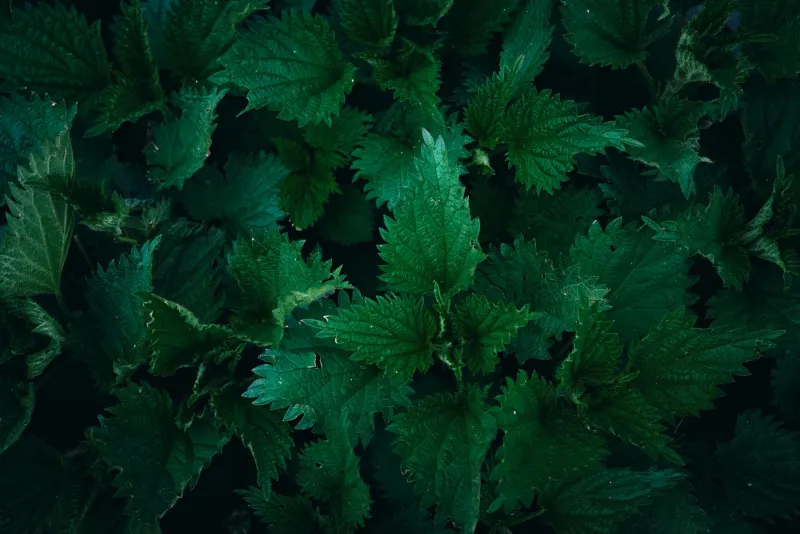
What is Nettle Root?
Stinging nettle (Urtica dioica) is a perennial plant found throughout Europe, Asia, and North America. While most people know nettle for its stinging leaves, the plant's root has a long history in traditional European herbal medicine.
It is important to distinguish between nettle root and nettle leaf — they have different compositions and are used for different purposes. Leaves are known primarily for their nutritional value, while the root has historically been used in the context of prostate health and hormonal balance.
Nettle root's bioactive components include lectins, lignans, polysaccharides, and sterols. These compounds are the focus of modern research.
How it works
Nettle root's effects are based on several mechanisms. Research suggests that the root's components may influence sex hormone-binding globulin (SHBG), a protein that binds testosterone in the blood (Schottner et al., 1997). By reducing SHBG binding, potentially more testosterone may remain free and active.
Studies have also found that nettle root may influence the 5-alpha-reductase enzyme, which converts testosterone to dihydrotestosterone (DHT) (Nahata & Dixit, 2012). This mechanism is particularly interesting in the context of prostate health.
Evidence and benefits
Currently there are no EU-approved specific health claims for nettle root. However, research suggests several areas of interest:
- Prostate health: Nettle root has been most extensively studied in the context of prostate health. Multiple studies suggest it may support normal prostate function, especially in older men (Safarinejad, 2005).
- Hormonal balance: Some studies show that nettle root may influence SHBG levels, which in turn may affect free testosterone levels.
- Seasonal allergy support: Nettle leaves (not root) have traditionally been used for seasonal allergies. Some research suggests antihistamine properties.
- Anti-inflammatory activity: Laboratory studies suggest certain anti-inflammatory properties.
Many studies are small-scale and require confirmation in larger clinical trials.
How to take
Common forms:
- Standardized root extract capsules
- Dried root tea
- Liquid extract (tincture)
- Often combined with other herbs (e.g., saw palmetto)
Typical dosages:
- Standardized extract: 300–600 mg per day
- Dried root as tea: 2–4 g per day
- Tincture: per manufacturer's instructions
- Divided into 2–3 doses per day, taken with food
A minimum of 6–8 weeks is recommended to evaluate the effects of nettle root.
Who should consider it
- Men over 50 looking to support prostate health
- Individuals interested in natural hormonal balance support
- People with seasonal allergies (primarily nettle leaves)
- Those who prefer a traditional European herbal medicine approach
- Men wanting to support free testosterone levels
Consult a healthcare professional before starting any new supplement. Nettle root may interact with blood pressure medications, blood sugar-affecting medications, and anticoagulants.
Frequently asked questions
What is the difference between nettle root and nettle leaf? Nettle root and leaf have different compositions and traditional uses. The root is primarily used for prostate health and hormonal support, while leaves are used for their nutritional value and seasonal allergy support.
Does nettle root raise testosterone? Nettle root does not directly increase testosterone production, but may influence SHBG levels, which in turn may increase the proportion of free testosterone. Study results are promising but not conclusive.
Is nettle root safe? Generally well tolerated. In rare cases, digestive discomfort may occur. Interactions are possible with certain medications.
Can women use nettle root? Nettle leaves are widely used by women as well. The root has been studied less frequently in a women's health context.
Can nettle root be combined with saw palmetto? This is actually a very common combination in prostate health supplements. Some studies have examined their combined effects.
References
- Schottner M, Gansser D, Spiteller G. (1997). Lignans from the roots of Urtica dioica and their metabolites bind to human sex hormone binding globulin (SHBG). Planta Medica, 63(6), 529-532.
- Nahata A, Dixit VK. (2012). Ameliorative effects of stinging nettle (Urtica dioica) on testosterone-induced prostatic hyperplasia in rats. Andrologia, 44(S1), 396-409.
- Safarinejad MR. (2005). Urtica dioica for treatment of benign prostatic hyperplasia: a prospective, randomized, double-blind, placebo-controlled, crossover study. Journal of Herbal Pharmacotherapy, 5(4), 1-11.
- Chrubasik JE, Roufogalis BD, Wagner H, Chrubasik S. (2007). A comprehensive review on the stinging nettle effect and efficacy profiles. Phytomedicine, 14(7-8), 568-579.
See also:
Browse plant-based supplements at MaxFit →
Disclaimer
A food supplement is not a substitute for a varied and balanced diet and a healthy lifestyle.



