
How to Choose a Quality Multivitamin Supplement
Multivitamins are the most widely purchased dietary supplement globally. The market ranges from discount store generic tablets to premium gender- and age-specific formulas at ten times the price. Most buyers do not know what distinguishes one from another. This guide provides a clear, evidence-informed framework for evaluating multivitamin quality: what to look for on the label, form and dose markers, third-party testing, red flags to avoid, and a realistic view of value for money.
What to Look for on the Label
A quality multivitamin label should provide:
1. The specific chemical form of each nutrient. This is the single most important quality indicator that most buyers overlook. For example:
- Vitamin B12 as methylcobalamin or adenosylcobalamin is more bioavailable than cyanocobalamin in some populations (particularly those with MTHFR gene variants).
- Magnesium as glycinate, malate, or citrate is better absorbed and gentler on the digestive system than magnesium oxide (which is cheap but poorly absorbed).
- Folate as methylfolate (5-MTHF) is the active form and preferable to folic acid for people with impaired folate metabolism.
- Zinc as picolinate, glycinate, or citrate is generally better absorbed than zinc oxide or zinc sulfate.
2. Amounts relative to reference daily intakes. A reputable multivitamin covers vitamins and minerals at or close to the recommended daily intake — not at fragments (10% of RDI) that are nutritionally irrelevant, and not at multiples of the tolerable upper intake level for fat-soluble vitamins (A, D, E, K).
3. Absence of unnecessary excipients. Artificial colourants, sweeteners, and fillers are not harmful at usual levels but are indicators of formulation priorities. A product focused on quality tends to minimise them.
Form and Dose Markers
Beyond the specific chemical forms listed above, watch for:
- Iron: many general multivitamins include iron. Men and postmenopausal women typically do not need iron supplementation and excess iron may be harmful. Gender-specific formulas (e.g. men's multivitamins) that exclude iron are often better for this demographic.
- Vitamin D: the effective form is D3 (cholecalciferol), which is more potent than D2 (ergocalciferol) for raising blood 25(OH)D levels. Most quality modern multivitamins use D3.
- Vitamin A: preformed vitamin A (retinol) at high cumulative doses has been associated with increased fracture risk. Look for vitamin A provided partly or mainly as beta-carotene (the provitamin form), which the body converts only as needed.
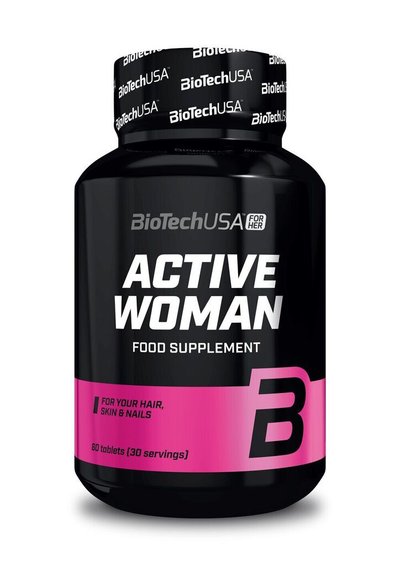 BIOTECHUSA Active Women€19.90 In stock 60tab, Optimum Nutrition Opti-Women 120tabs, and
 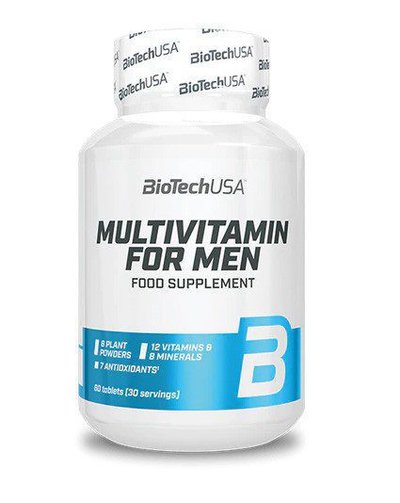 BIOTECHUSA Multivitamin for Men€17.90 In stock 60tab are multivitamins available at maxfit.ee that represent gender-differentiated formulations. MST Vitamin Kick - 60 Tablets is a sports-focused option with a disclosed micronutrient profile.
Third-Party Testing
Pharmaceutical GMP (Good Manufacturing Practice) certification is the baseline expectation for any supplement manufacturer. Beyond GMP:
- USP Verified (US Pharmacopeia): tests that the product dissolves properly, contains what it claims, and is free of specified contaminants.
- NSF International: similar independent verification programme.
- Informed Sport: primarily relevant for athletes concerned about banned substances; less universal for general multivitamins but a positive signal.
For general consumers, GMP-compliant manufacturing plus a transparent label with specific ingredient forms is usually sufficient due diligence. Third-party certification adds another layer of assurance.
Red Flags to Avoid
- "Proprietary blend" for the vitamin/mineral profile: vitamins and minerals are not a blend that needs to be protected — a proprietary blend label on a multivitamin hides the doses of individual nutrients, making evaluation impossible.
- Extremely cheap price with vague ingredient forms: budget multivitamins often use poorly absorbed forms (magnesium oxide, cyanocobalamin, zinc oxide) that minimise cost but reduce efficacy.
- Vitamin A as 100% retinol at high doses: this is a formulation concern, especially for pregnant women (high retinol is teratogenic).
- Very high doses of B vitamins: niacin (B3) at doses well above 100 mg/day can cause flushing; long-term high-dose B6 (pyridoxine) has been associated with peripheral neuropathy. Multi-ingredient supplements that hit very high % Daily Values for these should be scrutinised.
- No expiry date or manufacturing information: standard regulatory requirement — its absence indicates non-compliance.
Value for Money
Higher price does not automatically mean higher quality in multivitamins — and the cheapest products are often the worst. The sweet spot is a product that:
- Clearly lists chemical forms (not just "Vitamin B12" without the form)
- Uses more bioavailable forms for key nutrients
- Is manufactured under GMP
- Costs a reasonable amount per month of supply
For most adults in Estonia, a multivitamin covering the standard micronutrient range plus additional vitamin D (relevant for northern European winters) provides the best practical coverage. Specialty high-dose products or those marketed on proprietary ingredient clusters generally do not offer better outcomes than a well-formulated standard formula.
Browse the full multivitamin range including sports vitamins at maxfit.ee.
FAQ
Do I need to take a multivitamin if I eat a balanced diet?
For most healthy adults with a genuinely varied diet, a multivitamin provides modest additional insurance rather than filling a critical gap. Specific exceptions where supplementation is strongly evidence-supported: vitamin D in northern Europe from autumn to spring, vitamin B12 for vegans, folate for women who may become pregnant, and iron for women with heavy menstrual losses. Outside these specific cases, the benefit of a daily multivitamin is real but modest.
Is it better to take a multivitamin with or without food?
Fat-soluble vitamins (A, D, E, K) are absorbed better with a meal containing some fat. Water-soluble B vitamins and vitamin C absorb adequately with or without food but some people find B vitamins cause nausea on an empty stomach. Taking a multivitamin with breakfast is a practical default for most.
Are gender-specific multivitamins worth it?
For most people, yes — the key differences are iron content (men's formulas often exclude it; women's formulas include it for reproductive-age women), and sometimes dose adjustments for nutrients relevant to life-stage. The broad micronutrient profiles are largely similar. Pay attention to whether the iron inclusion or exclusion is appropriate for you specifically.
References
Murphy, S. P., White, K. K., Park, S. Y., & Sharma, S. (2007). Multivitamin-multimineral supplements' effect on total nutrient intake. American Journal of Clinical Nutrition, 85(1), 280S-284S. https://pubmed.ncbi.nlm.nih.gov/17209210/
MacPherson, H., Pipingas, A., & Pase, M. P. (2013). Multivitamin-multimineral supplementation and mortality: a meta-analysis of randomized controlled trials. American Journal of Clinical Nutrition, 97(2), 437-444. https://pubmed.ncbi.nlm.nih.gov/23255568/
Traber, M. G. (2014). Mechanisms for the prevention of vitamin E excess. Journal of Lipid Research, 54(9), 2295-2306.



