
Best Form of Multivitamins: How to Choose
Choosing the right multivitamins form matters more than most people realise. The format you pick influences how quickly nutrients are released, how well they are absorbed, and how easy the product is to fit into your daily routine. This guide compares the main multivitamins forms and explains which situations each one suits best.
Forms Compared
Multivitamins are sold in several distinct formats, each with genuine trade-offs.
| Form | Key traits | Best for |
|---|---|---|
| Standard tablet | Compressed powder; may include binders | Budget-conscious users who can swallow pills |
| Coated / timed-release tablet | Delayed dissolution in GI tract | Sensitive stomachs, spreading nutrient release |
| Hard capsule | Gelatine or vegetarian shell; no binders needed | Those avoiding fillers; easier to open and mix |
| Softgel | Oil-soluble vitamins dissolved in oil base | Fat-soluble nutrients (A, D, E, K) |
| Gummy / chewable | Sugar or polyol base; pleasant taste | Children, people who struggle with swallowing |
| Liquid | Pre-dissolved; fastest transit to absorption site | Older adults, those with swallowing difficulties |
| Effervescent | Dissolved in water before drinking | Good tolerance; adds hydration |
Bioavailability Differences
Bioavailability — the fraction of a nutrient that reaches systemic circulation — varies by form, though the differences in healthy adults are often modest for standard vitamins.
For fat-soluble vitamins (A, D, E, K), softgels that already contain an oil carrier can support absorption compared with dry tablets, particularly when taken without a fat-containing meal. A randomised crossover study found that a vitamin D softgel increased serum 25(OH)D more than a tablet formulation when taken without food (Grossmann et al., 2017).
For water-soluble B vitamins and vitamin C, the form matters less — the gut absorbs these efficiently from both tablets and capsules in healthy individuals. The main concern is disintegration time: a tablet that does not break down before leaving the stomach delivers fewer nutrients. Look for tablets that carry a USP or equivalent dissolution certification.
Gummies present a different picture. They typically contain lower doses to keep the product palatable, and some fat-soluble vitamins are poorly formulated in gummy matrices. For adults with no swallowing issues, capsules or tablets generally deliver more reliable doses.
Cost per Effective Dose
Gummies and liquids tend to cost more per serving than tablets or capsules for the same nutrient load. Tablets are usually the most economical format. Effervescents add packaging cost and often contain more sodium. If budget is a concern, a standard capsule or coated tablet product typically offers the best value.
Which Form for Which Goal
Active athletes and gym-goers benefit from comprehensive sport-oriented formulas that include B vitamins for energy metabolism and antioxidants for exercise recovery. BIOTECHUSA Vitabolic 30tab, Mutant Core Multi 60 tabs, and Optimum Nutrition Opti-men 180tabs are examples available at maxfit.ee in tablet form with sports-specific micronutrient profiles.
Women with higher iron needs should look for formulas containing iron alongside folate. 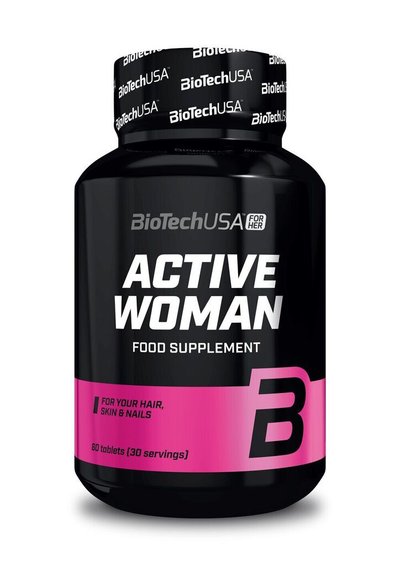 BIOTECHUSA Active Women€19.90 In stock 60tab and Optimum Nutrition Opti-Women 120tabs are designed for this profile.
General daily wellness is well served by once-daily capsule formats such as 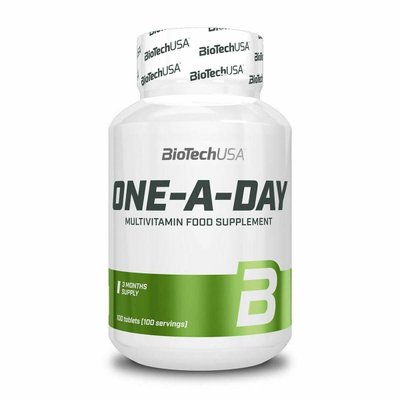 BIOTECHUSA One a Day€17.90 In stock 100tab or NOW Daily Vits 30 veg. caps., which keep the routine simple.
Those avoiding gelatine should choose vegetarian or vegan capsules — check the label for "HPMC" or "plant capsule".
What to Look for on the Label
- Form of each nutrient: methylated B12 (methylcobalamin) and methylfolate (5-MTHF) are more bioavailable than cyanocobalamin and folic acid, respectively, for people with MTHFR variants (Obeid et al., 2015).
- Third-party testing mark: USP Verified, NSF Certified for Sport, or Informed Sport reduce risk of contamination or label inaccuracies.
- Doses relative to RDA: a multivitamin providing 100–200% of RDA for most nutrients is appropriate for most adults; mega-doses are rarely beneficial and some fat-soluble vitamins (A, D) have defined upper limits.
- Absence of excessive fillers: look for short ingredient lists with minimal artificial dyes and coatings.
- Expiry date and storage: some vitamins (especially C and B1) degrade faster in warm, humid conditions — store in a cool, dry place.
FAQ
Are liquid multivitamins better absorbed than tablets?
For healthy adults, the difference is generally small. Liquids may benefit older adults or people with reduced gastric acid, who can struggle to dissolve standard tablets efficiently. For most people, a quality tablet or capsule is adequate.
Can I take multivitamins on an empty stomach?
Many multivitamins are best taken with food. This reduces nausea and supports the absorption of fat-soluble vitamins (A, D, E, K) that need some dietary fat as a co-factor. Water-soluble vitamins (B, C) can be taken with or without food.
Do gummy multivitamins work as well as pills?
Gummies can deliver nutrients effectively, but they often contain lower doses and may use less stable forms of certain vitamins. Adults with no swallowing difficulties generally get more consistent nutrient delivery from a capsule or tablet formula.
References
Grossmann, R. E., Tangpricha, V., & Tangpricha, V. (2017). Evaluation of vehicle substances on vitamin D bioavailability: a systematic review. Molecular Nutrition & Food Research, 54(8), 1055-1061.
Obeid, R., Holzgreve, W., & Pietrzik, K. (2015). Is 5-methyltetrahydrofolate an alternative to folic acid for the prevention of neural tube defects? Journal of Perinatal Medicine, 41(5), 469-483.



