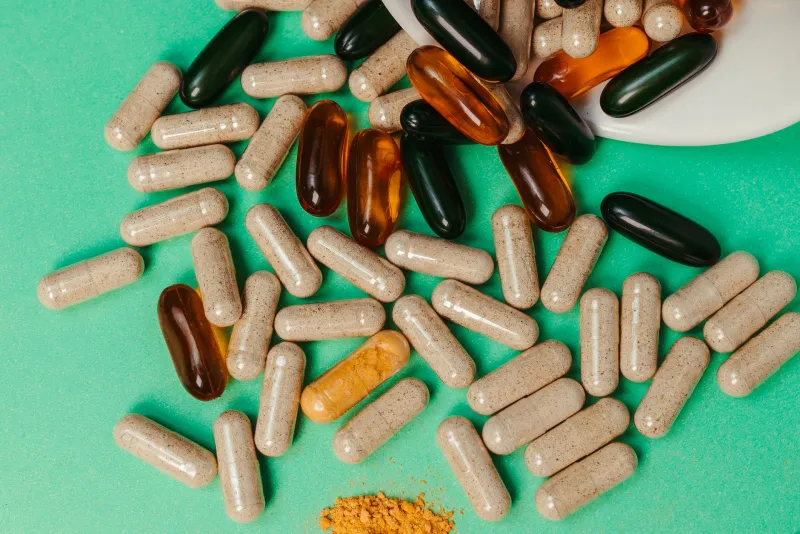
Multivitamins Benefits: What the Evidence Says
Multivitamins are the world's most widely purchased dietary supplement category. Their appeal is intuitive: a single daily tablet that covers multiple micronutrient needs simultaneously. But the scientific evidence on multivitamins benefits is more nuanced than the marketing suggests. This guide examines where multivitamins genuinely help, where they do not, and who stands to benefit most — particularly in the context of Nordic diets and lifestyles.
Primary Evidenced Benefits
Filling Micronutrient Gaps in Suboptimal Diets
The most strongly supported use of multivitamins is addressing micronutrient inadequacies in populations whose diets do not meet recommended intakes for multiple vitamins and minerals. Nutritional surveys consistently find that many adults in Northern Europe fall short of recommended intakes for vitamin D, folate, iodine, and vitamins B12 and B6. A multivitamin reduces the risk of subclinical deficiencies that, while not always producing acute symptoms, may impair long-term health outcomes (Blumberg et al., 2018).
BIOTECHUSA One a Day 100tab and Optimum Nutrition Opti-Women 120tabs are broad-spectrum formulas available at maxfit.ee. MST Vitamin Kick - 60 Tablets and SELF Multivitamin 60caps are further well-regarded options.
Energy Metabolism Support
Several B vitamins — particularly B1 (thiamine), B2 (riboflavin), B3 (niacin), B6, B12, and folate — function as co-factors in the metabolic pathways that convert food into ATP. Without adequate B vitamins, these pathways operate less efficiently. This is not an ergogenic effect (like creatine or caffeine) but a foundational biochemical role: correcting a deficiency restores normal energy metabolism. Athletes with restricted diets or high caloric demands may have elevated B vitamin needs.
Immune Function
Vitamins C, D, zinc, and selenium each have defined mechanistic roles in immune cell function. Multivitamins covering these nutrients can support baseline immune competence, particularly during periods of high physical stress (intensive training blocks), poor diet quality, or winter months when UV-derived vitamin D is low in Northern European latitudes. Research indicates that adequate vitamin C intake supports immune resilience in individuals under heavy physical stress — a consideration relevant to hard-training athletes.
Secondary and Emerging Effects
Antioxidant Support
Vitamins C and E, selenium, and beta-carotene function as antioxidants. Training generates reactive oxygen species, and while a moderate oxidative stress response is part of adaptation, extreme oxidative load may impair recovery. Multivitamins covering antioxidant nutrients offer a background buffer — though the evidence does not support exceeding typical supplemental doses for enhanced performance.
Bone Health
Vitamins D and K2, calcium, and magnesium are interrelated in bone mineral metabolism. Multivitamins formulated for active adults often include these in combination. In the context of Northern European athletes who spend limited time outdoors during winter, covering vitamin D through a multivitamin is particularly rational.
Cognitive and Mood Support
Subclinical deficiencies in B12, B6, folate, and iron are associated with cognitive fatigue, mood changes, and impaired concentration. Multivitamins covering these nutrients may support cognitive performance in individuals whose dietary intake is borderline — though they are not cognitive enhancers in well-nourished individuals.
Where Evidence Is Weak
- Disease prevention in well-nourished individuals: large trials in populations with adequate baseline nutrition do not show clear reductions in cardiovascular disease, cancer, or all-cause mortality from multivitamin use
- Performance enhancement: multivitamins are not performance supplements; they support baseline physiological function, not supra-normal function
- Replacing a poor diet: a multivitamin does not provide fibre, phytochemicals, or adequate macronutrients — it only addresses the micronutrient dimension of dietary shortfalls
Who Gains Most from Multivitamins
- Individuals with genuinely restricted diets: vegans, people with food allergies or intolerances, chronic dieters
- Northern European populations during winter (October–March) when dietary vitamin D and vitamin C from fresh produce may be low
- Older adults with reduced food variety and absorption efficiency
- Pregnant or planning-to-conceive women (folate coverage is well-evidenced in this group)
- Athletes training at high volumes with potentially elevated micronutrient demands
Sport-specific multivitamins like BIOTECHUSA Vitabolic 30tab and Mutant Core Multi 60 tabs are formulated with athlete micronutrient demands in mind. Explore the full multivitamin and vitamin complex range and sport vitamins at maxfit.ee.
Realistic Expectations
Think of a quality multivitamin as insurance against gaps, not as a performance driver or health amplifier. The benefit of correcting a deficiency can be meaningful and even dramatic (as with classical deficiency diseases), while the benefit in an already well-nourished person is modest to undetectable. A multivitamin will not make a good diet redundant — it makes a borderline diet good enough.
FAQ
Should I take a multivitamin every day?
For most people with unrestricted, varied diets, a quality multivitamin provides a practical safety net rather than a transformational intervention. For those with restricted diets, dietary restrictions, or increased physiological demands, daily use is better supported. Check with a healthcare provider if you take medications that might interact with high doses of specific micronutrients.
Are sport multivitamins different from regular ones?
Sport-specific multivitamins typically include higher doses of B vitamins (which support energy metabolism and are lost through sweat), antioxidants (to buffer exercise-induced oxidative stress), and sometimes iron (for women or endurance athletes with elevated needs). For very active individuals, a sport formula may be better matched to actual demand than a general-public formulation.
Can I get too much from a multivitamin?
For most water-soluble vitamins (B vitamins, C), excess is excreted and toxicity at typical supplement doses is not a concern. Fat-soluble vitamins (A, D, E, K) can accumulate. Vitamin A excess is possible with long-term high supplementation; vitamin D toxicity requires sustained high doses well above typical multivitamin content. Standard multivitamin doses are generally safe for most adults when used as directed.
References
Blumberg, J. B., Bailey, R. L., Sesso, H. D., & Ulrich, C. M. (2018). The evolving role of multivitamin/multimineral supplement use among adults in the age of personalized nutrition. Nutrients, 10(2), 248. https://pubmed.ncbi.nlm.nih.gov/29470410/
Oster, O., & Prellwitz, W. (1990). Selenium and cardiovascular disease. Biological Trace Element Research, 24(2), 91–103. https://pubmed.ncbi.nlm.nih.gov/1702669/



