
Multivitamins for Beginners: A Complete Guide
Multivitamins are among the most widely used dietary supplements globally. For beginners, they can seem like an obvious safety net — but understanding what they actually do, when they are worthwhile, and how to choose one separates a useful supplement habit from spending money without benefit.
What Multivitamins Do
A multivitamin is a single product providing multiple vitamins and minerals — typically covering most or all of the recommended daily values. Their role is not to boost your health above normal function, but to fill gaps that your regular diet may leave.
Specific micronutrients have well-established roles:
- B vitamins (B1, B2, B3, B6, B12, folate) — involved in energy metabolism, DNA synthesis, and nerve function
- Vitamin D — essential for calcium absorption, bone maintenance, and immune function; deficiency is extremely common in Northern Europe including Estonia
- Vitamin C — supports immune function and is a cofactor for collagen synthesis
- Zinc — involved in immune defence, wound healing, and protein synthesis
- Iron (in women-specific formulas) — essential for haemoglobin synthesis
- Magnesium — participates in ATP synthesis and muscle function
For athletes, the micronutrient needs for several of these are modestly elevated compared to sedentary individuals, due to increased loss in sweat, elevated metabolic turnover, and greater oxidative stress.
How to Start
Assess your diet first. A multivitamin is not a replacement for a varied diet. Before spending money, consider whether your meals cover diverse food groups. If they do, you may not need a comprehensive multivitamin — targeted supplementation of specific known deficiencies (vitamin D, iron, B12 for vegans) is often more rational.
Choose a formula matched to your life stage and activity level. Men and women have different micronutrient needs; active individuals may benefit from sport-specific formulas that include higher doses of B vitamins and antioxidants. Options available at maxfit.ee include:
- BIOTECHUSA One a Day 100tab — a simple all-in-one daily formula
- Optimum Nutrition Opti-Women 120tabs — formulated for active women with iron and additional antioxidants
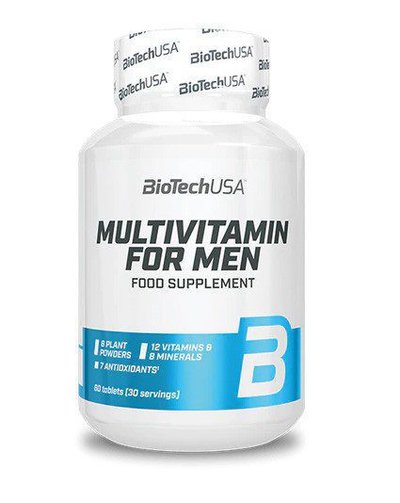 BIOTECHUSA Multivitamin for Men€17.90 In stock 60tab — optimised for men's micronutrient priorities
- Optimum Nutrition Opti-men 180tabs — a comprehensive sports multivitamin for active men
- MST Vitamin Kick - 60 Tablets — a higher-potency sport formula
For most beginners, a standard once-daily tablet from a reputable brand within the multivitamins category at maxfit.ee is an appropriate starting point.
Take with food. Most multivitamins contain fat-soluble vitamins (A, D, E, K) that are significantly better absorbed with a meal containing some dietary fat. Taking a multivitamin on an empty stomach can also cause nausea.
What to Expect and When
For people who are not deficient in any covered nutrient, a multivitamin will not produce noticeable changes in how you feel or perform. This is normal and expected — you are filling a potential gap, not adding above-normal amounts.
For people with genuine deficiencies, the effects can be meaningful:
- Correcting vitamin D deficiency is associated with improved mood, bone density, and immune function
- Correcting iron deficiency anaemia restores energy and exercise capacity
- Correcting B12 deficiency (common in vegans and older adults) improves neurological function and reduces fatigue
A large trial by Sesso et al. (2012) found that long-term multivitamin use in men was associated with a modest reduction in total cancer incidence, though the effect was small and should not be overstated. Evidence for multivitamins preventing cardiovascular disease in the general healthy population is not strong.
The most honest expectation for a healthy person with a reasonable diet taking a standard multivitamin: you are covering your bases, which is worthwhile as nutritional insurance — particularly in Estonia where vitamin D insufficiency is very common due to limited sunlight exposure for much of the year.
Common Mistakes
- Expecting dramatic effects. A multivitamin will not boost energy, improve athletic performance, or compensate for a poor diet in someone who is already eating adequately.
- Doubling up on individual supplements. If you take a multivitamin that already contains vitamin D, zinc, and B12, and then add individual supplements for each, you may exceed safe tolerable upper limits for fat-soluble vitamins (particularly A and D). Check your total intake.
- Choosing a product with excessive doses. Mega-dose multivitamins with hundreds of times the daily value for certain vitamins are unnecessary for most people and can be counterproductive — very high vitamin A from retinol, for example, is teratogenic and can harm bone density at chronically elevated intakes.
- Ignoring the form of the nutrient. Vitamin B12 as methylcobalamin is more readily used than cyanocobalamin. Magnesium glycinate is better absorbed than magnesium oxide. Zinc picolinate is better absorbed than zinc oxide. Premium formulas differ in this respect.
- Stopping and starting inconsistently. For the nutrient insurance role to work, consistency matters more than the specific product chosen.
Choosing a Product
Key selection criteria:
- Appropriate for your sex and activity level
- Contains vitamin D at a meaningful dose (at least 400–1000 IU)
- Does not exceed the tolerable upper limit for vitamin A (retinol)
- From a brand with quality manufacturing standards
Browse the full selection in the multivitamins and vitamin complexes category and sports vitamins at maxfit.ee.
References
Sesso, H. D., Christen, W. G., Bubes, V., Smith, J. P., MacFadyen, J., Schvartz, M., ... & Manson, J. E. (2012). Multivitamins in the prevention of cardiovascular disease in men: the Physicians' Health Study II randomized controlled trial. JAMA, 308(17), 1751–1760. https://pubmed.ncbi.nlm.nih.gov/23117775/
Fulkerson, J. A., Sherwood, N. E., Perry, C. L., Neumark-Sztainer, D., & Story, M. (2004). Depressive symptoms and adolescent eating and health behaviors: a multifaceted view in a population-based sample. Preventive Medicine, 38(6), 865–875. https://pubmed.ncbi.nlm.nih.gov/15193910/
Heaney, R. P. (2008). Vitamin D in health and disease. Clinical Journal of the American Society of Nephrology, 3(5), 1535–1541. https://pubmed.ncbi.nlm.nih.gov/18525006/
FAQ
Should I take a multivitamin every day even if I eat well?
For most people who eat a varied, balanced diet including vegetables, dairy, meat or fish, eggs, and wholegrains, a daily multivitamin adds minimal benefit. The exception is vitamin D — in Northern Europe, supplementing vitamin D year-round is widely recommended regardless of diet quality because food sources alone cannot compensate for limited sunlight. B12 supplementation is also generally recommended for vegans.
Can I take a multivitamin with my other supplements?
Yes, but check for overlap. If you already take separate vitamin D, C, zinc, or magnesium supplements, adding a multivitamin that also contains them may push your total intake above the tolerable upper level for some nutrients. This is most relevant for vitamin A (retinol), vitamin D, and zinc.
Are sports multivitamins worth the premium price?
For active individuals training regularly, a sports multivitamin offering higher doses of B vitamins (for energy metabolism), antioxidants (vitamins C and E, selenium), and magnesium can be a better fit than a basic one-a-day. Whether the premium is justified depends on your diet and training volume — if you already eat plenty of vegetables and wholegrains, the extra antioxidant dose may add little.



