How to Maximize Multivitamins Absorption
Taking a multivitamin is a good baseline habit, but multivitamins absorption is not automatic. Several factors — from what you eat alongside the pill to the time of day you take it — can meaningfully influence how much of each nutrient your body actually uses. This guide focuses on practical, evidence-informed strategies.
What Limits Multivitamins Absorption
Fat-Soluble vs Water-Soluble Vitamins
Multivitamins contain both fat-soluble vitamins (A, D, E, K) and water-soluble ones (B-complex, C). This distinction matters enormously for absorption. Fat-soluble vitamins require dietary fat to be absorbed properly through the intestinal wall. Taking a multivitamin on an empty stomach, especially for fat-soluble nutrients, can reduce their uptake compared with taking them with a fat-containing meal (Roodenburg et al., 2000).
Water-soluble vitamins, by contrast, are absorbed relatively efficiently with or without food, though stomach comfort may be better with a small meal.
Competing Minerals
Some minerals compete for the same transporters. High-dose calcium can reduce iron and zinc absorption when taken simultaneously. Most well-formulated multivitamins keep single-mineral doses low enough to minimise this competition, but it remains a factor — especially if you add separate mineral supplements on top.
Gut Health
A compromised gut lining, low stomach acid (common with age or certain medications), or impaired bile secretion can all reduce vitamin and mineral uptake. These are medical factors; if you suspect them, consult a healthcare provider rather than simply increasing your dose.
Cofactors That Help Absorption
- Vitamin C enhances non-haem iron absorption (Hallberg et al., 2003). Many multivitamins include vitamin C alongside iron for this reason.
- Vitamin D is required for efficient calcium absorption — they are functional partners.
- Black pepper extract (piperine) has been shown to increase bioavailability of certain nutrients by inhibiting their breakdown in the gut. Some premium formulas include it.
Form and Timing Effects
Nutrient form matters as much as dose. Magnesium glycinate or malate is better absorbed than magnesium oxide. Methylated B12 (methylcobalamin) is preferred by people with certain genetic variants over cyanocobalamin. Zinc picolinate is generally better absorbed than zinc oxide.
Timing:
- Take multivitamins with your largest meal of the day, which typically contains the most fat and helps fat-soluble vitamin uptake.
- Avoid taking them at the same time as coffee or tea; tannins and polyphenols can inhibit iron and zinc absorption (Hurrell et al., 1999).
- If your multivitamin contains iron, avoid pairing it with dairy within the same hour — calcium reduces iron absorption.
Food Pairings
| Nutrient | Helpful Pairing | Avoid Combining With |
|---|---|---|
| Fat-soluble vitamins (A, D, E, K) | Olive oil, avocado, eggs | Empty stomach |
| Iron | Vitamin C-rich foods | Tea, coffee, calcium-rich foods |
| Zinc | Animal proteins | High-phytate grains at the same meal |
| B12 | Any food | Antacids (reduce stomach acid) |
Practical Tips
- Take with breakfast or lunch, not on an empty stomach and not last thing at night.
- Use consistently — micronutrient status builds gradually; missing occasional days matters less than consistency over weeks.
- Do not double-dose — many B vitamins and fat-soluble vitamins accumulate; more is not always better.
- Check for interactions with any medications you take; some vitamins affect drug metabolism.
- Choose a quality product with well-researched forms of each nutrient.
At maxfit.ee you can find targeted options for different needs. BIOTECHUSA Active Women 60tab is formulated for active women, Optimum Nutrition Opti-Women 120tabs covers a broad micronutrient profile, and 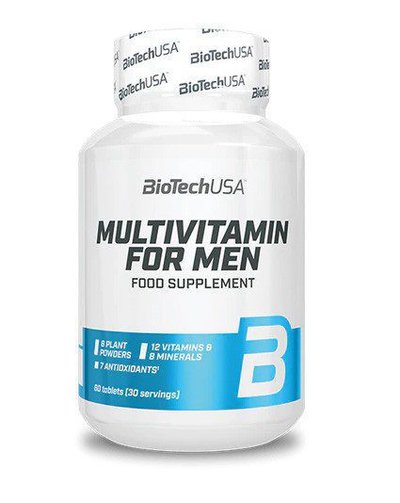 BIOTECHUSA Multivitamin for Men€17.90 In stock 60tab is designed for male physiology. Browse the full range in the multivitamins category.
References
- Roodenburg, A. J., Leenen, R., van het Hof, K. H., Weststrate, J. A., & Tijburg, L. B. (2000). Amount of fat in the diet affects bioavailability of lutein esters but not of alpha-carotene, beta-carotene, and vitamin E in humans. American Journal of Clinical Nutrition, 71(5), 1187–1193. https://pubmed.ncbi.nlm.nih.gov/10799382/
- Hallberg, L., Hulten, L., & Gramatkovski, E. (2003). Iron absorption from the whole diet in men: how effective is the regulation of iron absorption? American Journal of Clinical Nutrition, 58(3), 397–401.
- Hurrell, R. F., Reddy, M., & Cook, J. D. (1999). Inhibition of non-haem iron absorption in man by polyphenolic-containing beverages. British Journal of Nutrition, 81(4), 289–295. https://pubmed.ncbi.nlm.nih.gov/10999016/
FAQ
Is it better to take multivitamins in the morning or evening?
Morning or lunchtime with a meal is generally best. B vitamins can be mildly stimulating for some people, making evening timing less ideal. Fat-soluble vitamins need dietary fat, so any meal containing some fat is appropriate.
Can I take a multivitamin with protein powder?
Yes, protein shakes usually do not significantly impair vitamin absorption. If the shake contains calcium (as in dairy-based whey), avoid taking high-iron multivitamins at the exact same time.
Do cheaper multivitamins absorb less well?
Not always, but lower-cost products sometimes use less bioavailable forms of minerals and B vitamins (e.g., magnesium oxide, cyanocobalamin). Checking the ingredient list for nutrient forms is more informative than price alone.



