Natural Food Sources of MSM
Methylsulfonylmethane (MSM) is an organic sulphur compound that has gained popularity as a supplement for joint health, connective tissue, and post-exercise recovery. What is less often discussed is that MSM occurs naturally in food — though the amounts are modest. If you are curious about food sources of MSM, how they compare to supplementation, and when a supplement is genuinely useful, this article covers the practical ground.
Top Food Sources of MSM
MSM is part of the natural sulphur cycle and is found in trace amounts in a variety of whole foods. The richest dietary sources identified in the scientific literature include:
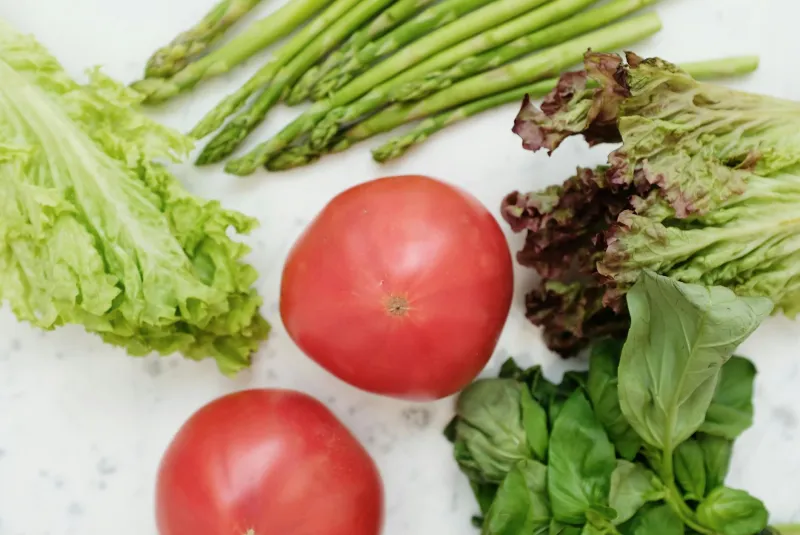
- Fruits and vegetables: Tomatoes, onions, garlic, leeks, broccoli, Brussels sprouts, and asparagus all contain sulphur compounds including DMSO and MSM.
- Grains: Whole grains (wheat, barley, corn) contain small amounts.
- Beer and coffee: Fermented and roasted products contain detectable MSM.
- Milk: Particularly raw milk, which contains modest sulphur compounds.
- Seafood and meat: Animal protein sources contain naturally occurring sulphur amino acids and related compounds.
However, even in the richest food sources, the concentration of MSM is low — typically in the range of a few milligrams per kilogram or less (Magnuson, 1986).
Bioavailability from Food vs Supplement
The bioavailability of MSM from food has not been as rigorously studied as from supplements. What is clear is that sulphur compounds in food are in many forms, not exclusively MSM. The pure crystalline or powder MSM used in supplements is well-absorbed orally — a pharmacokinetic study showed that oral MSM is absorbed and distributed systemically (Magnuson et al., 2007). Whether the food-form sulphur compounds provide an equivalent functional contribution to joint sulphur metabolism is not yet established.
Daily Targets from Diet
Research on MSM for joint health and connective tissue support typically uses doses of several grams per day. The amounts obtainable from typical daily food consumption are a small fraction of those doses. For context, you would need to eat implausibly large amounts of vegetables and whole grains to approach even a fraction of a gram of MSM daily from diet alone.
For general background sulphur intake, eating a varied diet rich in cruciferous vegetables, alliums (garlic, onion), eggs, and animal protein is sensible. But this should not be confused with achieving the targeted amounts studied for specific joint or recovery outcomes.
Cooking and Storage Effects
MSM and related sulphur compounds are volatile — they are lost through heat, evaporation, and processing. Boiling vegetables significantly reduces their sulphur content, while steaming or light sauteing retains more. Raw consumption of cruciferous vegetables preserves the maximum sulphur content. Pasteurisation and processing reduce sulphur compounds in dairy.
Freezing is generally well tolerated and does not dramatically reduce MSM content, but prolonged storage and industrial processing do.
When Food Is Not Enough
If your goal is targeted support for joint comfort, connective tissue health, or to contribute to recovery alongside training, supplementation is the practical path — the amounts in food are simply insufficient to approach what studies have investigated. MSM supplements are safe and well-tolerated.
Products available at maxfit.ee include OstroVit MSM 1200mg 60caps, OstroVit MSM 300g, and OstroVit MSM Plus 300g. For combination joint support, MST Chondroitin Glucosamine MSM + HA 90tabs and OstroVit Glucosamine + MSM + Chondroitin 90tab provide MSM alongside glucosamine and chondroitin, which are commonly studied together for joint function. Browse the full MSM range.
FAQ
Can I get enough MSM from diet for joint support?
Unlikely at the amounts studied in clinical trials. Food sources provide background sulphur intake, but for targeted joint support at the doses researched, supplementation is necessary.
Is dietary MSM destroyed by cooking?
Yes, to a meaningful degree. Sulphur compounds including MSM are volatile and heat-sensitive. Raw or minimally cooked vegetables retain more MSM.
Is MSM safe for daily supplementation?
Yes. MSM has a good safety profile in both short and longer-term use at typical supplement doses. It is one of the better-tolerated joint support compounds.
References
Magnuson, B. A., Appleton, J., Ryan, B., & Matulka, R. A. (2007). Oral developmental toxicity study of methylsulfonylmethane in the rat. Food and Chemical Toxicology, 45(6), 977–984. https://pubmed.ncbi.nlm.nih.gov/17258373/
Kim, L. S., Axelrod, L. J., Howard, P., Buratovich, N., & Waters, R. F. (2006). Efficacy of methylsulfonylmethane (MSM) in osteoarthritis pain of the knee: a pilot clinical trial. Osteoarthritis and Cartilage, 14(3), 286–294. https://pubmed.ncbi.nlm.nih.gov/16309928/



