
Mineral Complexes for Weight Management: Does It Work?
Mineral complexes — products combining two or more minerals like magnesium, zinc, chromium, or calcium — are sometimes marketed as supportive for weight management. The claims are plausible at the mechanistic level, but the clinical reality is more nuanced. This article examines whether mineral supplementation genuinely moves the needle on weight, what the evidence shows, and what better levers exist.
Proposed Mechanism
Several minerals have biological roles that, in theory, connect to body weight regulation:
Chromium is involved in insulin signalling and glucose metabolism. Correcting deficiency could theoretically support better blood glucose regulation, potentially influencing hunger and fat storage. Chromium deficiency impairs insulin sensitivity in animal models.
Magnesium is a cofactor in more than 300 enzymatic reactions, including those involved in energy production and glucose metabolism. Low magnesium status is associated with insulin resistance and the metabolic syndrome in population studies.
Zinc participates in leptin signalling — leptin is the appetite-regulating hormone produced by fat tissue. Low zinc status has been associated with altered leptin levels in some observational studies.
Calcium has been studied for a proposed mechanism where higher calcium intake reduces fat absorption in the gut and promotes greater fecal fat excretion, though the effect size is modest.
Honest Look at the Evidence
For chromium specifically, a meta-analysis by Tian et al. (2013) pooled data from 25 RCTs and found that chromium supplementation produced a statistically significant but very small reduction in body weight — averaging less than one kilogram more than placebo — with no meaningful difference in body composition outcomes (Tian et al., 2013). The clinical significance of an effect this small is questionable.
For magnesium and zinc in the context of weight, the evidence is primarily observational and confounded. People with poor diets tend to have lower mineral intakes AND heavier body weights, making it difficult to separate cause from effect. RCTs directly testing multi-mineral complexes for weight reduction as a primary outcome are scarce.
For calcium, the proposed fat malabsorption mechanism has not translated into meaningful weight loss in controlled trials in non-deficient populations.
Effect Sizes
The honest summary of effect sizes is that no single mineral or mineral complex has demonstrated a clinically meaningful reduction in body weight as a standalone intervention in controlled trials. Where effects are observed, they are typically small (often less than one kilogram of body weight change), seen only in deficient populations, and disappear in adequately nourished individuals.
This is not nothing — correcting mineral deficiency has real metabolic consequences — but it is far from what marketing language around weight management supplements typically implies.
Realistic Expectations
The most defensible expectation for a mineral complex and body weight is: if you have documented mineral deficiency that is contributing to metabolic dysfunction, correcting that deficiency may support better metabolic health, which could very indirectly help with weight management over time. This is not the same as a weight-loss supplement.
For someone already meeting their mineral needs through a varied diet, a mineral complex is unlikely to produce meaningful weight changes. The products at maxfit.ee, such as SELF Potassium Magnesium 120 vegan caps, BIOTECHUSA Calcium Zinc Magnesium 100tab, and 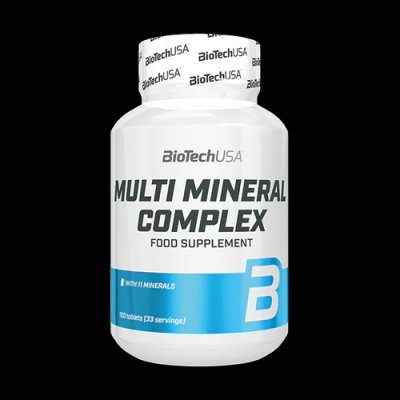 BIOTECHUSA Multi Mineral Complex€14.90 In stock 100tabl, are useful for correcting deficiency gaps, which is their most honest indication.
Better Levers for Weight Management
If weight management is the goal, the evidence-based hierarchy is clear:
- Sustained caloric deficit through dietary adjustment
- Regular resistance and aerobic exercise
- Adequate protein intake to preserve lean mass during weight loss
- Sleep quality (sleep deprivation raises appetite hormones)
- Stress management
Mineral sufficiency supports overall metabolic health and should be a foundation, not a strategy. Viewing mineral complexes as weight-loss tools sets up unrealistic expectations.
FAQ
Can chromium picolinate help with sugar cravings and weight?
There is some RCT evidence that chromium picolinate may modestly reduce carbohydrate cravings and slightly improve blood glucose regulation in people with insulin resistance or deficiency. Effect sizes in controlled trials are small. It is not a standalone weight-loss solution.
If I'm deficient in zinc or magnesium, will fixing it help me lose weight?
Correcting deficiency can improve insulin sensitivity and energy metabolism, which creates a more favourable metabolic environment. However, the contribution to actual body weight change in controlled conditions has been small. Diet and exercise remain the primary drivers.
Should I take a mineral complex while dieting?
Yes, but for nutritional completeness rather than direct weight-loss effect. Calorie restriction increases the risk of micronutrient gaps. A mineral complex helps maintain adequate mineral status during a dietary deficit — this is the legitimate role.
References
Tian, H., Guo, X., Wang, X., He, Z., Sun, R., Ge, S., & Zhang, Z. (2013). Chromium picolinate supplementation for overweight or obese adults. Cochrane Database of Systematic Reviews, (11), CD010063. https://doi.org/10.1002/14651858.cd010063.pub2
DiNicolantonio, J. J., O'Keefe, J. H., & Wilson, W. (2018). Subclinical magnesium deficiency: a principal driver of cardiovascular disease and a public health crisis. Open Heart, 5(1), e000668. https://pubmed.ncbi.nlm.nih.gov/30564378/



